Finding agatha
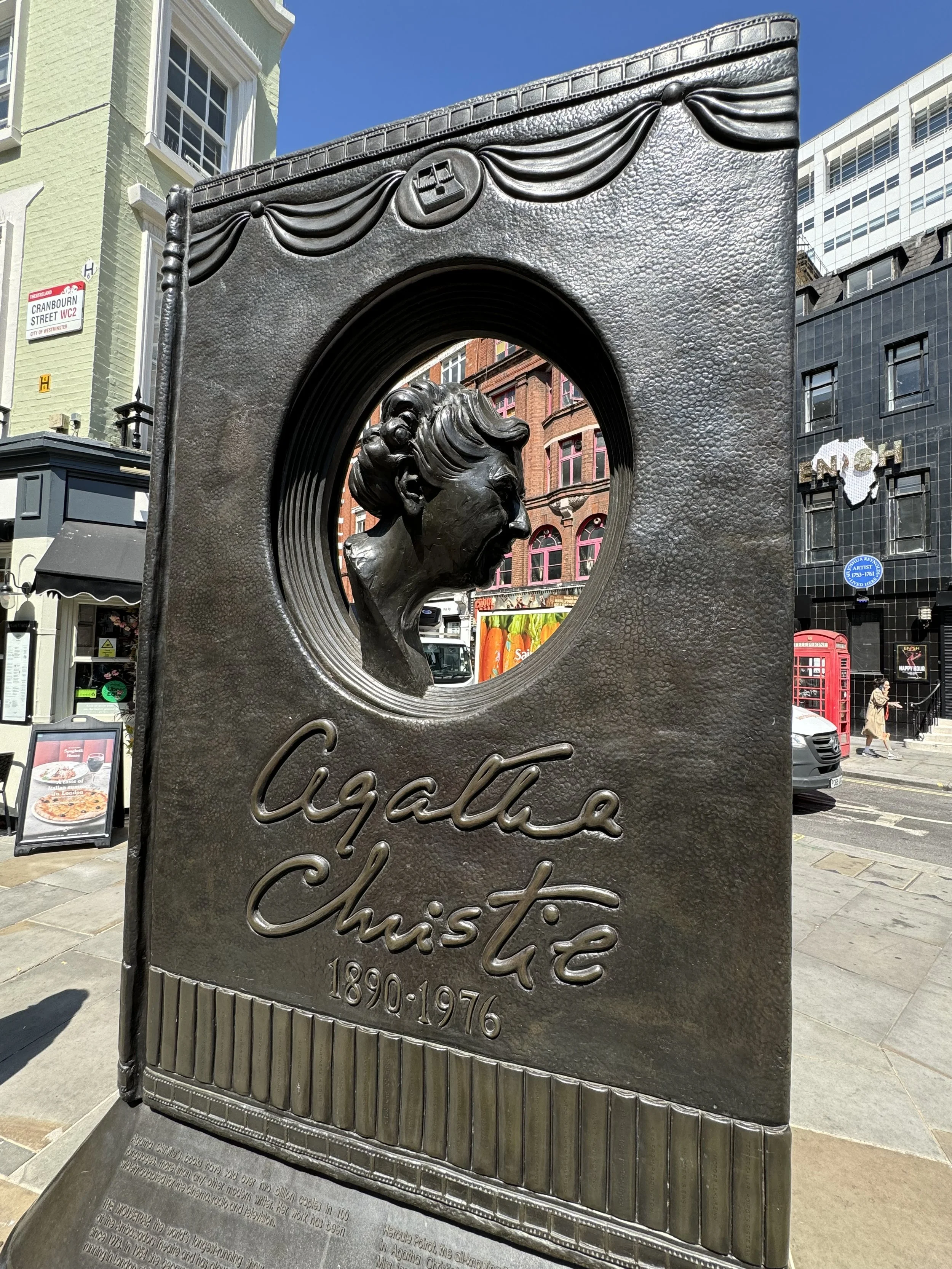
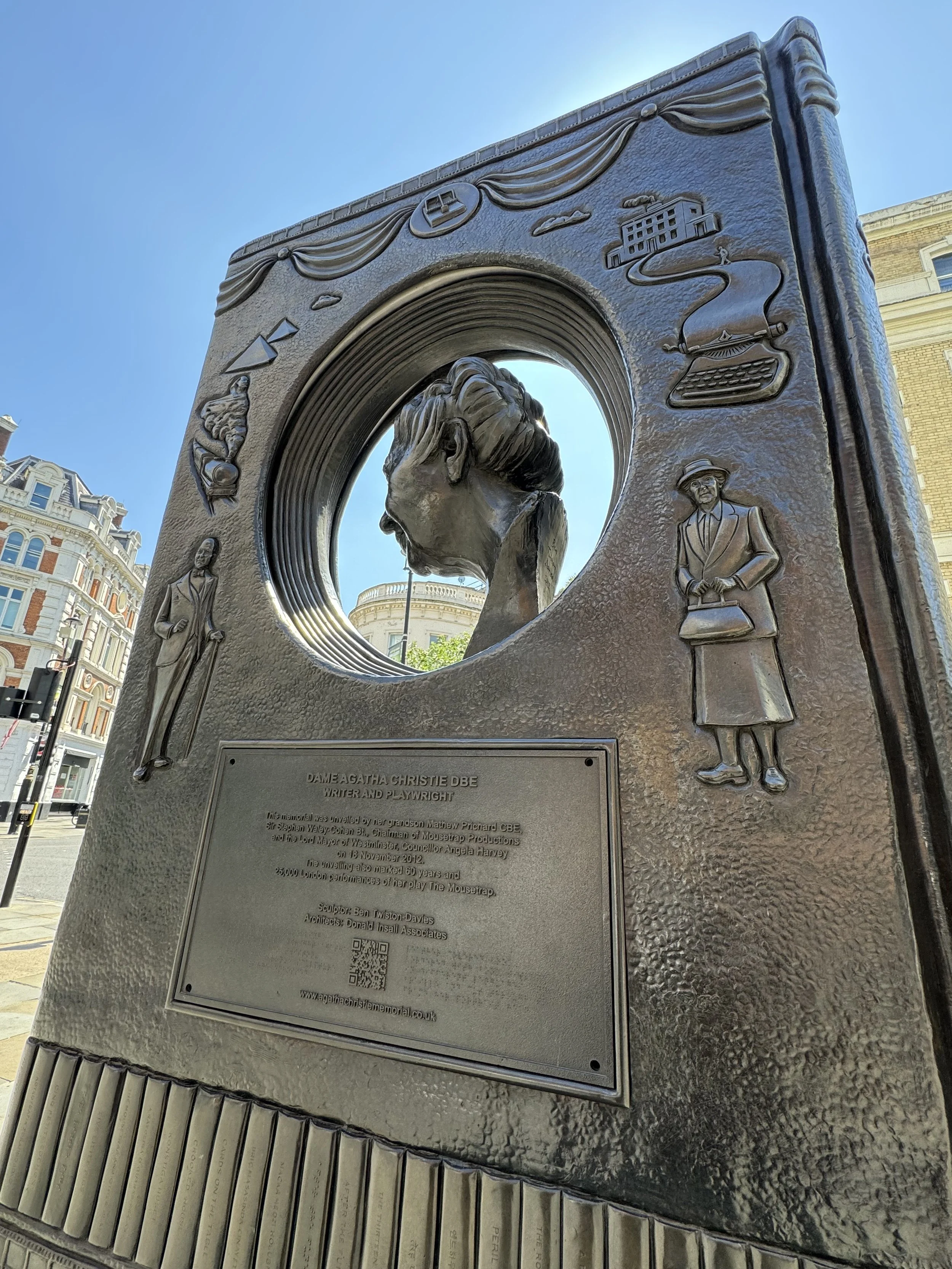
A few years ago, I had the wonderful opportunity to take a trip to England, fulfilling a longtime dream of finding many of the locations significant to the great mystery writer, Agatha Christie.
Writers will understand when I say that the trip, while historical and cultural, in many ways, was even more of a spiritual experience. I was able to finally walk in the steps of the Queen of Crime, stand where she stood, see what she saw, be where she had been. And I also got to see where the book of her illustrious life at last was closed.
My family and I spent ten days across the pond, most of them in London. There were a few days outside the city limits, like the day trip to Windsor Castle where King Charles goes to rest and vacation, and another trip to Bletchley Park which was the secret headquarters of the code breakers in World War Two. You know those guys, right? Mostly women, along with Alan Turing, they cracked the Nazi Enigma machine, decrypting the German secret messages, shortening the war and saving countless lives.
Incidentally, during the war, Christie traveled by train one day and the locomotive came to a long stop at the Bletchley station. Annoyed at the delay, she decided to name one of her characters in a book she was currently writing Major Bletchley. When the story, a spy novel no less, published that year, Britain’s MI5 called on Christie asking what she knew of Bletchley Park. She assured them she knew nothing at all, and they soon realized that it was nothing more than a wild coincidence that the world’s most famous mystery writer had penned a spy novel using the name of their top-secret code breaking HQ! Only decades later would Christie learn the reason of her visit by MI5. By the way, that novel was N or M?, a Tommy and Tuppence, husband and wife, spy adventure. Jaxson and Holiday would be so proud!
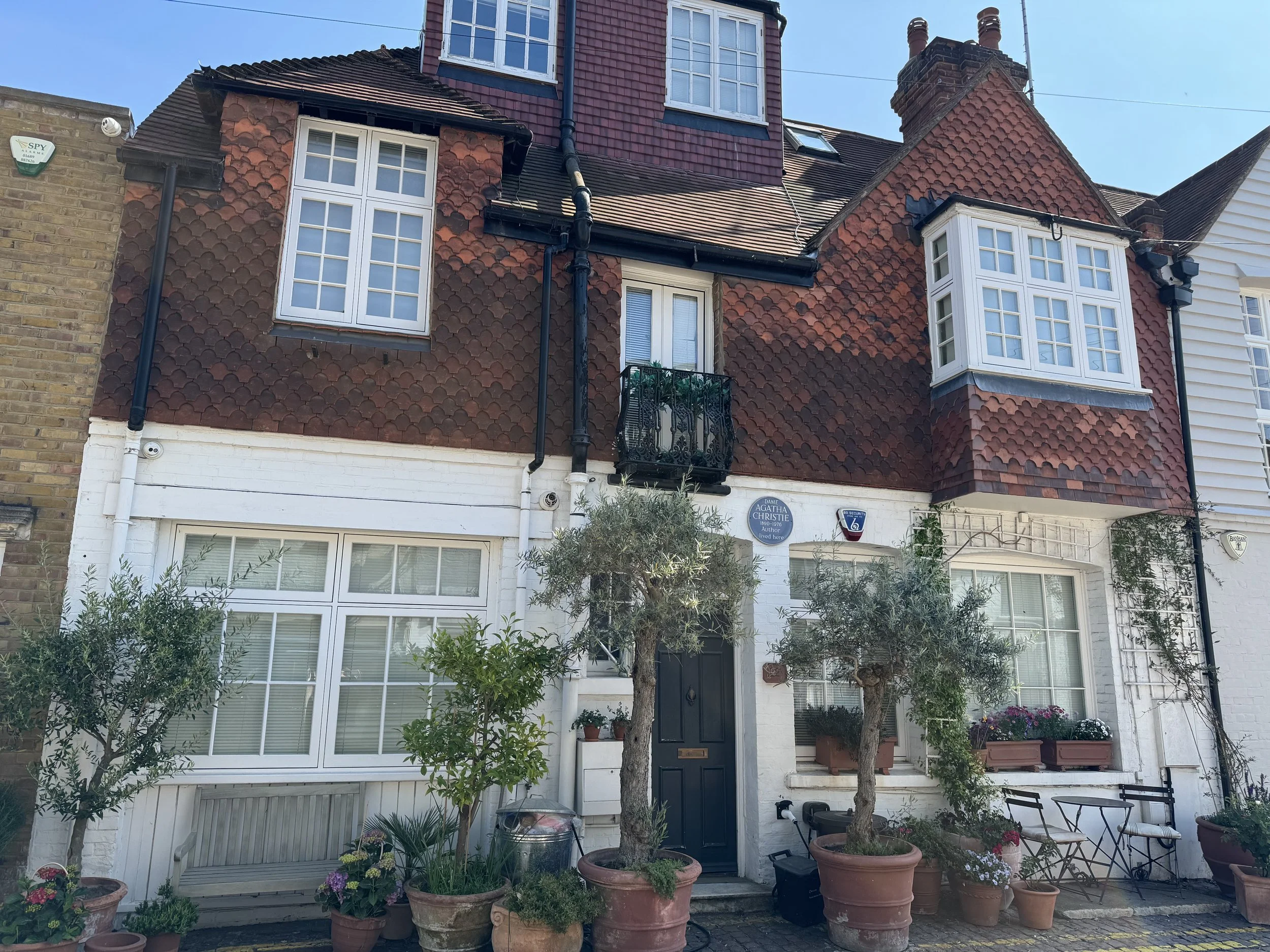
We visited some of the homes where Christie lived in London, including a flat in Chelsea referred to as Cresswell Place. Here she wrote Murder in the Mews (1937), a collection of four novellas featuring her famed detective Hercule Poirot. For those who don’t know, and that was me until I did a bit of research, a mews is an 18th century stable that’s been converted into an adorable little apartment. Usually two stories, the stables would house horses on the ground floor with staff on the upper. Once converted into residences, these homes are quite charming, quite desirable, and can be quite pricey. Christie had a cozy little office at the top of the flat where she did all her writing and like all the locations where Christie lived in London there’s a plaque beside the front door that tells everyone Agatha Christie once lived there.
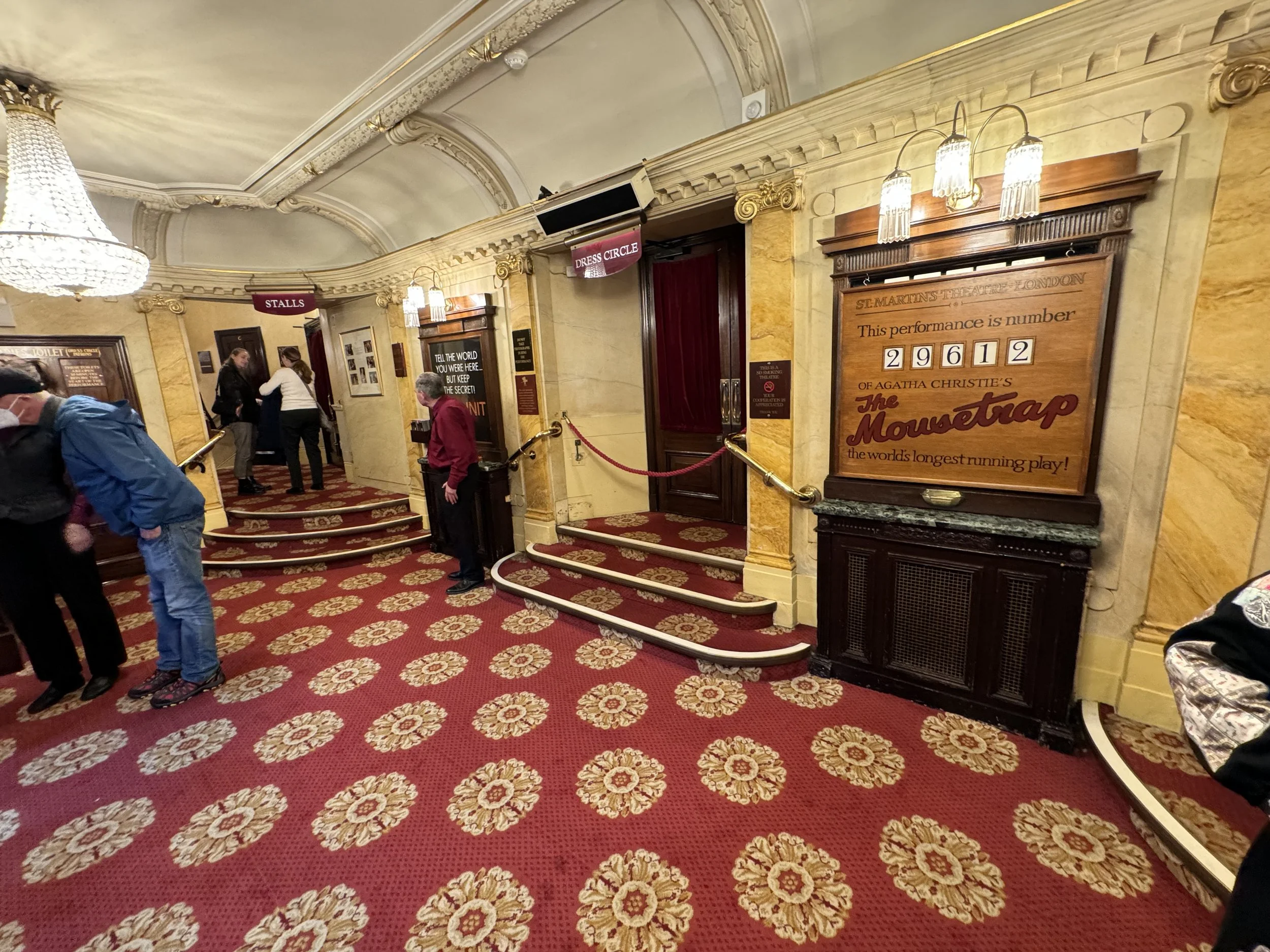
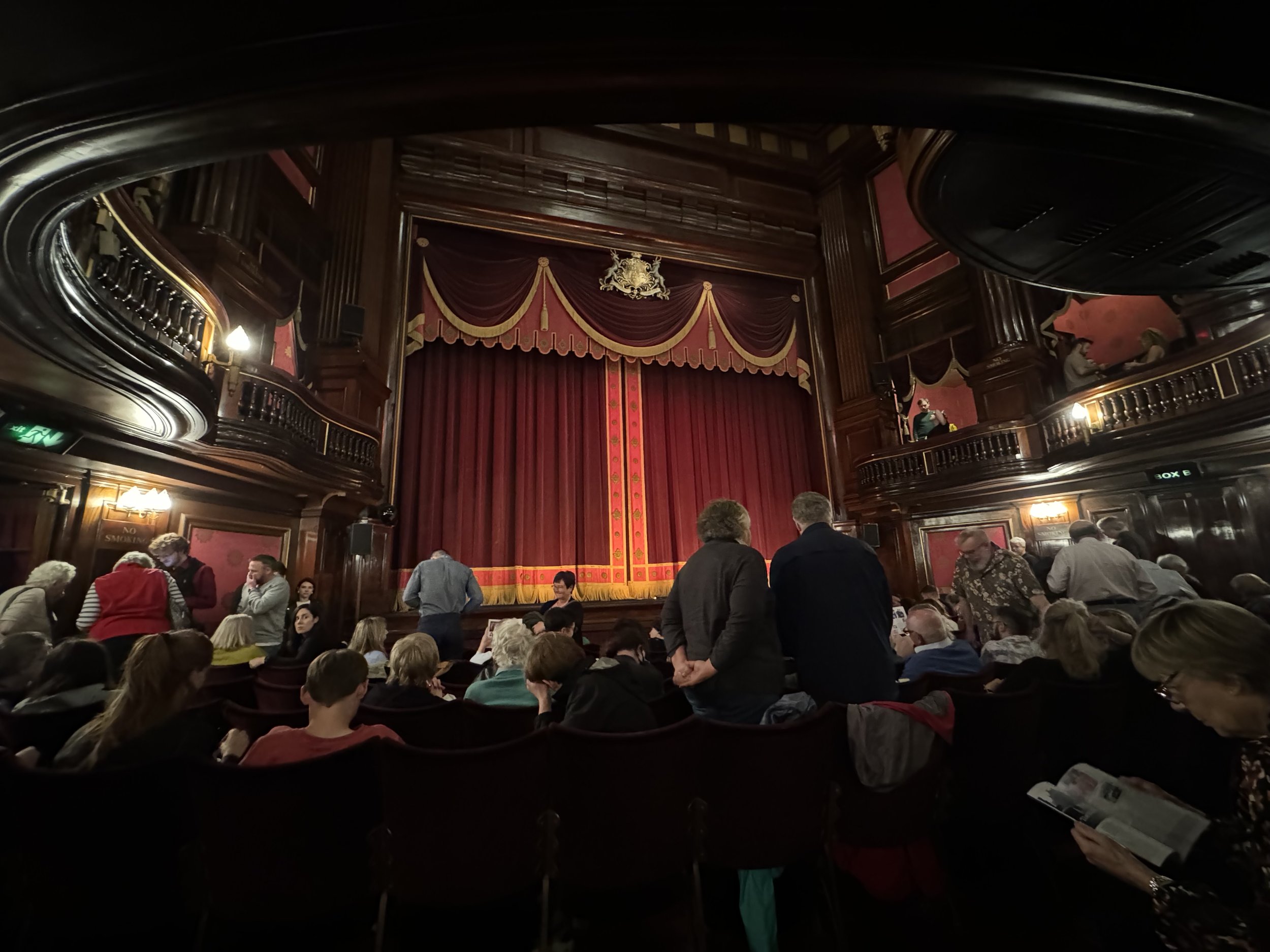
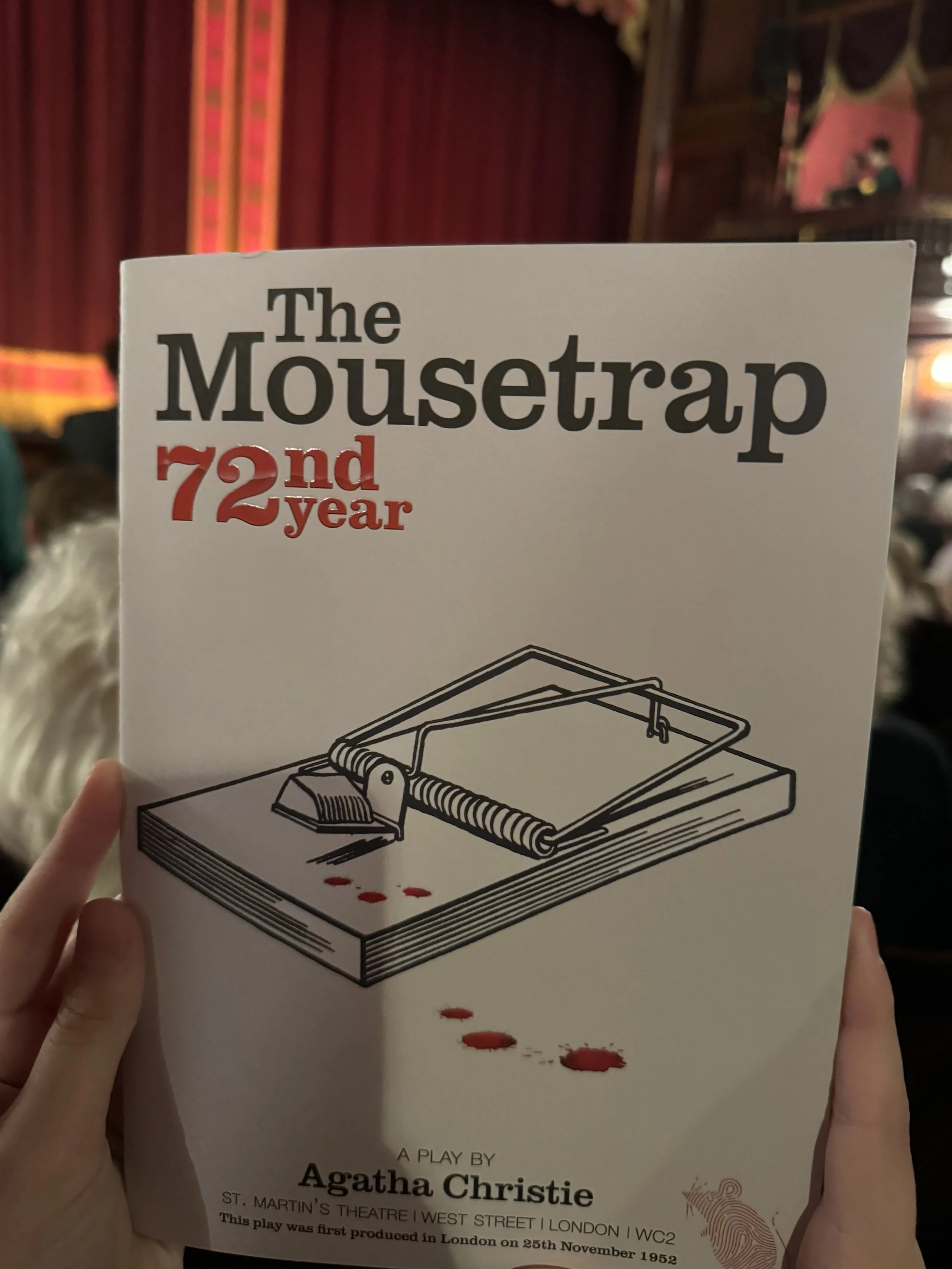
One of my most memorable moments in London was our night out in the West End where we took in Agatha Christie’s play The Mousetrap at St. Martin’s Theater. Begun in 1952, it’s London’s longest running play, only taking a brief break in 2020 due to Covid. It was in its 72nd year when we saw it. A two-act play, The Mousetrap is a classic whodunit, with the same set that was used when it first began. And what a twist at the ending! But you’ll have to see if you want to know it! The audience is reminded to keep it a secret. I still get goosebumps thinking about that night.
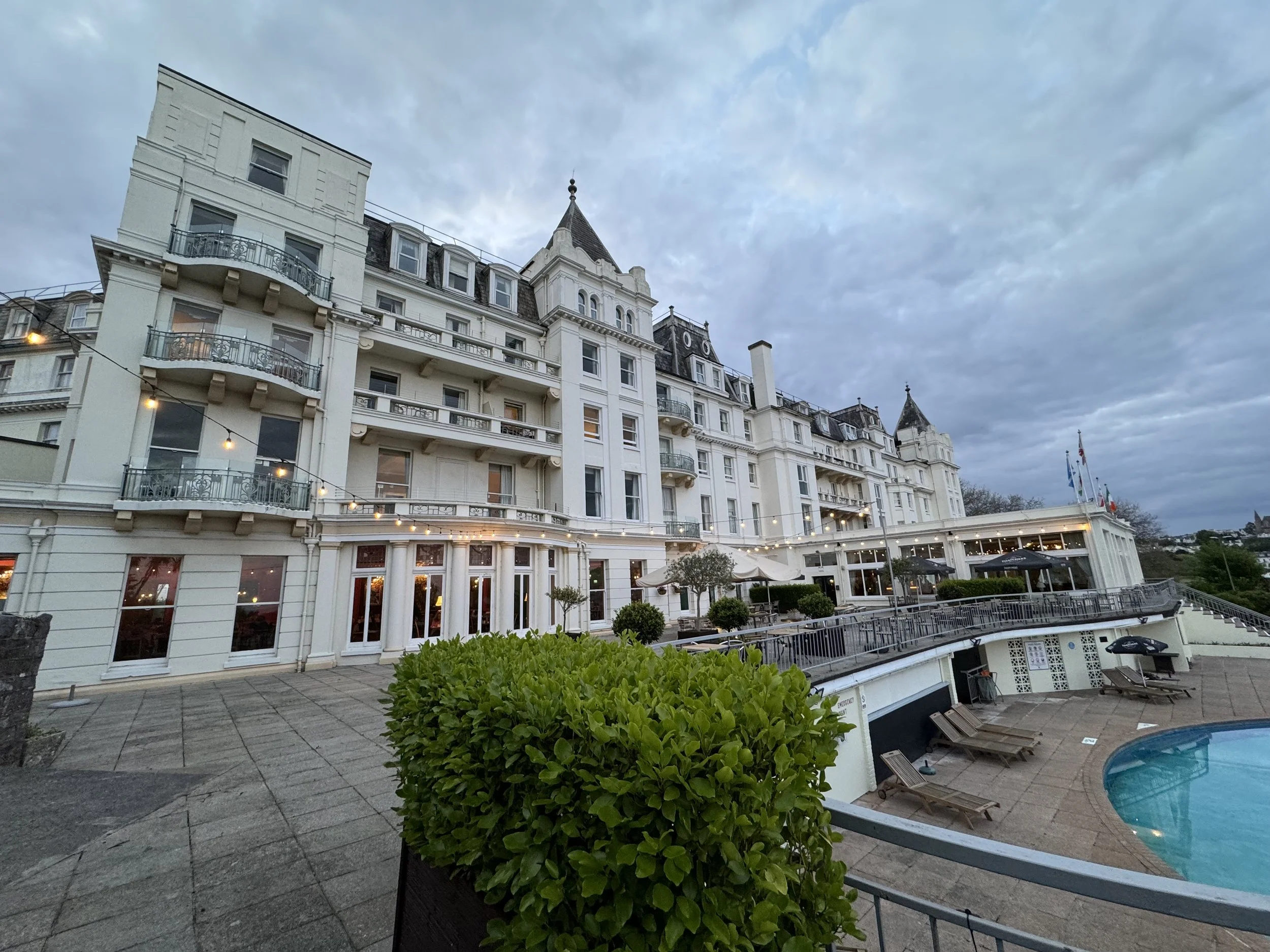
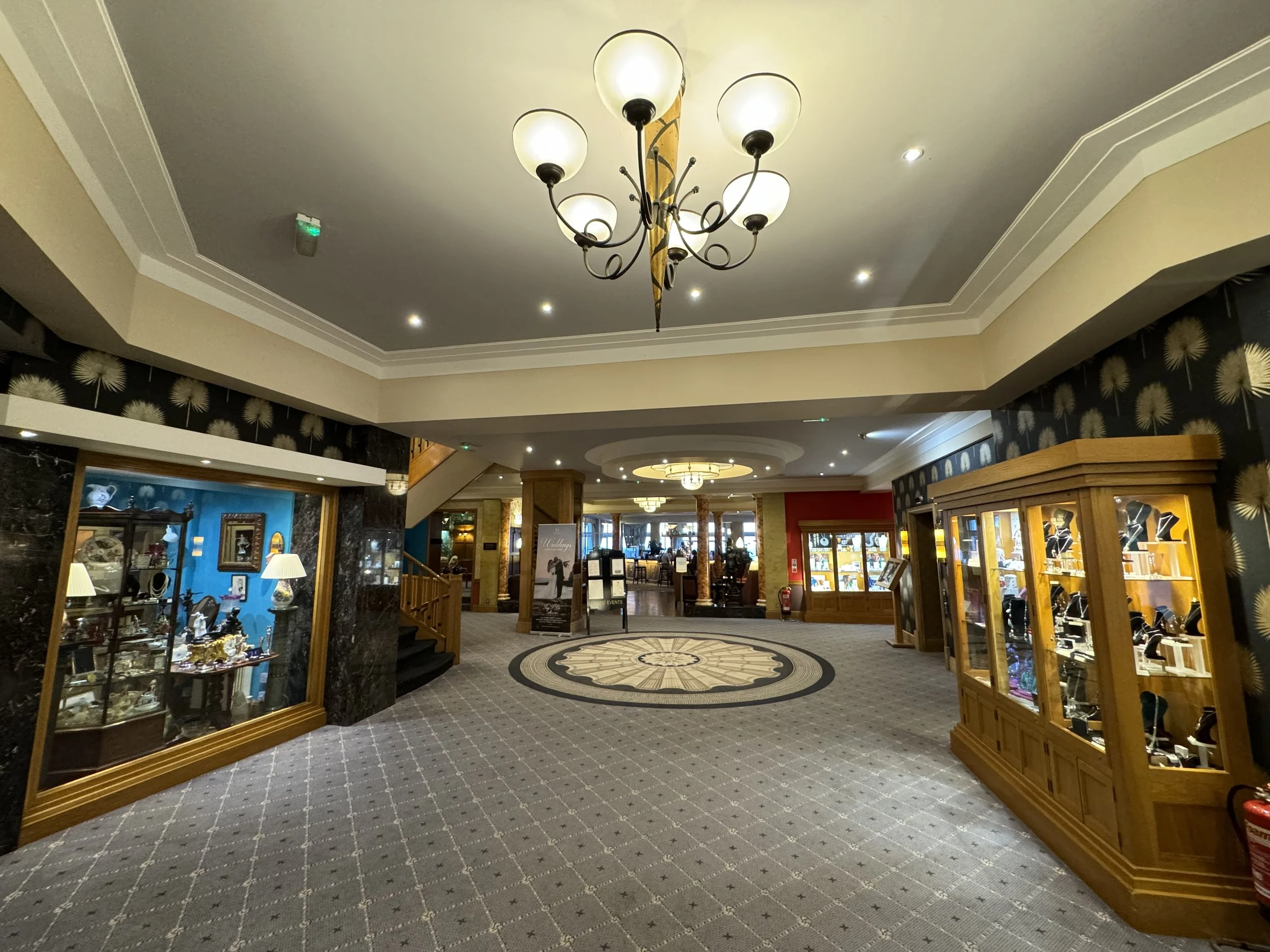
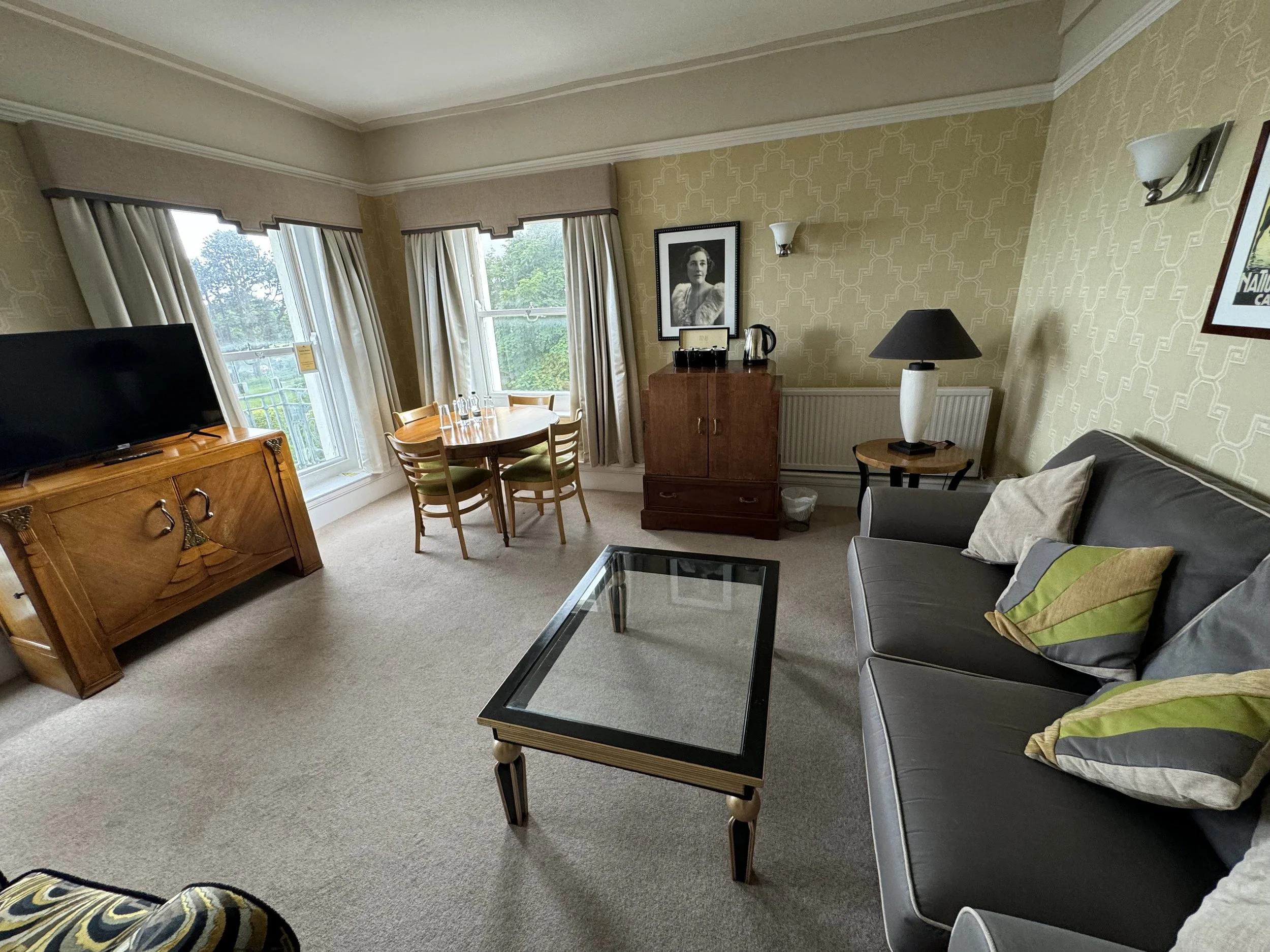
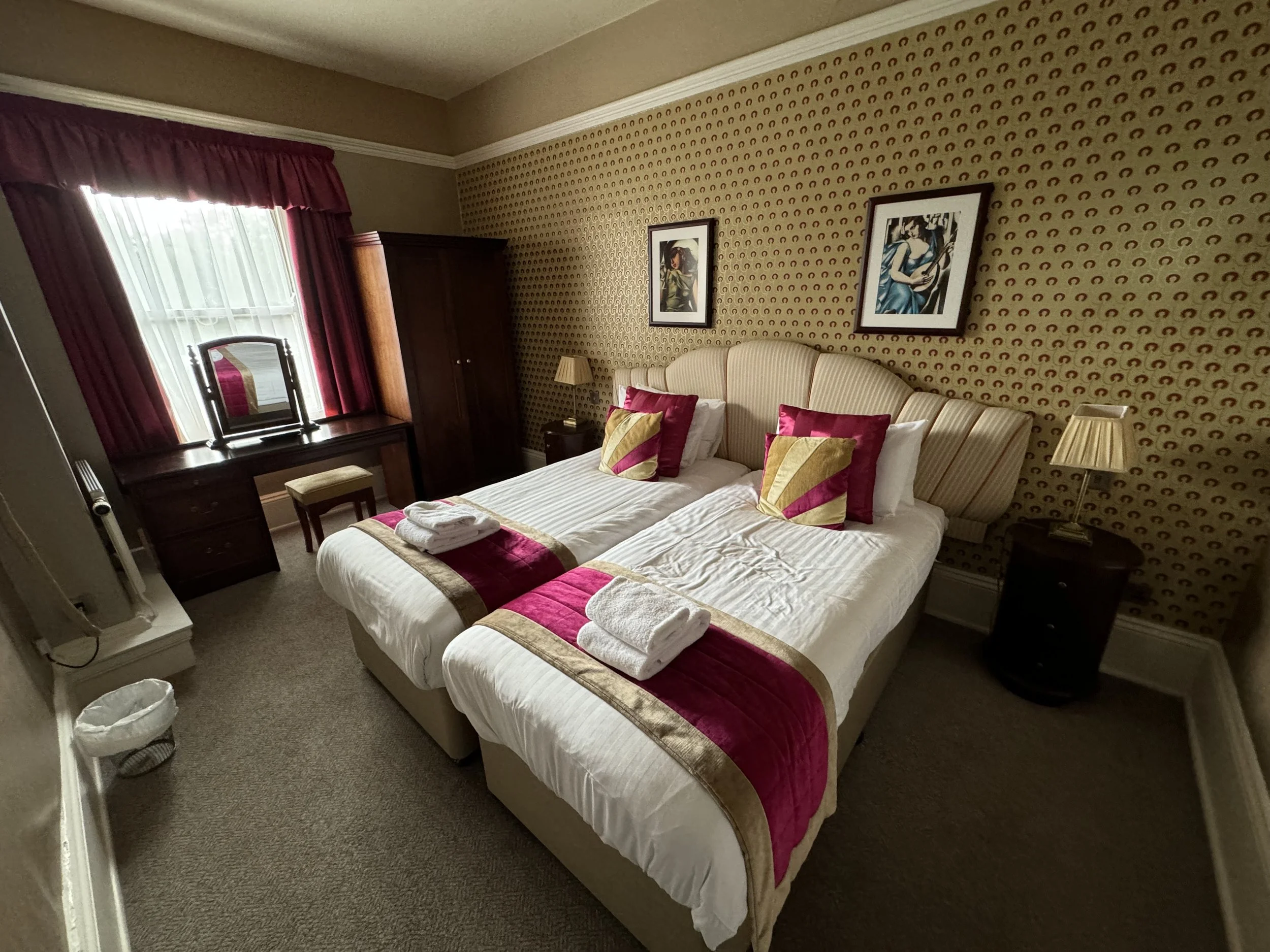
But I suppose it was our two-day trip away from London that had the most impact on me. On the back end of our trip we drove (on the wrong side of the road, I might add) from London to Torquay, Devon, on the coast of southwest England. Affectionally referred to as “the English Riveria,” this absolutely charming little seaside town is also the home of The Grand Hotel where Agatha and her first husband Archie spent their honeymoon on December 24, 1914. Of course we had to stay there that night, and in the Agatha Christie Suite no less!
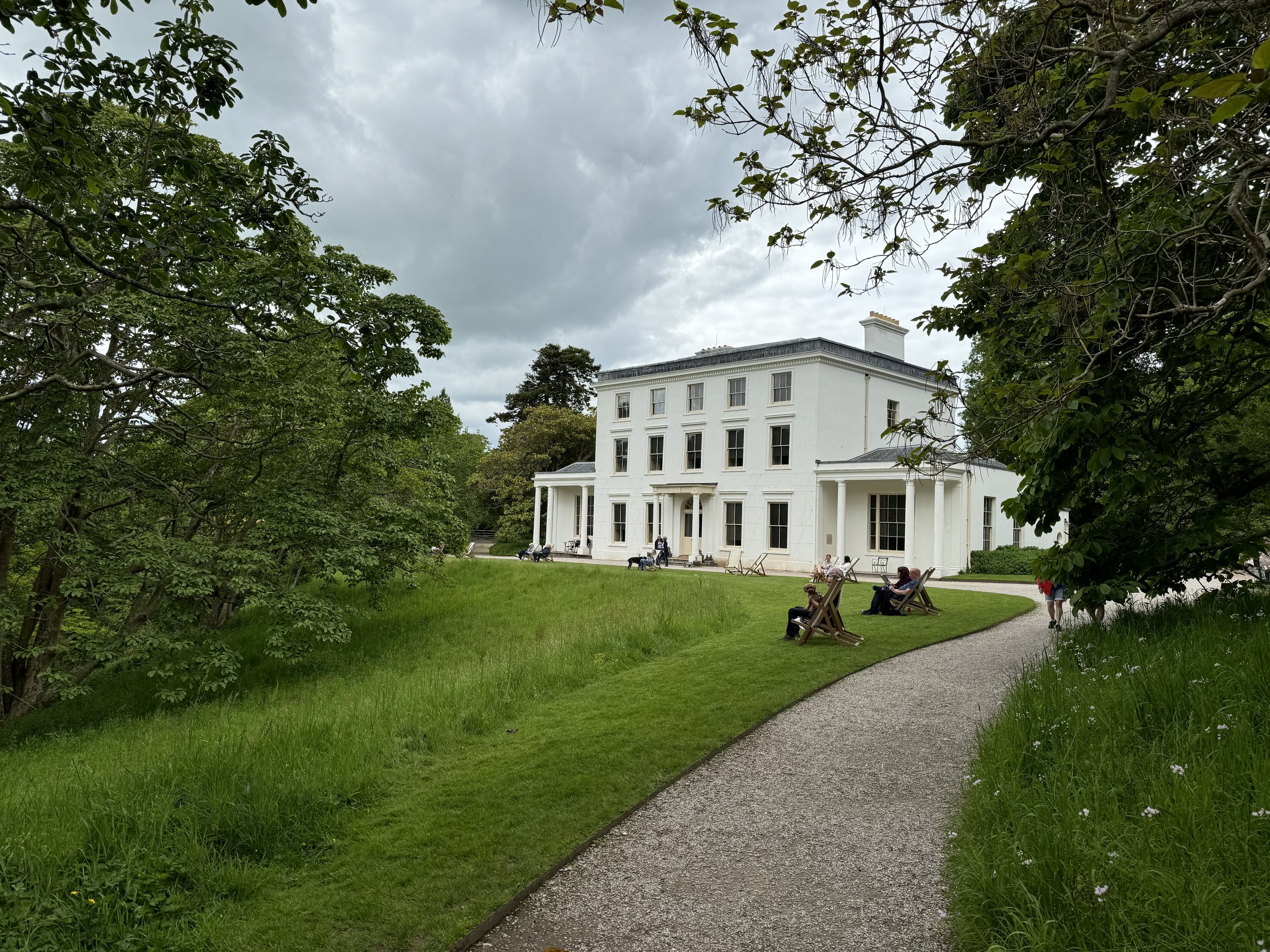
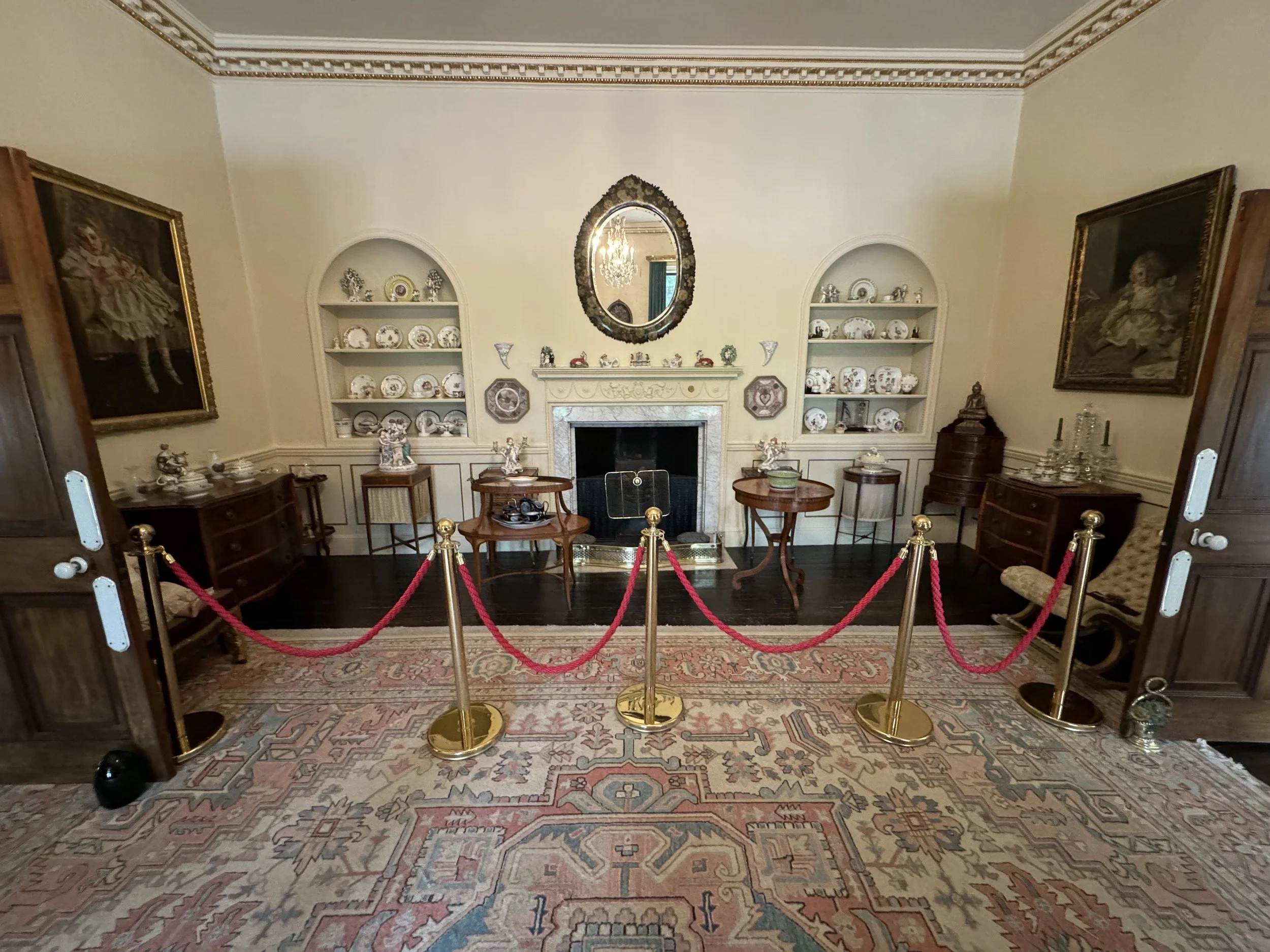
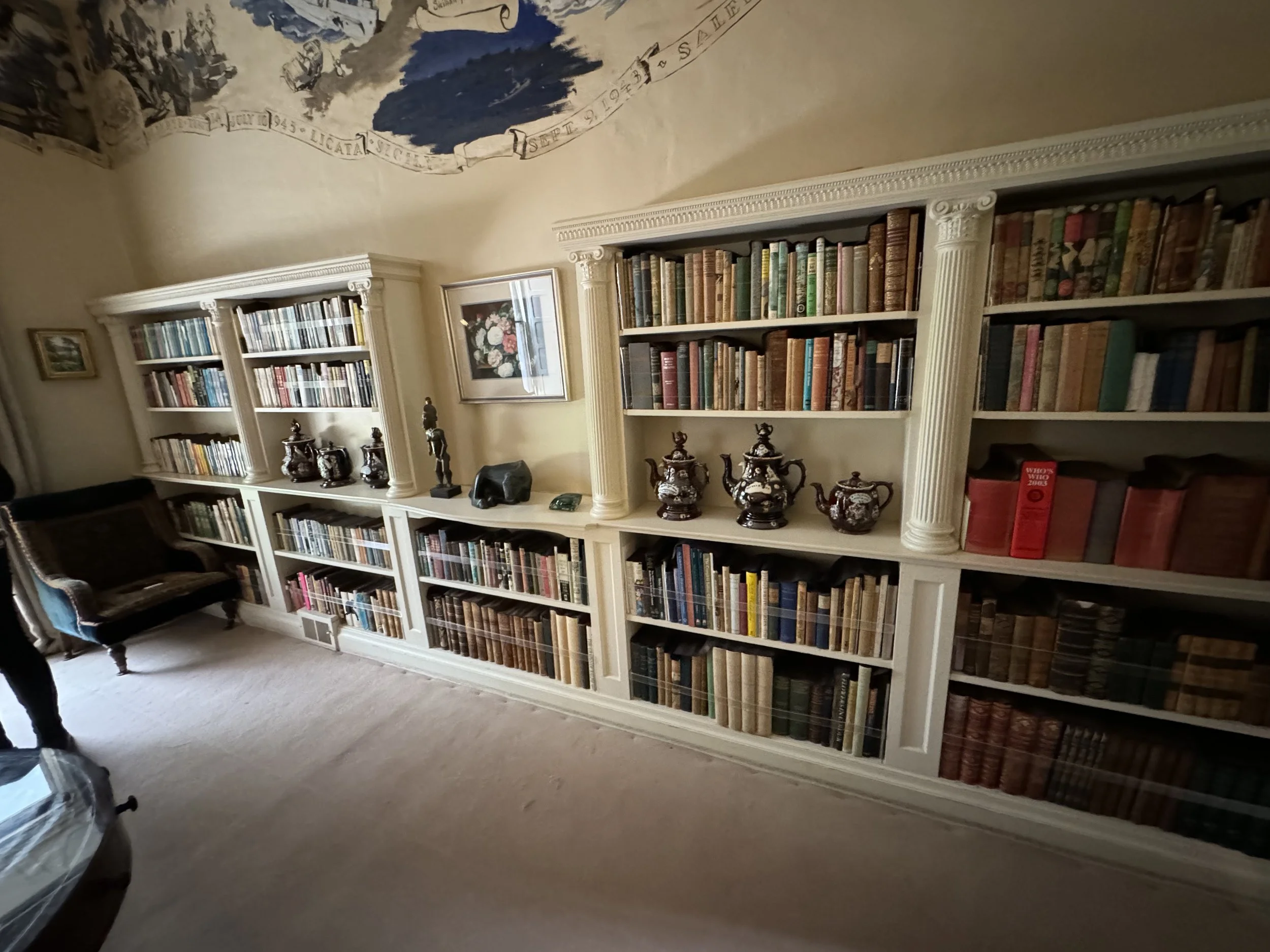
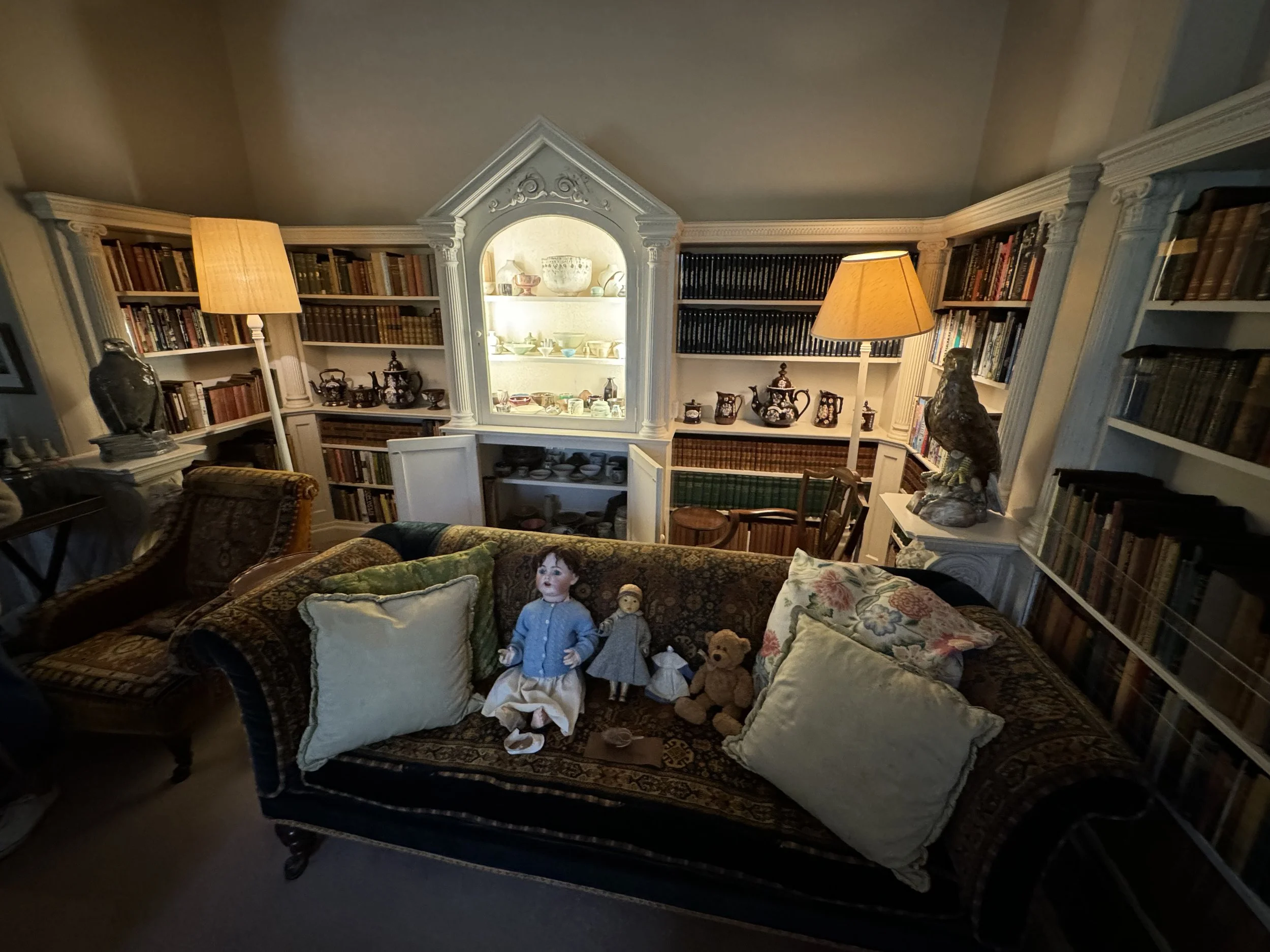
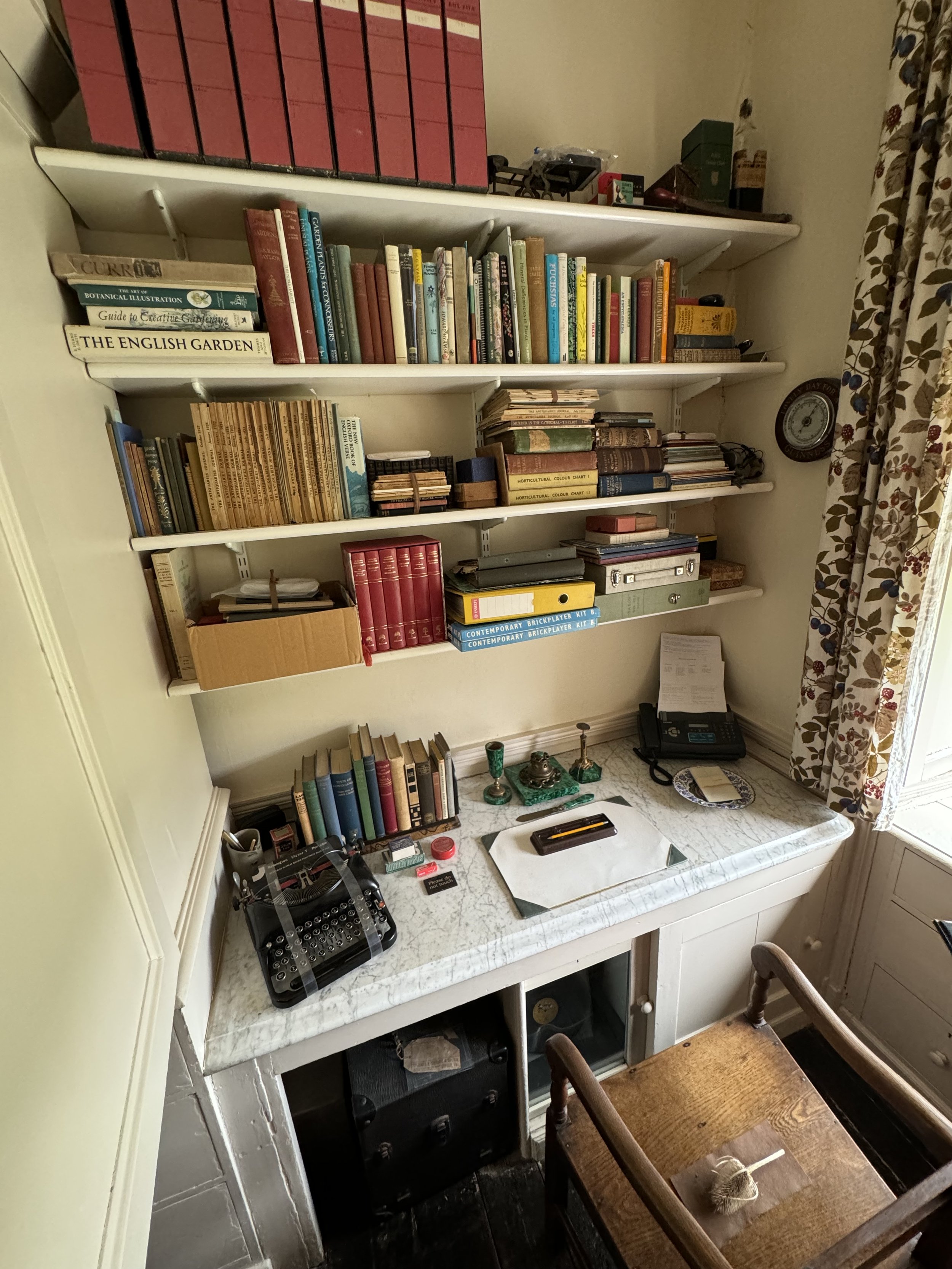
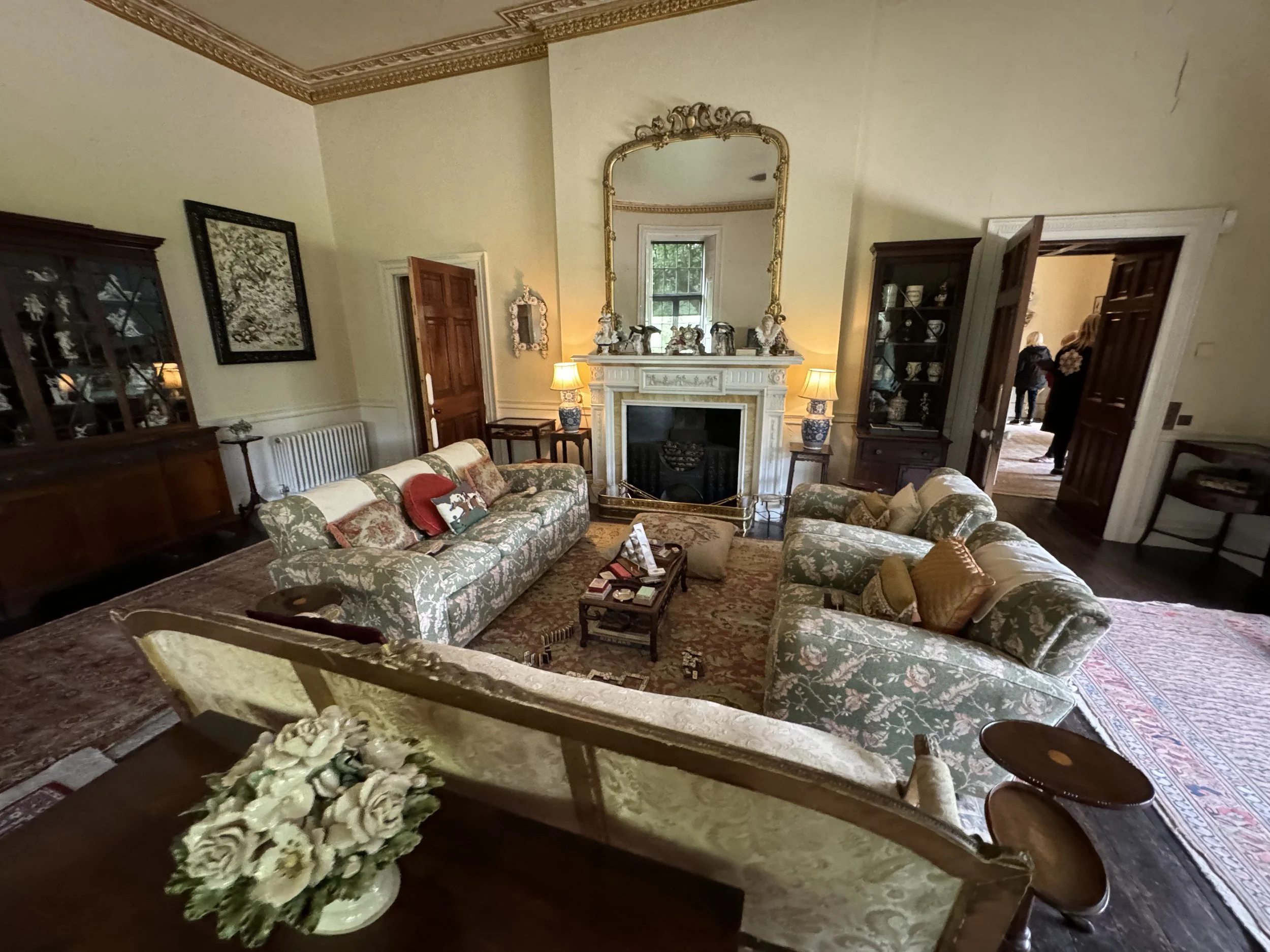
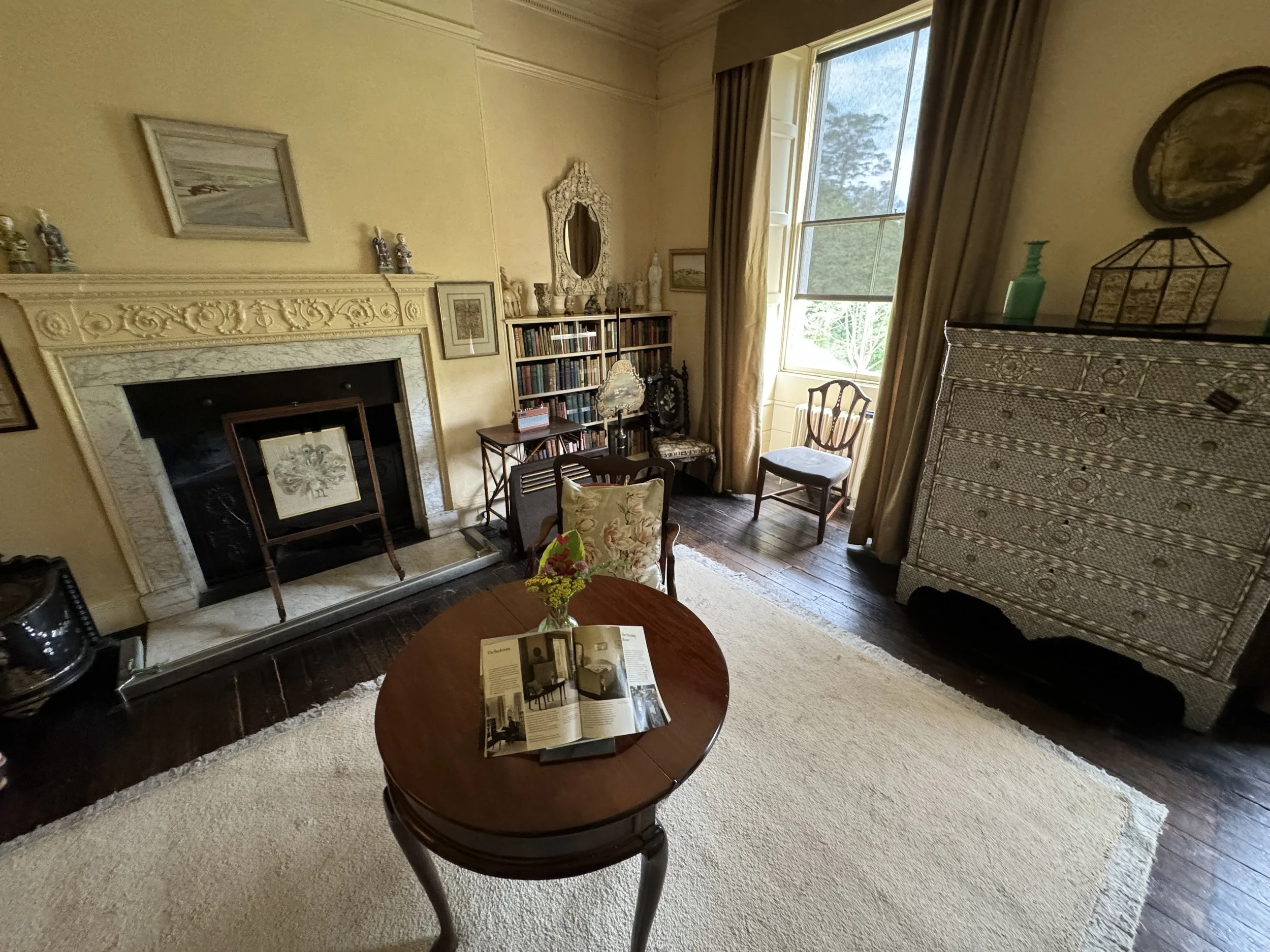
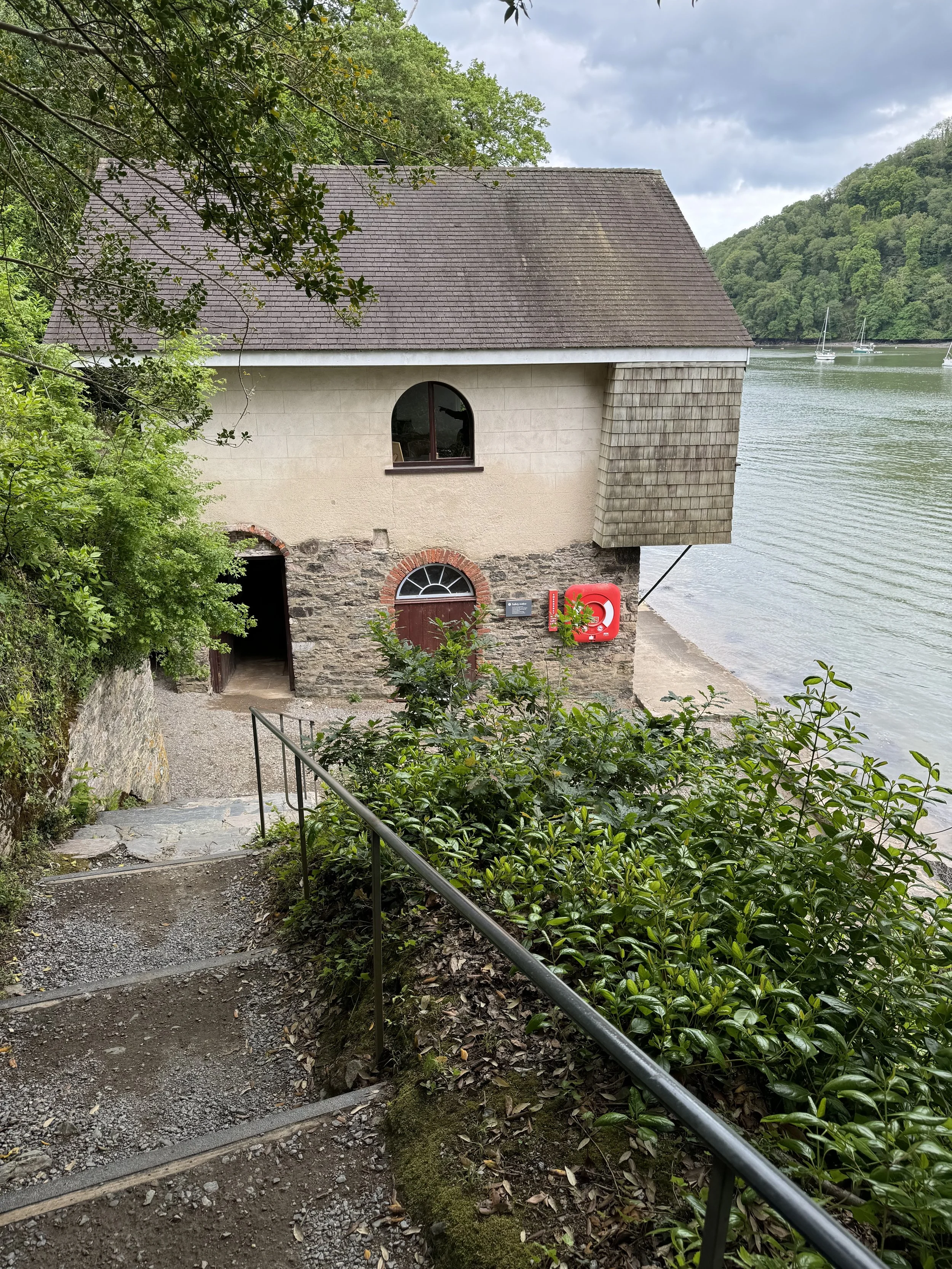
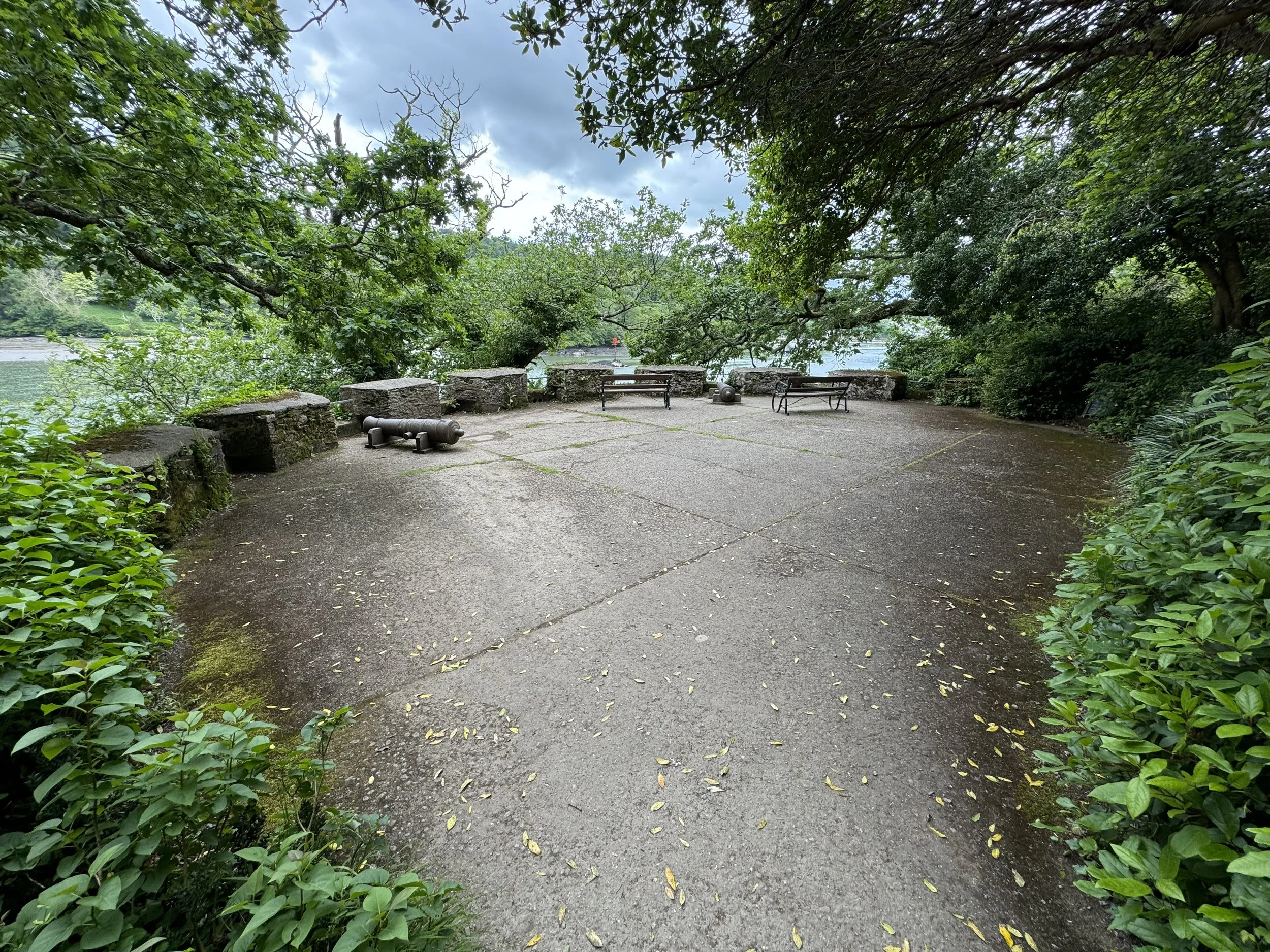
But it was our short drive to her nearby vacation home Greenway that made the most indelible impression on me. Built in the late 1700s, Agatha Christie bought the Georgian-style two-story estate in1938, the same year she published Hercule Poirot’s Christmas. It became her summer home and where she and her extended family would gather for Christmas and other holidays. We wandered casually and thoughtfully throughout her home, up and down the stairs, in and out of every room, taking in her books, her furniture, and other possessions, and her many collections. She was an avid collector of just about everything! I marveled at the old black typewriter on the desk upstairs and imagined the click clack of the keys as she pounded out one best-selling mystery after another every year. Back outside on the lawn, I wandered down the sloping gravel path through a woodland, past the most beautiful landscaping, about a half mile to the boathouse on the River Dart. Then I wound my way back up a different path to The Battery, a flat, stone overlook outlined with a low-lying wall and two small cannons. Here Christie and her second husband Max Mallowan, the famed archeologist, would sit for hours enjoying boaters on the river. Christie called Greenway “the loveliest place in the world” and used her home as the setting for two of her novels, Five Little Pigs, the most literary of all her works, and Dead Man’s Folly.
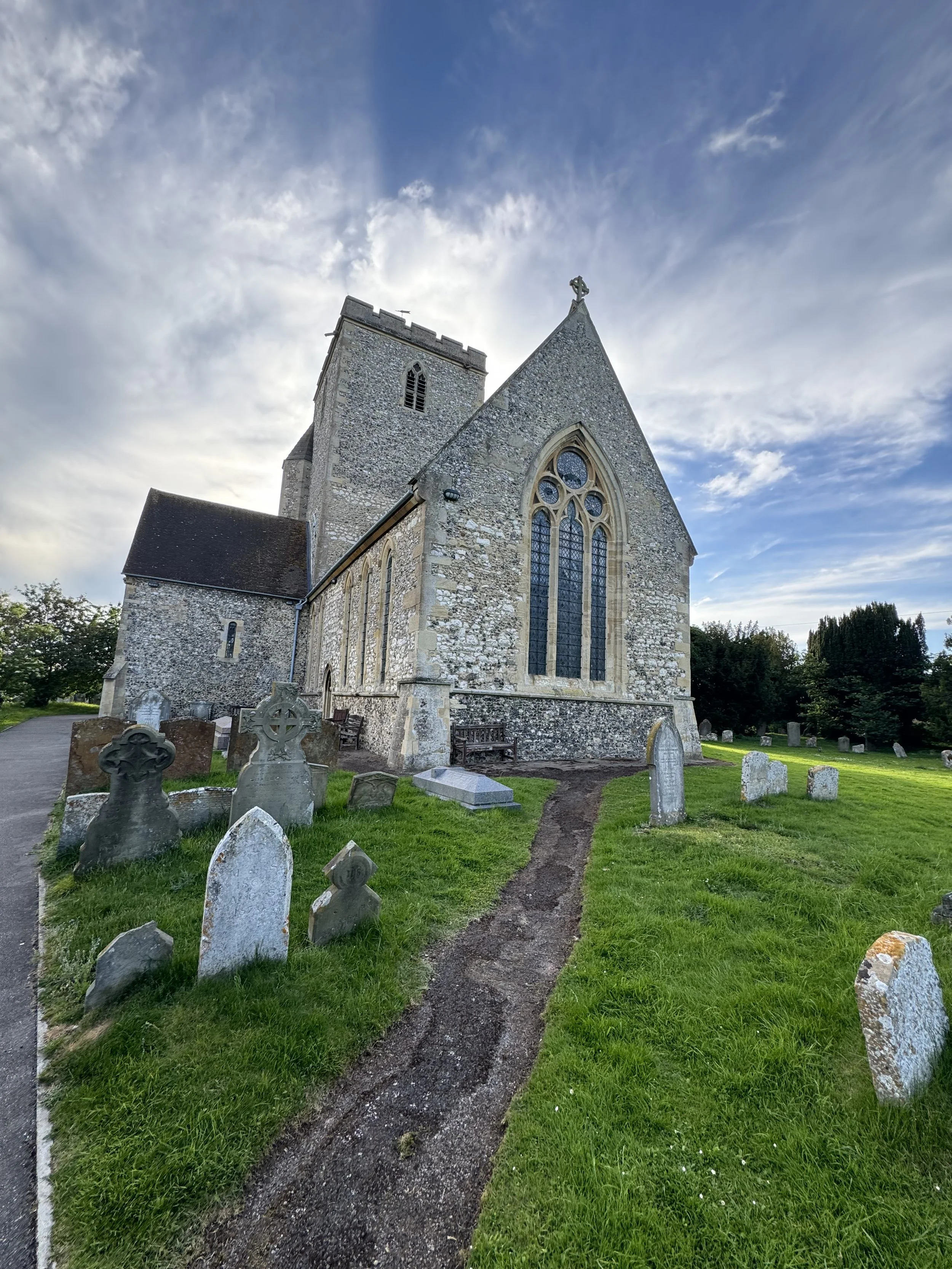
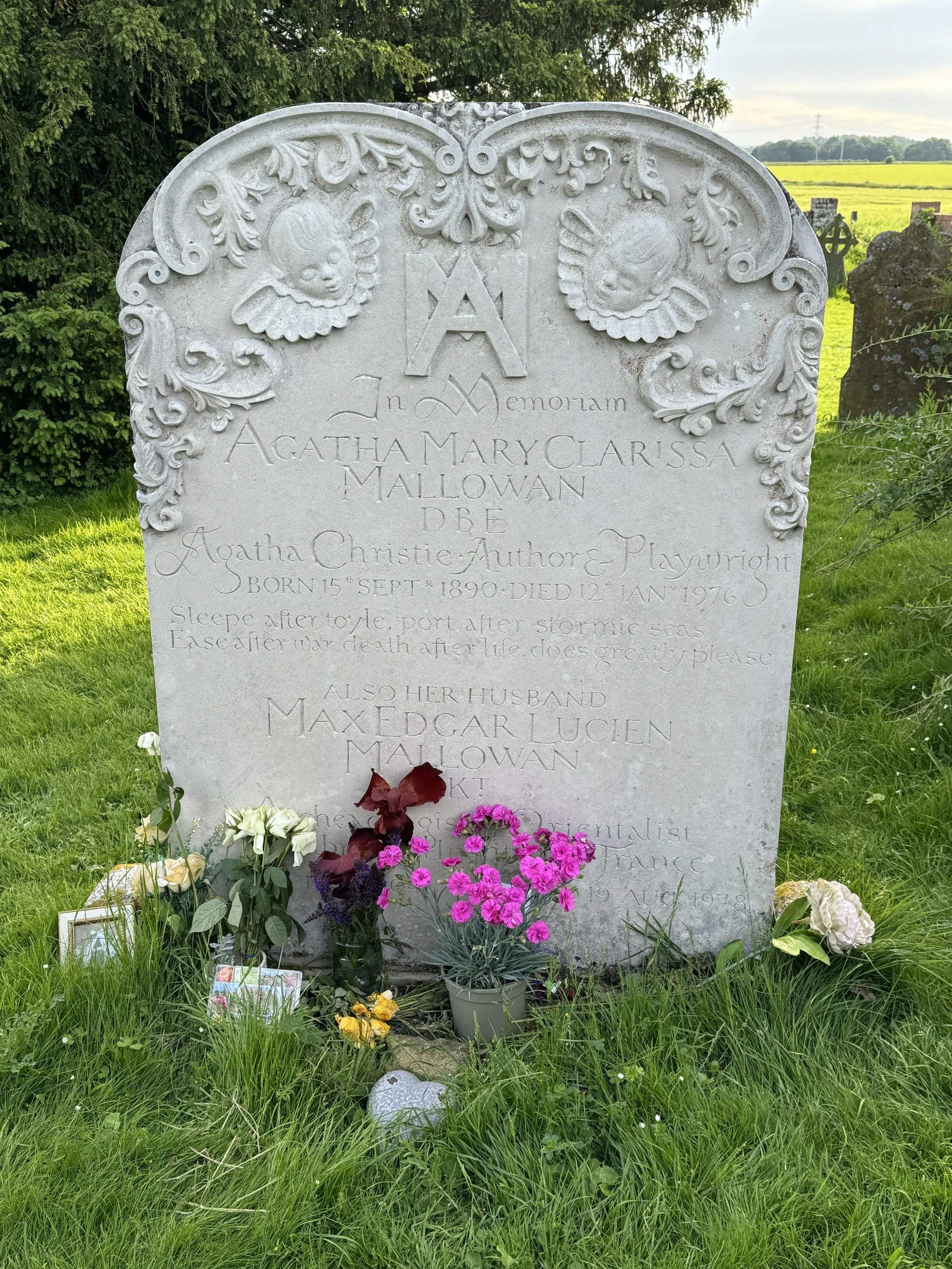
The next day, on our way back to London, we made a stop at Stonehenge (another bucket list item checked off) and then to St. Mary’s Church in Cholsey, Oxfordshire. Here the Queen of Crime and her beloved husband Max are buried in the northwest corner of the churchyard. St. Mary’s is the church she attended most every Sunday, a quaint rock structure with stained glass and steeple. I stood before her grave and thanked her for the impression she’d made on me, my reading life, and now my writing life. I read my first Christie mystery in 8th grade and to this day she continues to be my all-time favorite author. She was a prolific writer, churning out about a novel a year. And during the war she sometimes wrote two in a year.
So, yes, it was in many ways a very spiritual experience for me to visit Agatha Christie’s England, her London, her Devon, her Greenway, her St. Mary’s church. I had walked where she’d walked, saw what she’d seen, heard what she’d heard, been where she’d been. I had finally found her. The only question that remains is can I write the way she wrote? Can I touch readers the way she did for decades?
By the way, not that it matters to anyone else but me, but I kind of like to remember that the great Agatha Christie died on my birthday, January 12, 1976, the same day my parents gave me my first two Hardy Boys detective books. I think that’s kind of cool. I was 10. She was 85.
I was reminded of this pilgrimage last week when I received a brand-new book from Tina Hodgkinson, Agatha Christie’s London. I highly recommend it. It made me miss London and Greenway.
What writer has had a most profound impact on your life? Have you met him/her, or been able to visit the place where they lived and wrote? Shoot me an email and let me know. I’d love to hear from you!