“It was not until several weeks after he had decided to murder his wife that Dr. Bickleigh took any active steps in the matter.”
And there you have it.
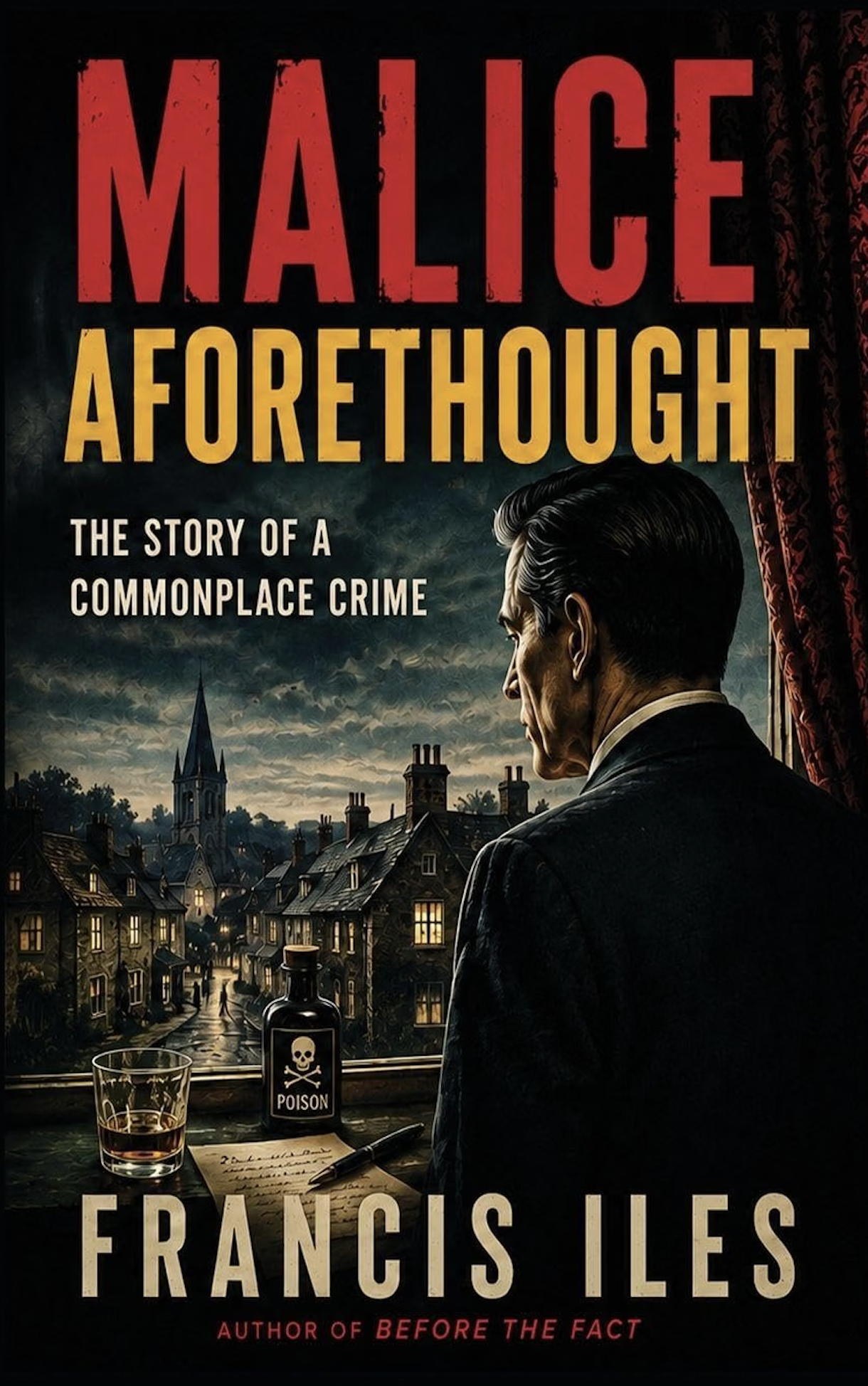
In the very first sentence of one of the most celebrated Golden Age of Murder mysteries, Malice Aforethought (1931), author Francis Iles (a.k.a. Anthony Berkley) reveals both victim and murderer. The mystery is solved. The killer is revealed. Justice can now be served.
Hold on! Wait one Sherlockian second. What in the name of Scooby Doo is going on here?
Isn’t the appeal of the traditional murder mystery it’s puzzle-like nature in which the novel’s leading man or lady, professional detective or amateur sleuth, matches wits with the reader in a race against pages to see who can decipher the clues and be the first to uncover the identity of the killer?
Isn’t the thrill in reading a mystery to know that we too could’ve solved a murder on the Orient Express, or even some bloody boat out on the Nile?
Where’s the fun, the tease, the adrenaline rush in knowing who did it on the first page? Why even bother reading the story if the author is just going to straight up reveal the killer in the first line?
Scooby and Shag never knew who did it until they’d been chased by half a dozen crazy ghosts and Freddy finally ripped off the culprit’s rubber mask. (Those meddling kids!)
It’s like knowing it was Miss Scarlett in the conservatory with the candlestick before the first roll of the dice in a game of Clue (or as the British like to say, Cluedo).
Isn’t that kind of like … cheating?
Well, no, because that, my friend, is the beauty and charm of what has now become known as “the inverted mystery,” a story that is not so much whodunit as howcatchem. This kind of narrative device is well over a hundred years old, and you might be more familiar with it than you realize.
First used by R. Austin Freeman in 1912 in the short story “The Case of Oscar Brodski,” the inverted mystery relies on several key characteristics:
The early reveal, often within the first few scenes of the novel, play, or movie, if not the first line.
A cat-and-mouse tension in which a seemingly less than adept policeman or amateur sleuth satisfactorily toys with the suspect as he follows the breadcrumbs of clues the reader was previously given but has probably forgotten.
A focus on the psychological as the narcissistic killer, step by step, is ensnared in a web of his own lies and folly.
Instead of focusing on revealing who killed Mr. Body, in which room, and with what weapon, the reader is led on a psychological maze to show how the killer will be caught and how the detective will prove it. It’s not about the culprit. It’s about the chase. It’s murder mystery upside down.
Freeman’s reasoning behind his development of the inverted mystery has been quoted often:
Some years ago, I devised, as an experiment, an inverted detective story in two parts. The first part was a minute and detailed description of a crime, setting forth the antecedents, motives, and all attendant circumstances. The reader had seen the crime committed, knew all about the criminal, and was in possession of all the facts. It would have seemed that there was nothing left to tell. But I calculated that the reader would be so occupied with the crime that he would overlook the evidence. And so, it turned out. The second part, which described the investigation of the crime, had to most readers the effect of new matter.
Get the reader so caught up in the story, even show him the murderer at the beginning, and he’ll overlook the clues the detective will later use to catch him. That’s not too unlike the traditional mystery, or a standard magic trick. Same goal. Like the illusionist who tells the audience exactly what object he’s going to disappear and does it even when they’re suspecting it, the inverted mystery writer says, “here’s the killer,” and then distracts the reader with a set of facts in one hand, hiding the clues with the other.
Francis Iles seems to have been paying strict attention to Freeman’s anatomy of the inverted mystery. Malice Aforethought is doled out in two parts. In the first we are given a fascinating step-by-step exposition of how Dr. Bickleigh comes to regard Mrs. Bickleigh (most unworthy to live!), his solution to the unhappiness she brings him (what a clever scheme!), and the very act of his dastardly deed (what a beastly man!). In part two we meet the detective who will unravel every carefully laid out, premeditated act of the not-so-good doctor.
Want another example? Plenty more where those came from!
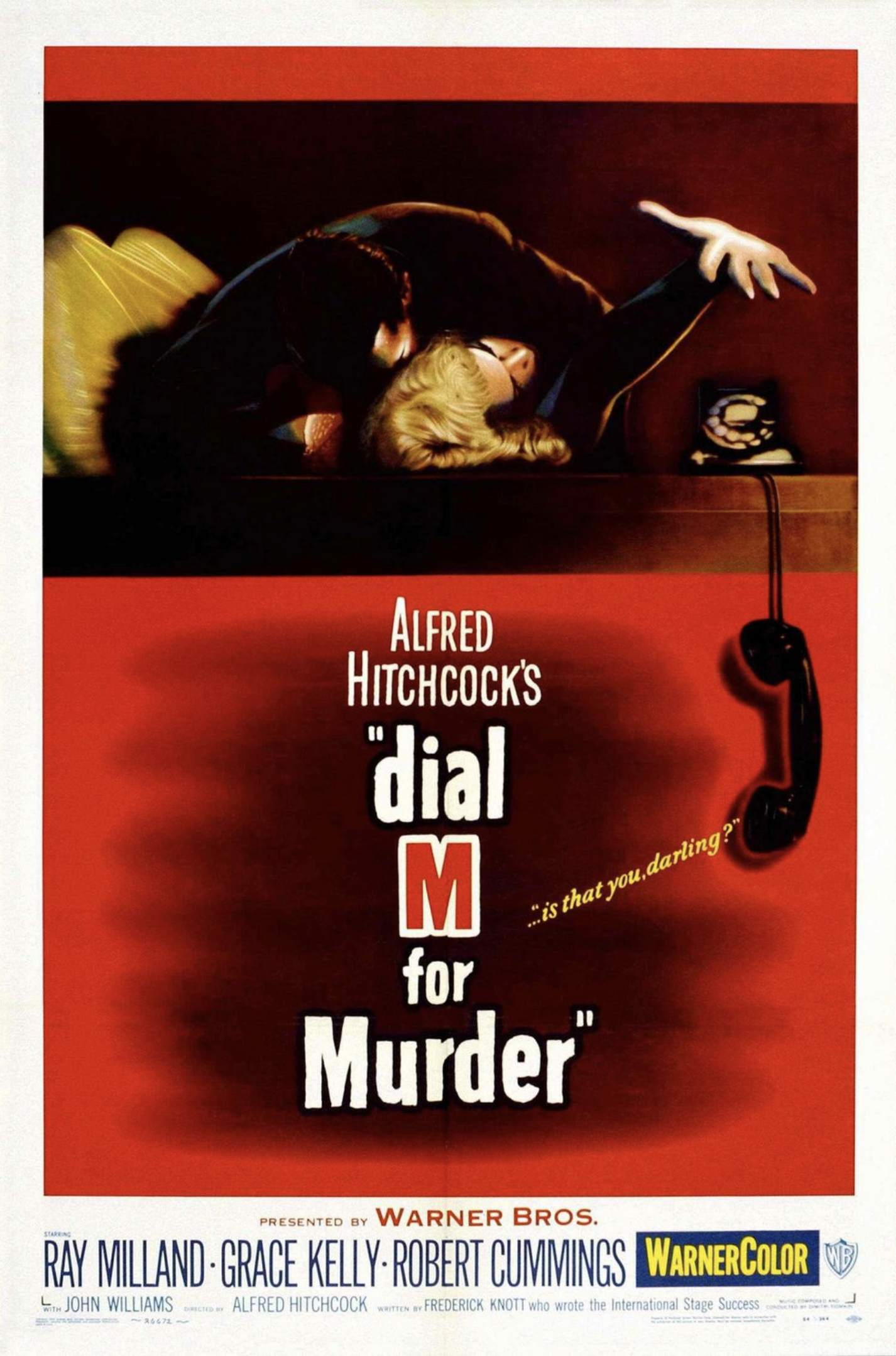
How about Alfred Hitchcock’s Dial M For Murder? Originally a successful West End London stage play by Frederick Knott, Hitchcock brought it to the big screen in 1954. Early on we discover that the main protagonist Tony Wendice wants to do away with his wife (what’s up with all these sneaky husbands wanting to off their wives?) and from the first scene has plan in hand to do just that. I won’t go into all the details and spoil it for you. I mean, you already know who the killer is, but what you don’t know is how he gets caught and therein lies the suspense. You really ought to watch it for yourself. It’s quite satisfying.
There’s also Patricia Highsmith’s Strangers on a Train, the reclusive author’s first best-seller before she stumbled upon the success of The Talented Mr. Ripley (whom many say is also an inverted story). It’s another classic example of the inverted mystery, so good that it too was brought to cinematic life by Hitchcock. Here we have two men who meet on a train quite by accident (or do they?) and agree to murder each other’s wives (here we go again!) to decrease their likelihood of getting caught. Read the book, then watch the movie. Really good stuff and, like Dial M For Murder, Strangers on a Train has all the elements of the classic howcatchem: the early reveal, the cat-and-mouse tension between killer and detective, and the psychological suspense.
By the way, the Queen of Crime never wrote an inverted mystery. It just wasn’t her cup of English tea. Agatha Christie was content with writing the traditional whodunit. To each their own, right?
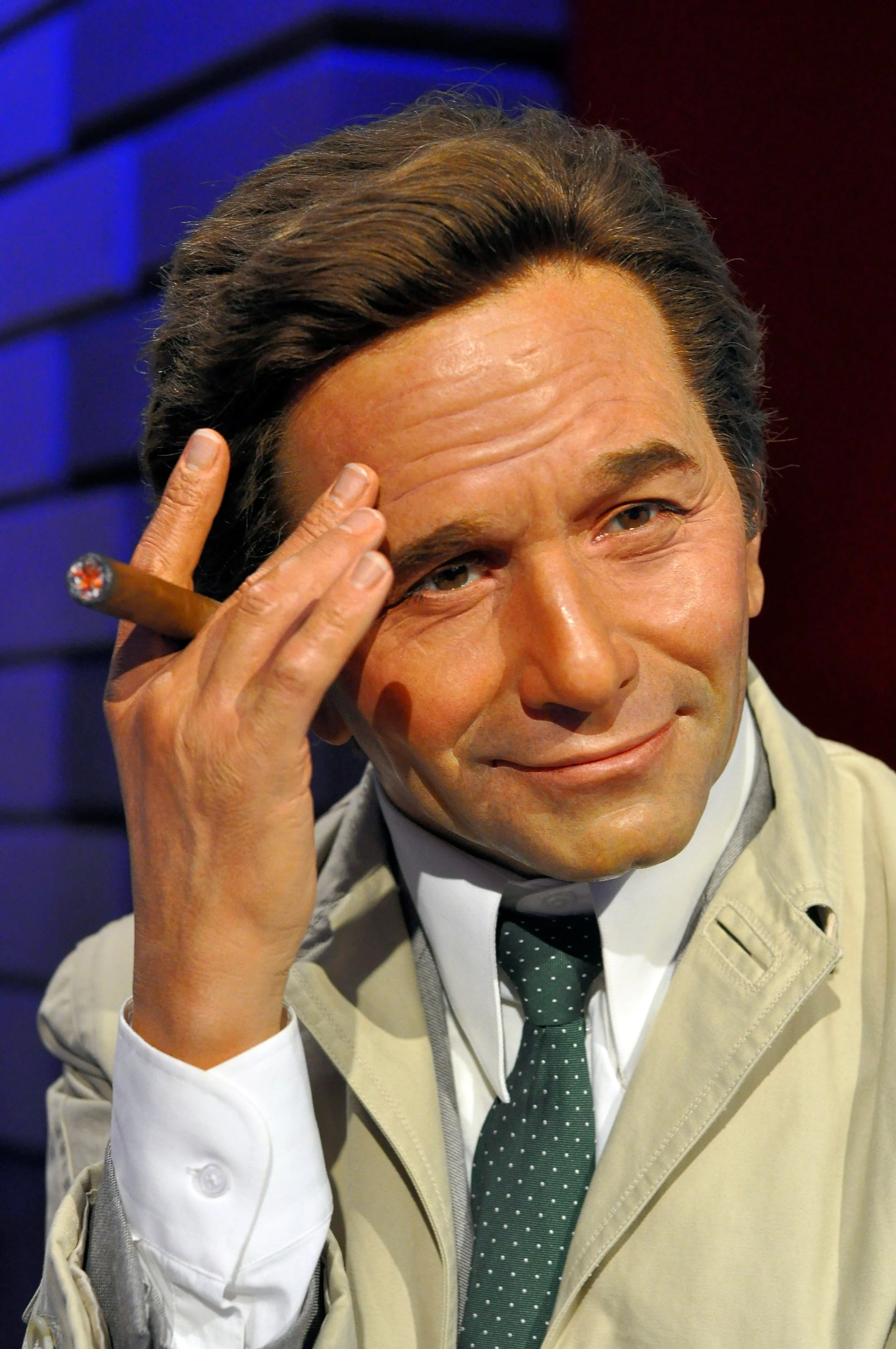
My all-time favorite televised example of the inverted mystery is most definitely the made for TV movie series Columbo. Total genius, it was. Starring the incomparable Peter Falk, Columbo was an NBC Sunday night television staple throughout much of the 1970s. Every episode opened with one of that decade’s most celebrated movie or television actors (Leonard Nemoy from Star Trek, Patrick McGoohan from the original Planet of the Apes, Robert Culp from the 60s hit I Spy, Jack Cassidy from The Patridge Family, William Shatner also from Star Trek, just to name a few) playing the part of the evil villain successfully killing off a rival. We viewers spend the entire first scene watching the killer lure his unsuspecting victim to his or her death, only to have the scruffy, bumbling, raincoat wearing, cigar smoking Detective Columbo pull up in his battered, grey 1959 Peugeot 403 Cabriolet and begin his investigation of the crime scene. In no time at all he is on the trail of the murderer, sometimes pulling the criminal alongside as an unwitting aide to the investigation, and without fail making a terribly nuisance of himself with his persistent and annoying unsolicited presence and his “Oh, just one more thing” exasperating questions. Columbo never failed to catch his man, or woman, and it was a delight to see how he did. An inverted howcatchem mystery in its purest form.
Oh, here’s a tidy little tidbit for ya: that very first episode of Columbo, “Murder by the Book” (September 15, 1971) … are you ready for this? … was written by Stephen Boccho (Hill Street Blues, LA Law, NYPD Blue) and directed by a 24-year-old Stephen Speilburg! Cool factoid, right? Even Double S can put together a mean howcatchem.
By the way, a few years ago NBC tried to bring back the inverted mystery magic of Columbo with the series Poker Face, created by Rian Johnson of Knives Out fame. It starred Natasha Lyonne as lonely drifter Charlie Cale who had the uncanny ability to realize when people were lying. Despite its heroic attempt and a creator who is quite clearly aware of the history of mystery and has deep appreciation for the genre, the show just didn’t have the same pizazz as Columbo and lasted only a few seasons. Hey, you win some, you lose some. Nevertheless, if you’re interested in a more modern-day example of the inverted mystery, you can catch Poker Face on Peacock, Amazon Prime, and Apple TV.
Oh, and there’s Elsbeth also, a police procedural comedy drama that’s now in its fourth season. I’ve only watched one episode on Paramount, but it too is a modern-day example of the inverted mystery. Most of the time.
All of this leads to what I really wanted to share: I have a gift for you.
It’s my own little foray into the field of the inverted mystery.
Several years ago, I penned a short story for the North Dallas Sisters in Crime yearly anthology called “The Prime Witness to the Murder of Dr. Malichi Samson.” Like Freeman and Ilses and Colombo, I wanted to plot out a mystery that began with the reader immediately knowing both the murderer and the hapless victim from the get-go and end with the indomitable Detective Virgil Crumbacher catching her (yes, it’s a woman killer) in the final scene.
“You are the one,” the detective said. His voice carried none of the usual bravado that championed the powers of his intellect. Rather, this time, his words were soft and mournful. “You are the one who killed Dr. Malachi Samson.”
That was the first line of the story.
And then I had another idea. What if I did a reverse inverted mystery? A story where not only the reader knows the killer at the beginning, but so does the detective? And the whole story goes in reverse order! Not even Freeman, Ilses, or Columbo did that!
I got the idea after watching an old episode of Seinfeld that plays backwards. In the first few seconds of the show, “The Betrayal,” the closing credits roll first. Then we view the last scene in the storyline, then the second to last scene, and so forth, the entire episode scrolling backwards. And between every scene there is a reminder that the next scene was “30 minutes earlier” or “2 hours previously.” The reverse storytelling is very clever and adds to the comedy, and the show rewinds so far back in time that the very last scene is a glimpse of Jerry meeting Kramer when he first moves into his apartment.
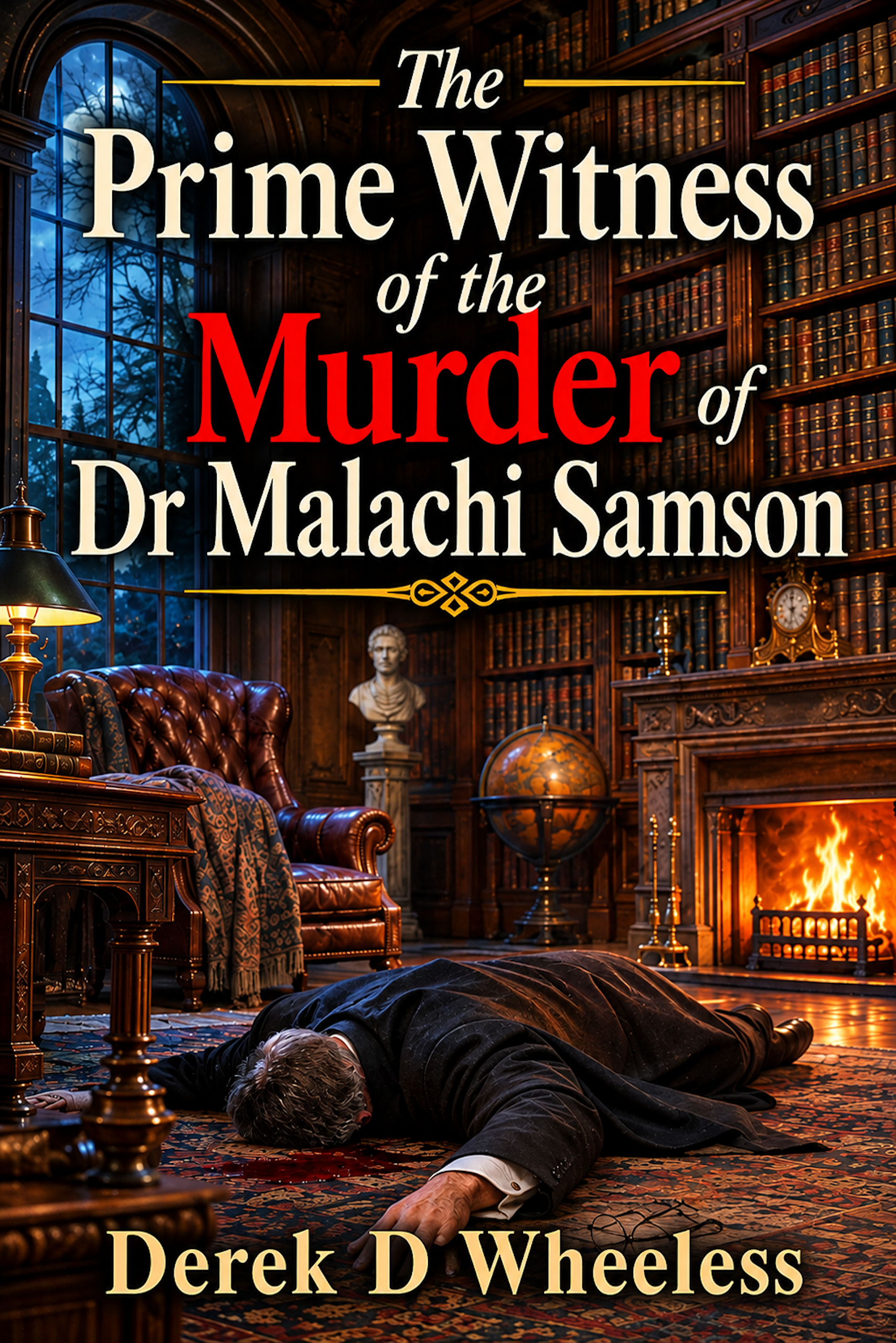
Get your FREE copy of my own inverted mystery with one click on the cover above.
So, that’s what I did. I wrote the entire story backwards. Both reader and detective know the killer from the beginning, and I unwind the story all the back to its beginning, adding in tags like “30 minutes earlier” between scenes.
What’s the twist? Well, you know the killer from the beginning. Or do you?
You’ll have to read it to find out and that’s what I wanted to tell you.
I’d love to give you that story, “The Prime Witness to the Murder of Dr. Malichi Samson,” as well as the first Jaxson and Holiday Resorting to Murder mystery, Partners in Crime, absolutely free just by going to my website, www.DerekWheelessAuthor.com. Drop your email in the box provided on the home page. and both stories are yours.
Oh, a quick note here: After submitting your addy you’ll get a confirmation email. You gotta click on that confirmation email if you want the stories. If you don’t see it in your inbox, check your junk mail. It’ll be there somewhere!
Inverted mysteries are a lot of fun to read. They’ve been around for over a hundred years and the suspense between killer and detective seems so much more ratcheted up in a howcatchem. If you’re looking for one to try, I highly recommend reading Malice Aforethought or watching one of those old Columbo episodes from the 70s. It’s murder upside down!