The Poe Museum
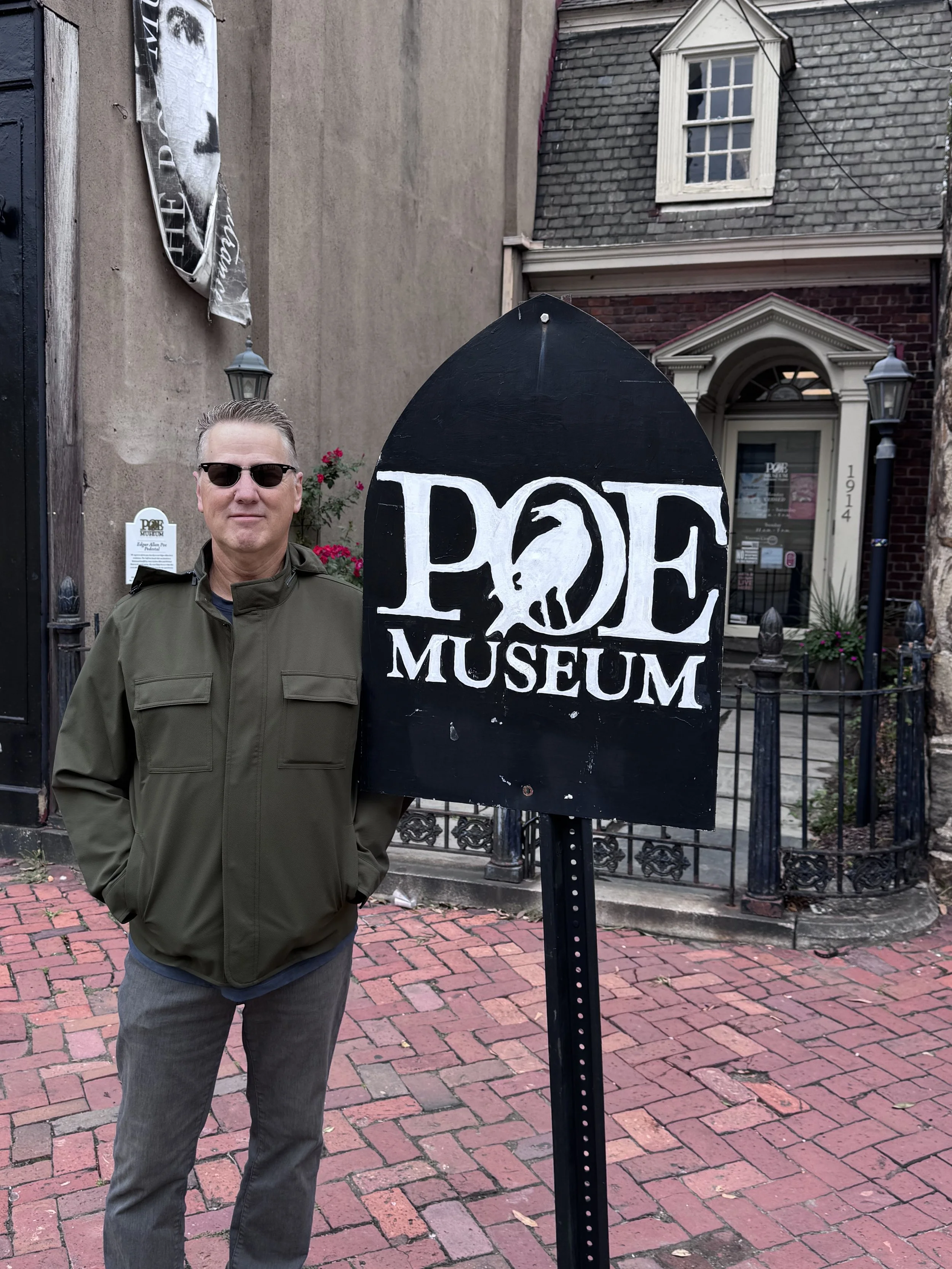
Last month my writing group and I went on a writing retreat to the wonderful city of Richmond, Virginia. It was my first trip to Richmond and I discovered it to be a beautiful city full of wonderful art and music and great dining. And it has tons of history worth exploring as well. If you remember your American history you’ll recall that Richmond became the capital of the Confederacy during the American Civil War and as such has a dark past tied to the promotion of slavery and terrible abuse. I appreciated that where that history was told, such as the Civil War Museum and the White House of the Confederacy, it was done fairly and accurately and with great truthful confession. Richmond was devastated during the war, a war it helped bring about, but it has risen like a phoenix because of its willingness to be honest and to get the story right.
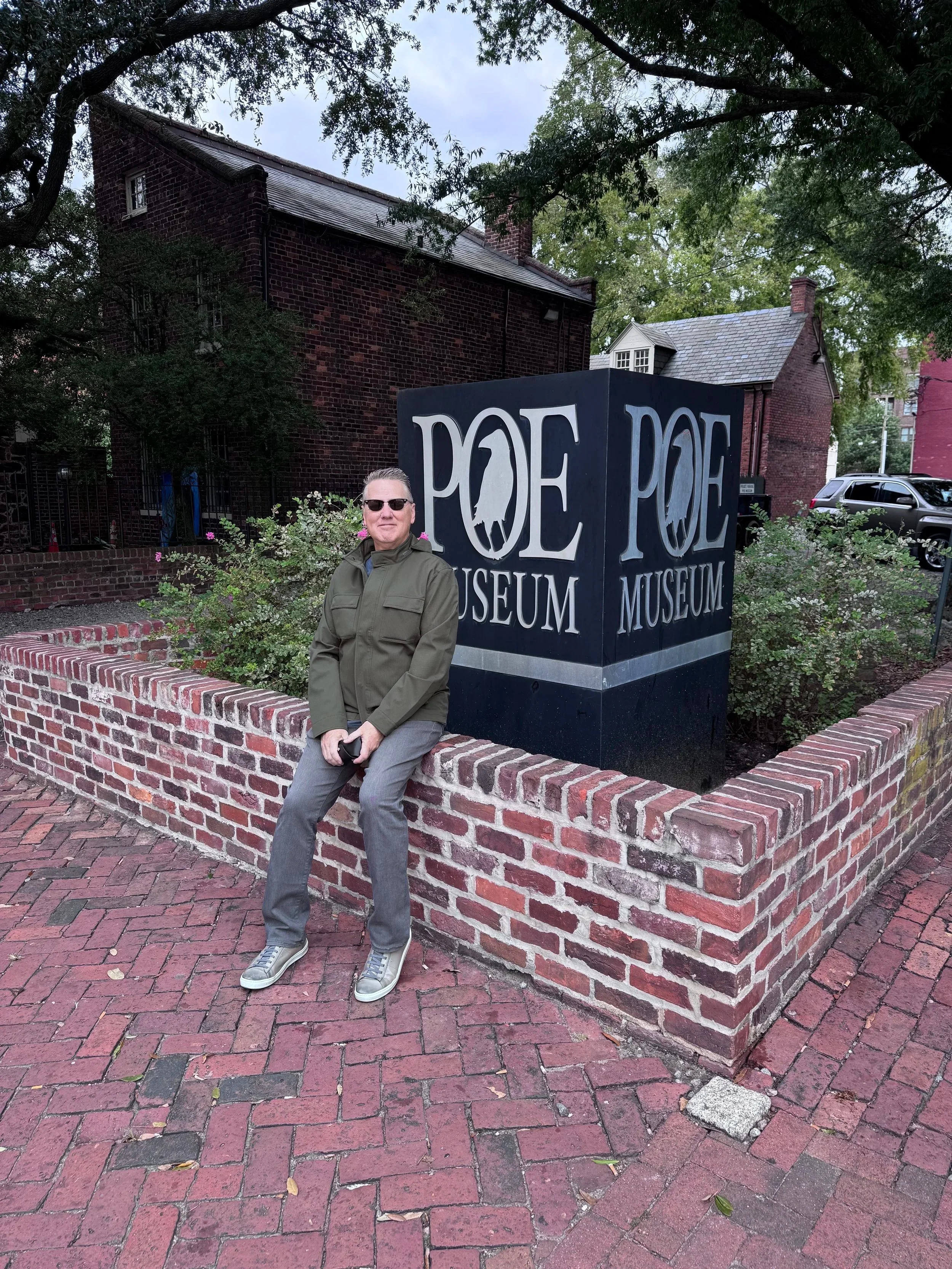
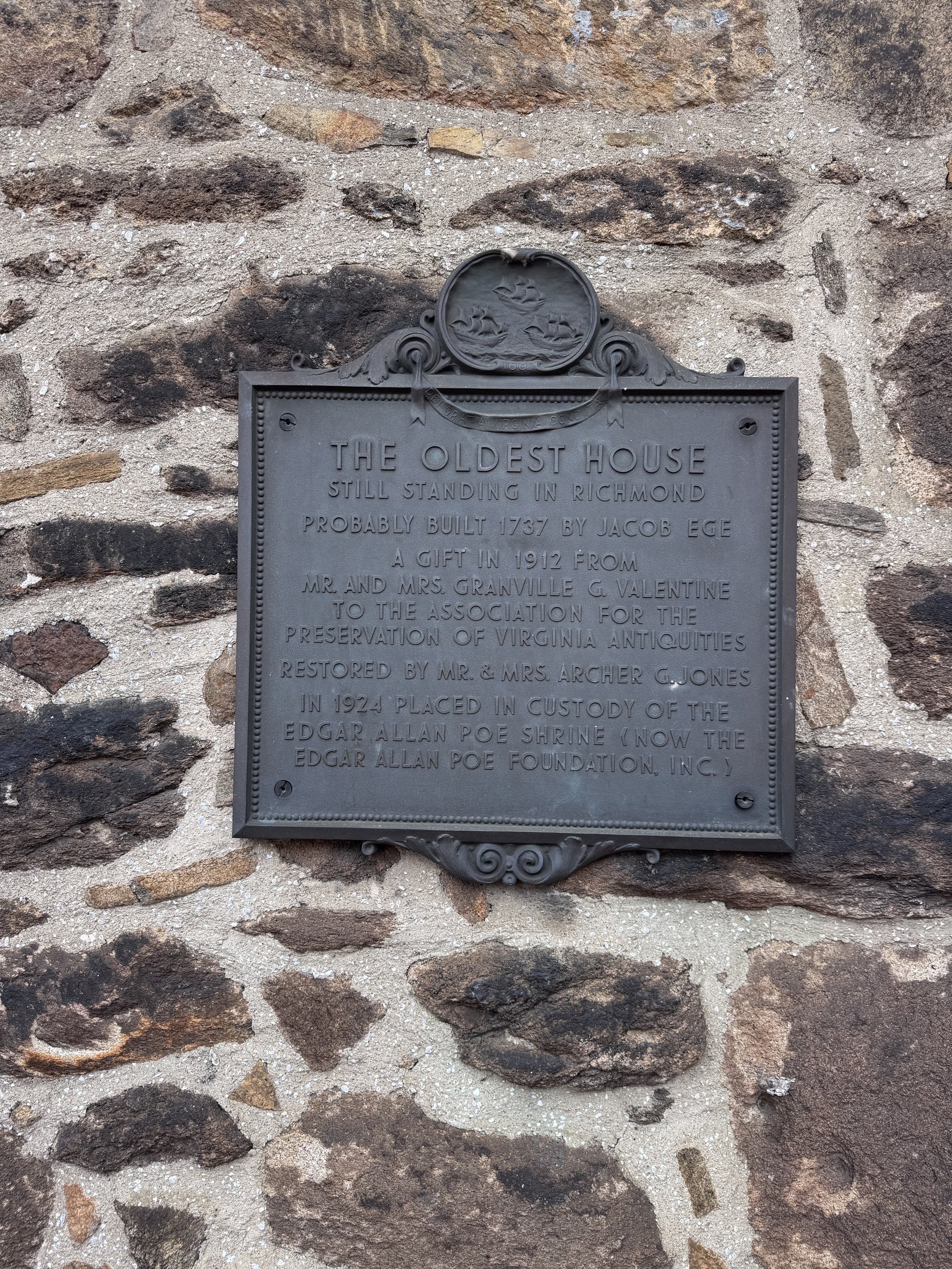
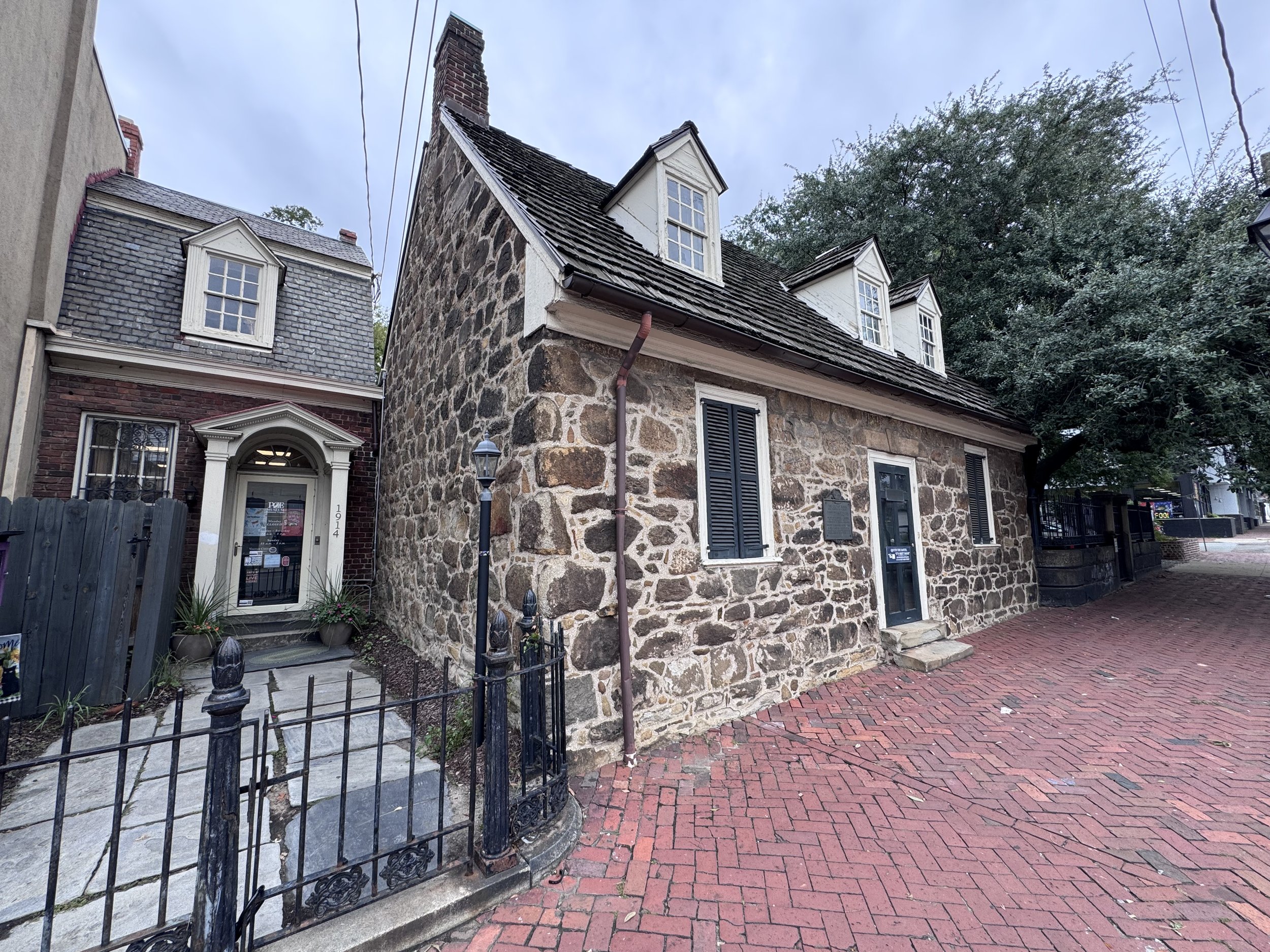
We spent the majority of each day of this writing retreat engaged in actual writing, taking a break in the afternoon for short field trips somewhere interesting in the city. And that was when I discovered The Poe Museum. Little did I know beforehand that although Poe was born in Boston and died under very mysterious circumstances in Baltimore, he actually lived most of his life in Richmond. Lived in Richmond. Went to school in Richmond. Wrote in Richmond. Even served in the Army in Richmond (well before the war). Because of this, The Poe Memorial Foundation, which came about in 1906, created the museum in 1922, using the oldest home in Richmond to house many of its artifacts, a home Poe never lived in but had visited. More on those artifacts in just a moment.
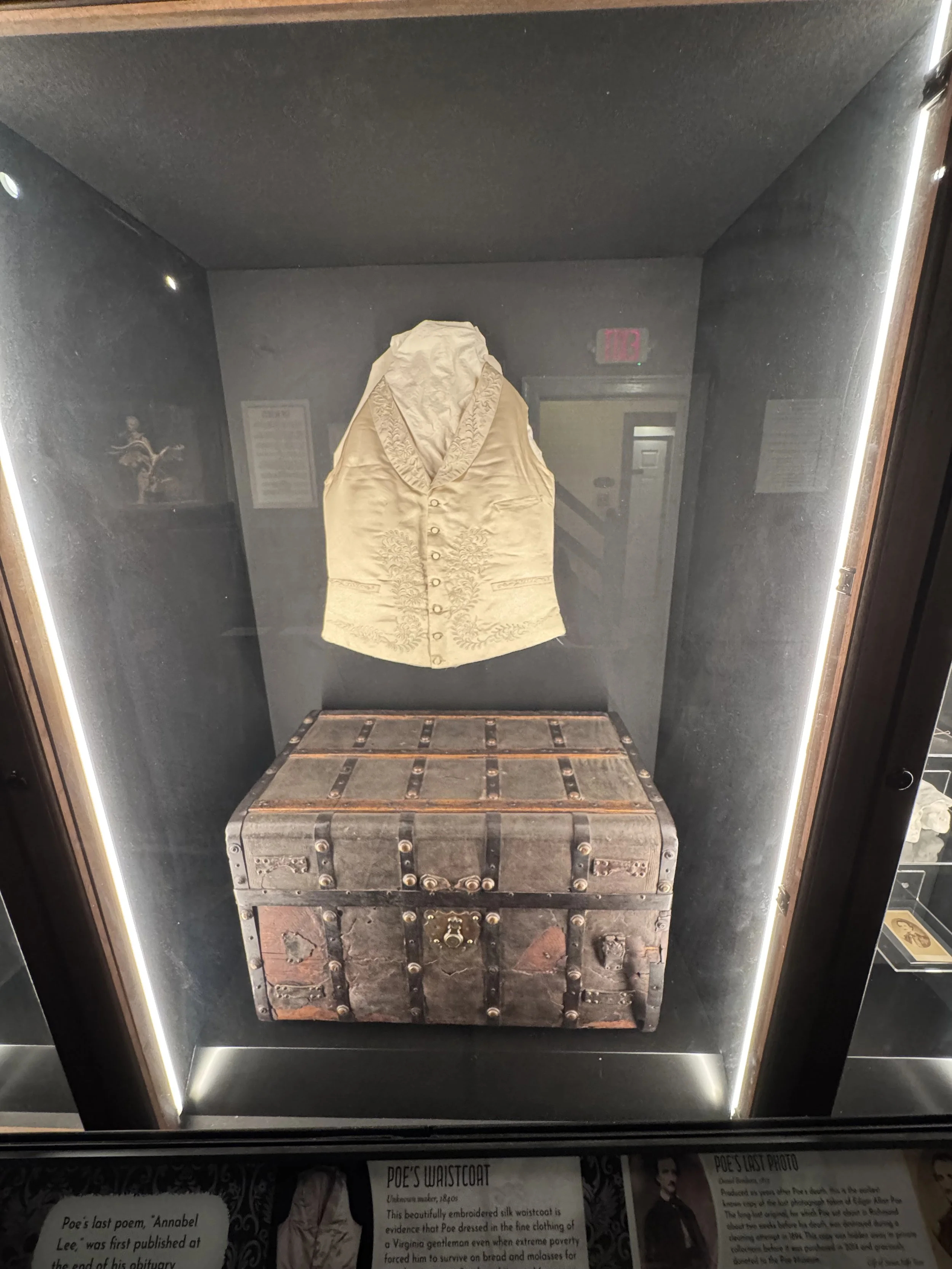
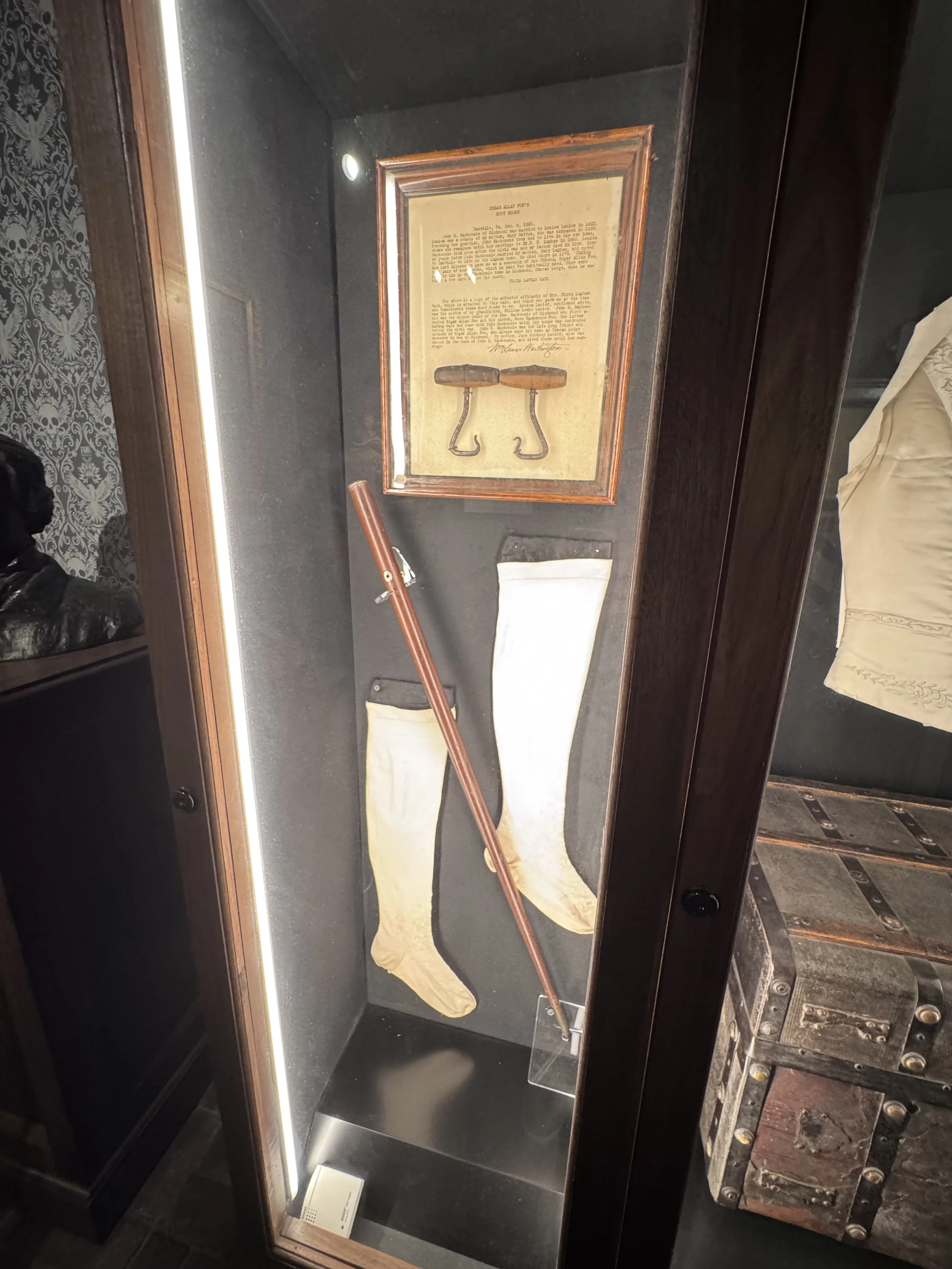
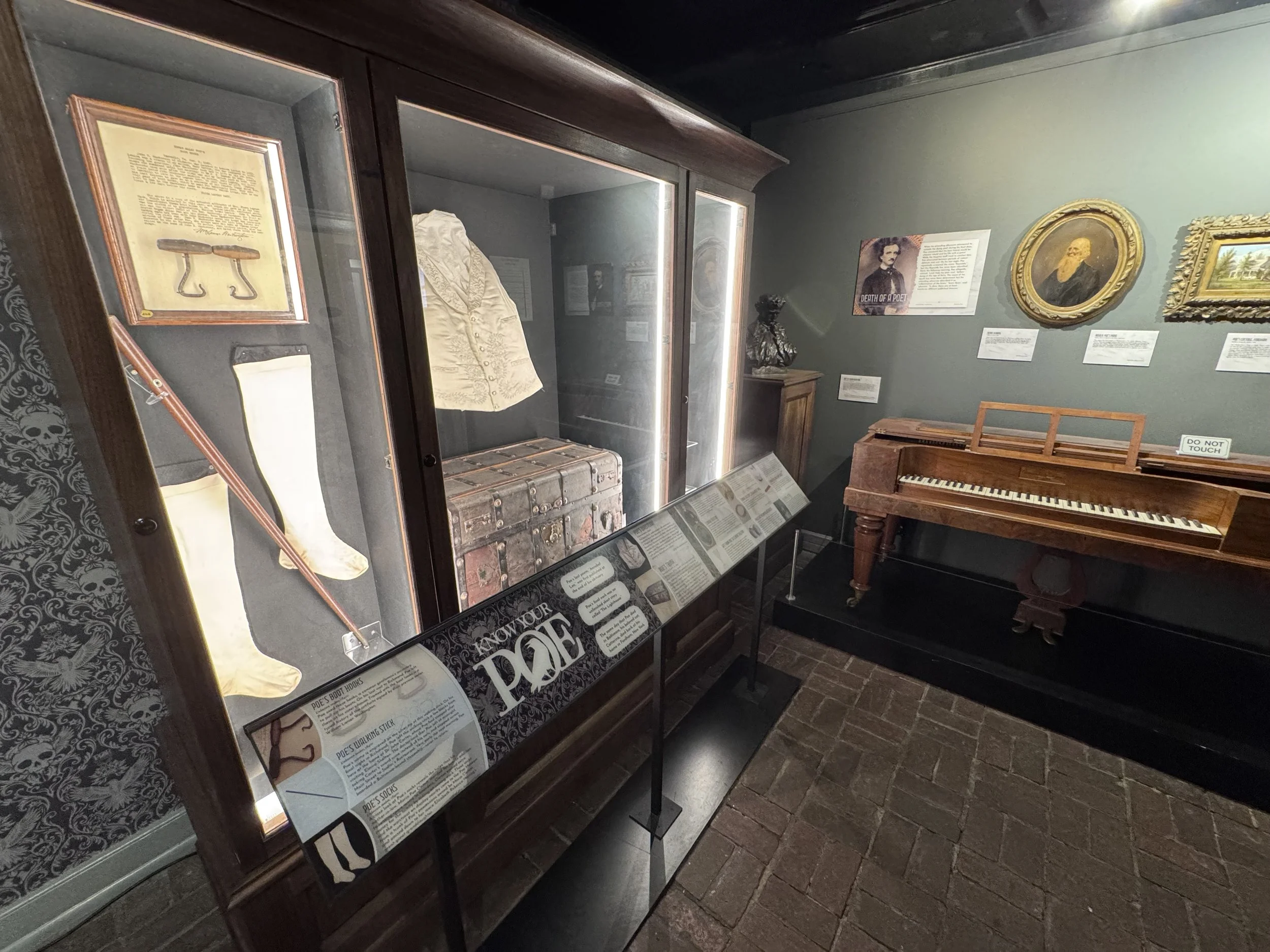
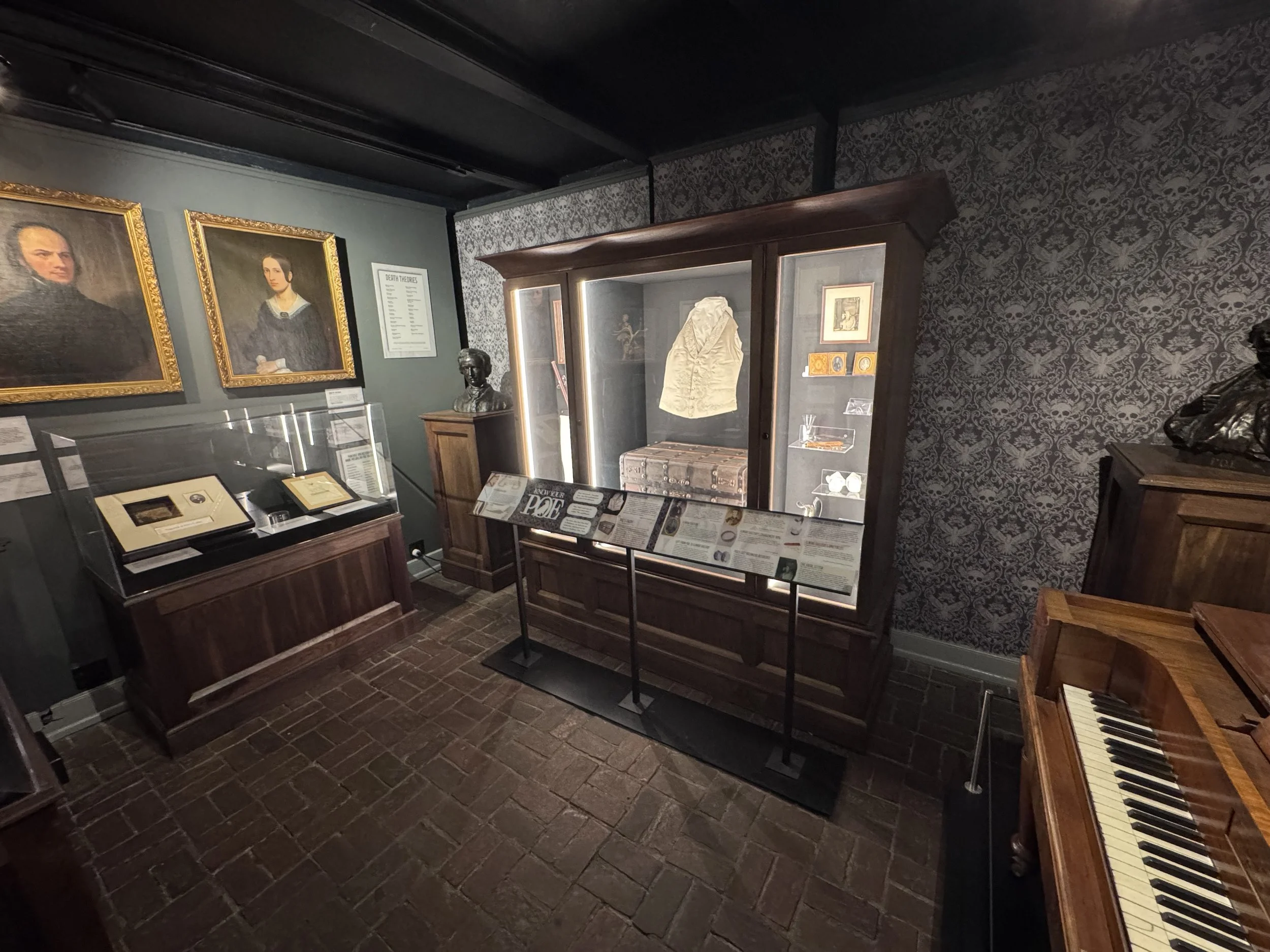
Poe’s waistcoat, and the trunk that contained his final belongings when he died in Baltimore.
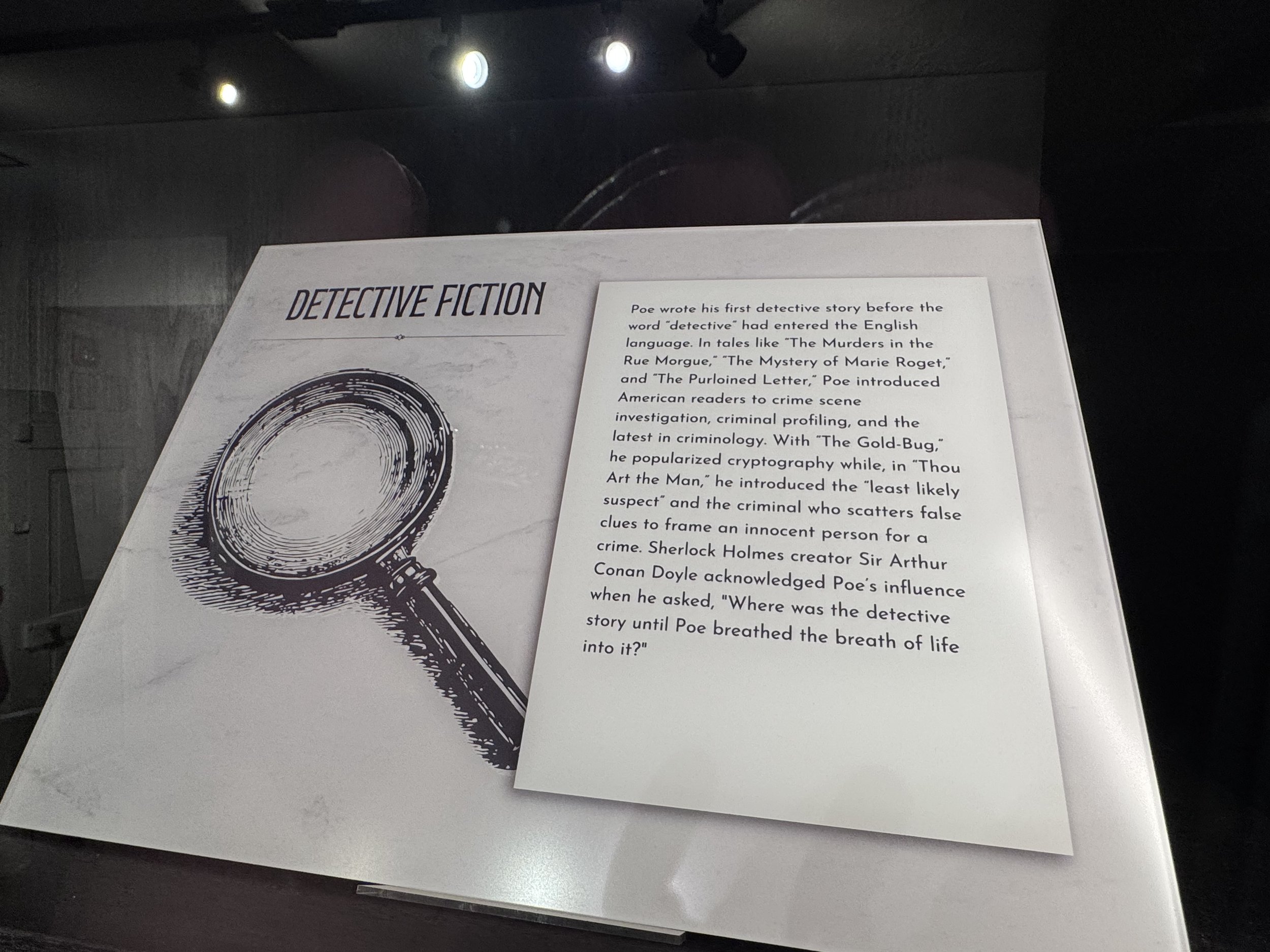
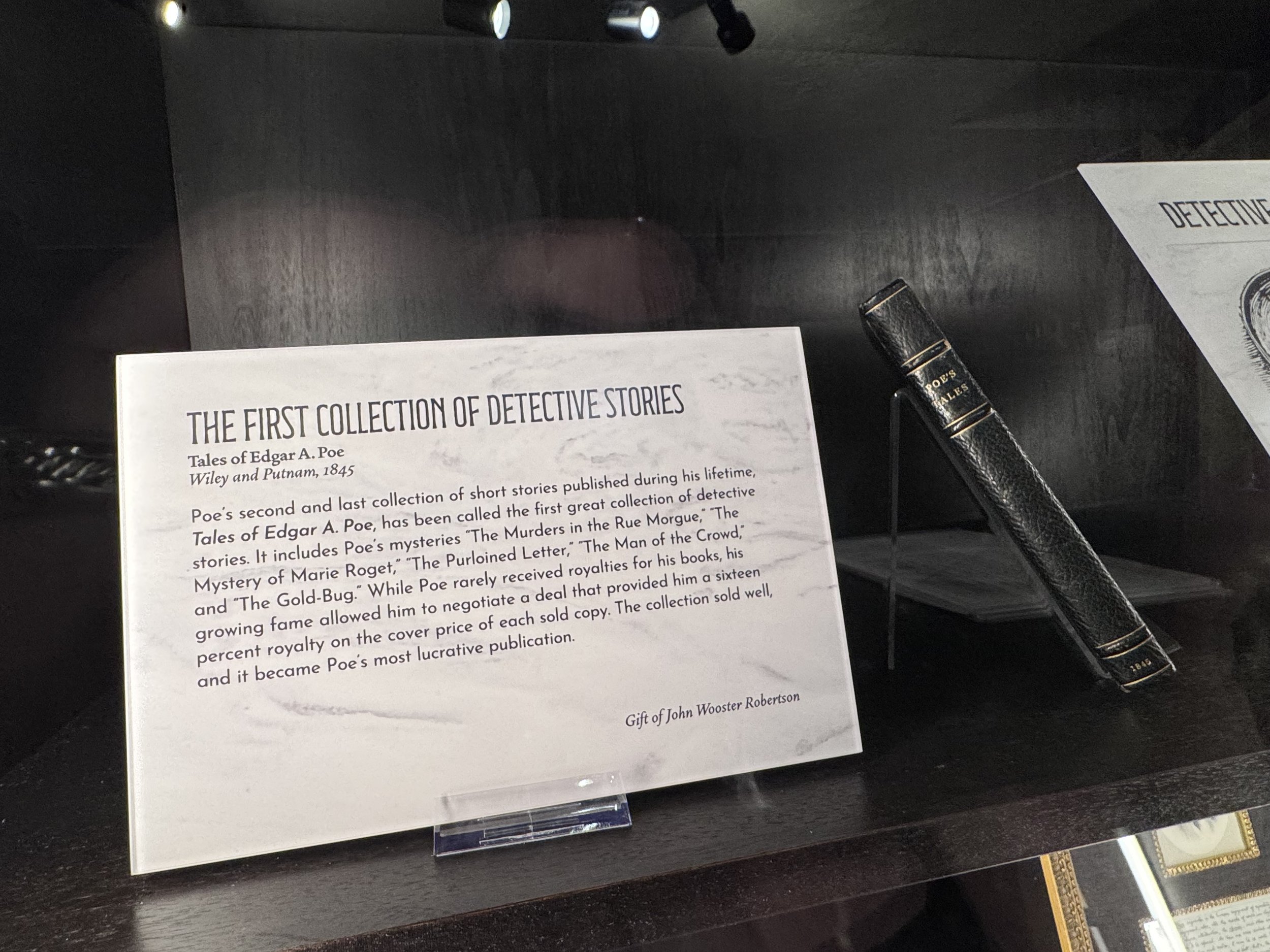
Poe may be more remembered for the horror he wrote such as “The Tell-Tale Heart” and “The Raven,” but he is also celebrated as the father of the mystery genre, having created the first detective story with “The Murders in the Rue Morgue,” published in 1841, just about 8 years before his death. His detective, C. Auguste Dupin, was a brilliant amateur sleuth who used analytical deduction to solve crimes. The story was the first of its kind anywhere, making Poe the originator of the second most popular genre today (romance being the first). Sir Author Conan Doyle once stated that his own creation Sherlock Holmes was patterned deliberately on Poe’s master sleuth.
Let’s go back in time for just a moment, back to when Poe was born in Boston on January 19, 1809. His parents were both traveling actors and quite unfortunately for them and Poe they both died just days apart in 1811 when Poe was but two years of age. As a result Poe was separated from his siblings and went to live with John and Frances Allan of Richmond, a couple he would stay with well into his young adult years. He attended the University of Virginia in 1826, only seven year after its creation by President Thomas Jefferson, but dropped out due to a lack of money. He joined the Army to support himself but soon left that as well and enrolled at West Point. But he didn't stay in school long either, leaving West Point when he was court-martialed. Finally he turned to a very meager career writing stories and poems. Here he found success and love. He got married, and became both writer and editor of The Southern Literary Messenger. Along the way his first wife died and Poe quickly became engaged to his childhood sweetheart, Elmira Royster Shelton. But in 1849, before they can marry, at the age of 40, he went to Baltimore for a business venture, is found weak and incoherent in a tavern, and is taken to a hospital where he dies. To this day Poe’s death is a mystery, and not unlike some of the horror stories he wrote.
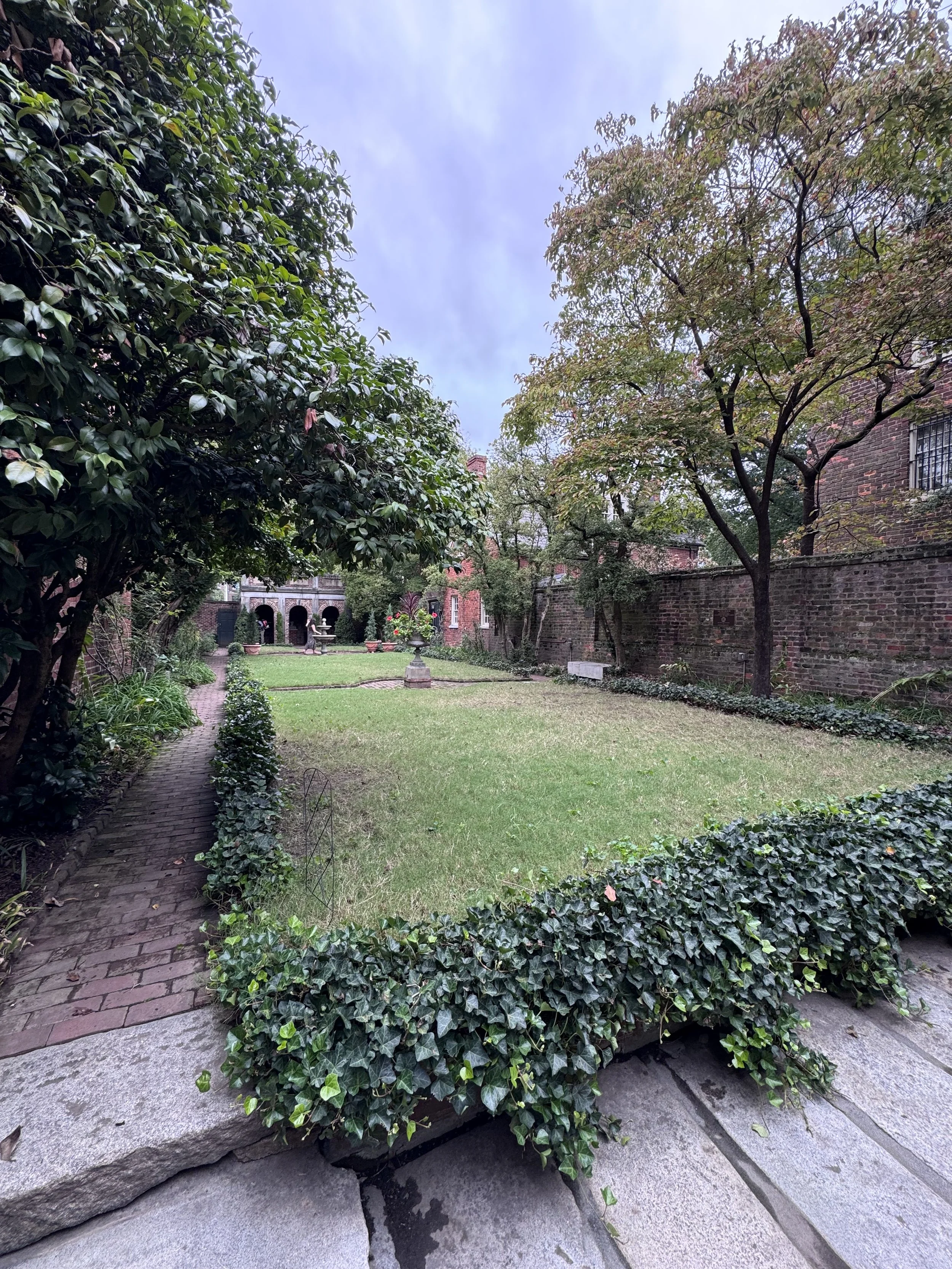
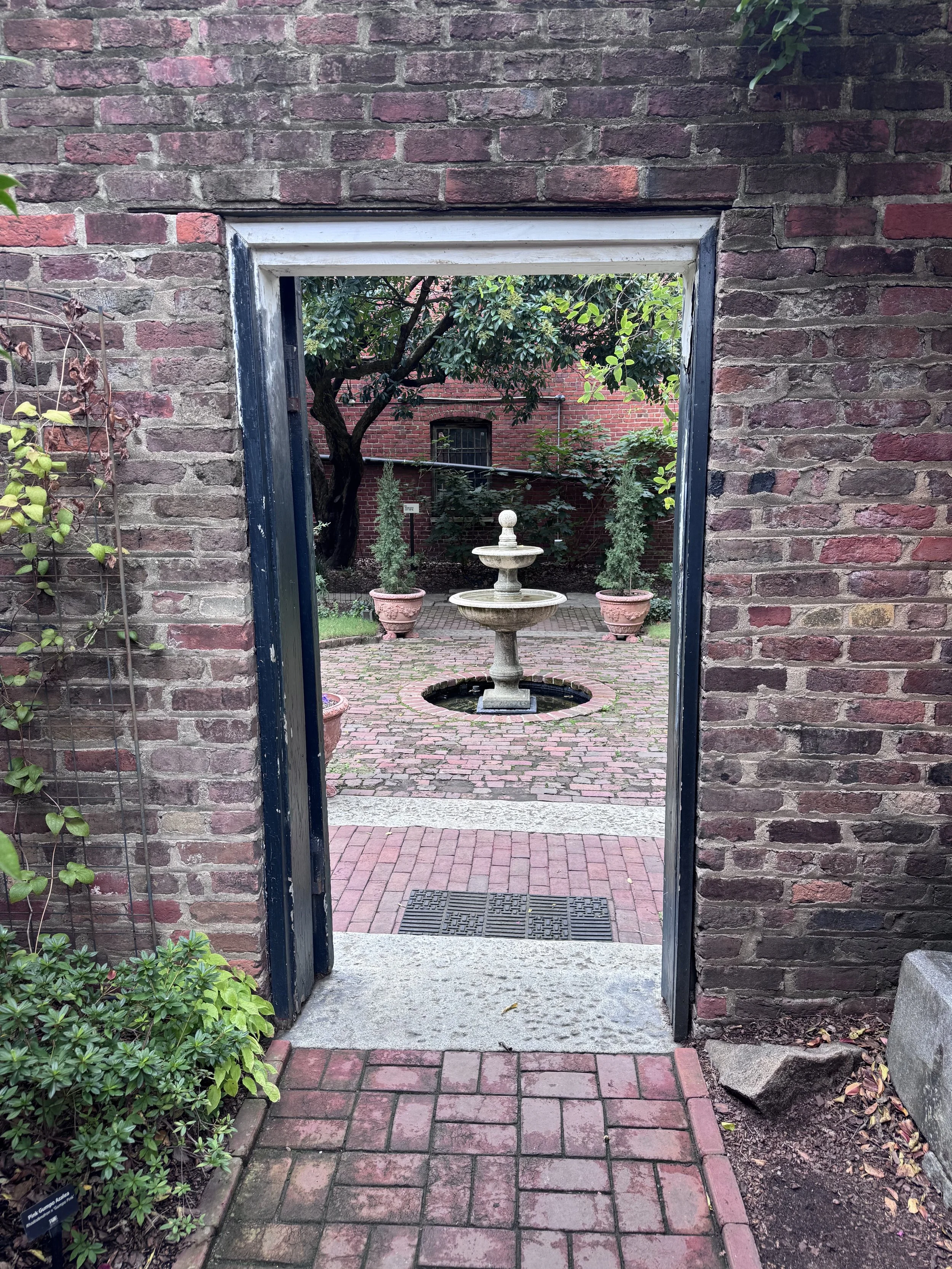
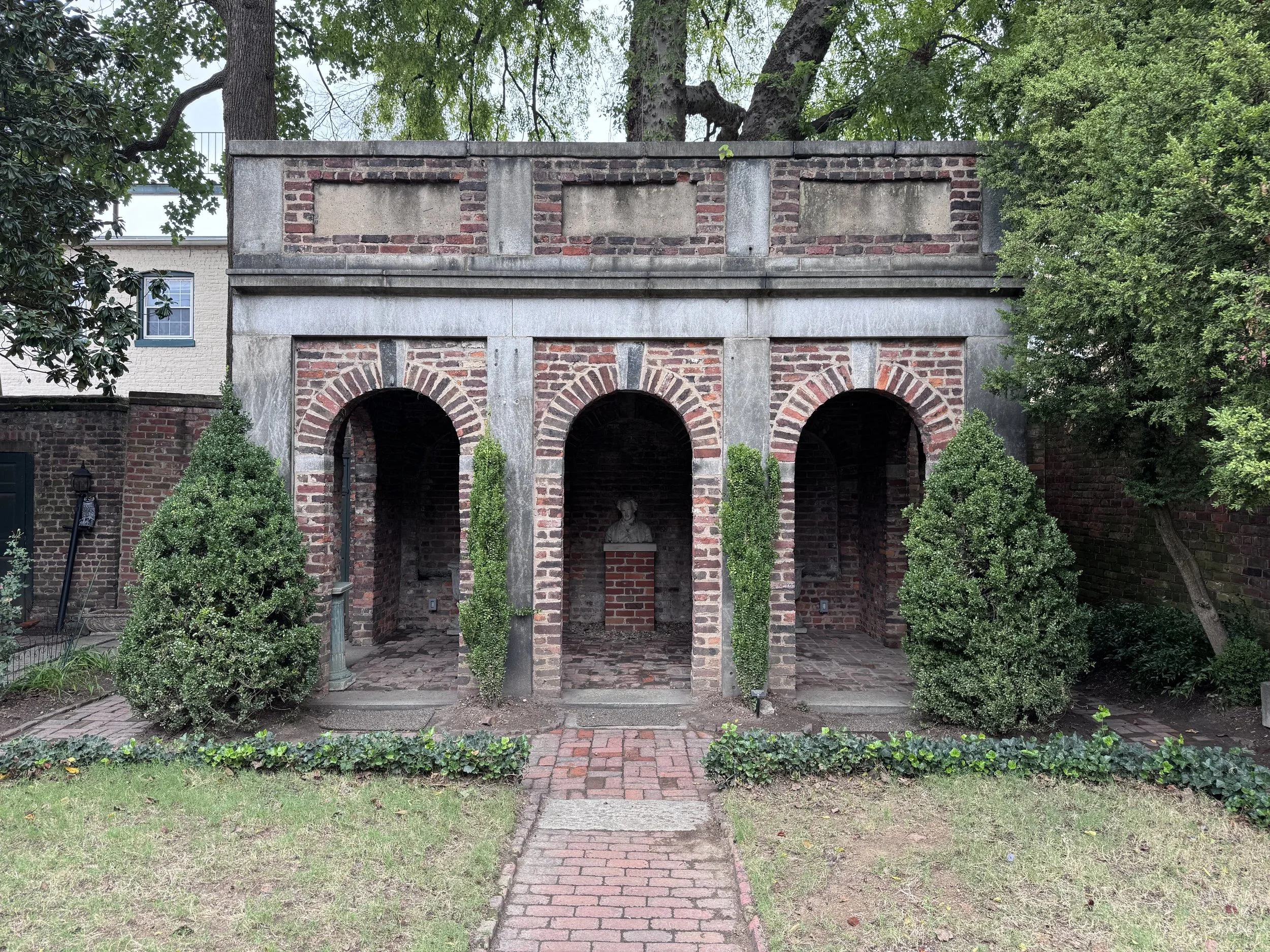
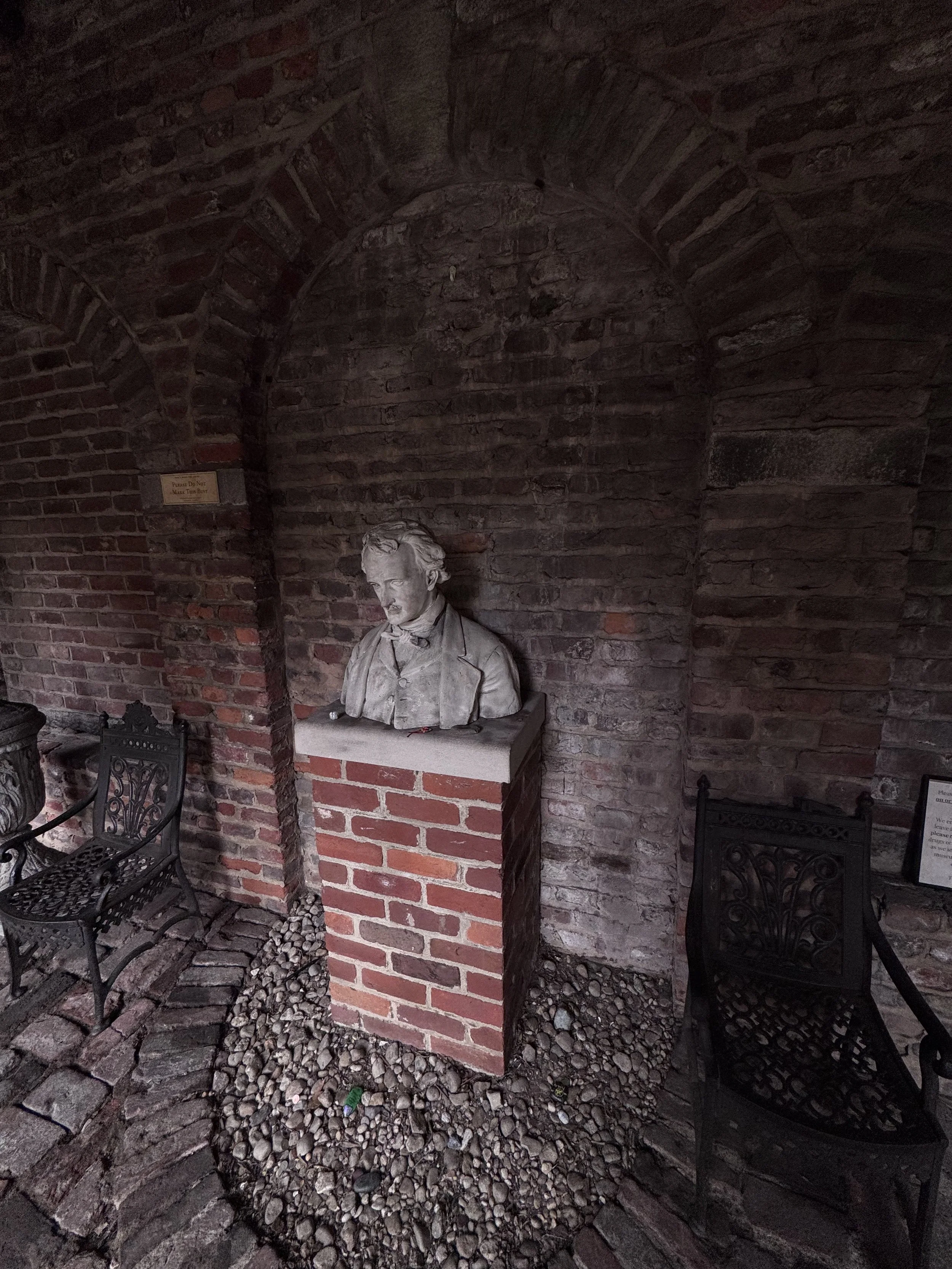
Let’s get back to the Poe Museum. A little over a hundred years after his birth, in 1921, The Poe Memorial Foundation decided to create a shrine to Richmond’s most famous writer. They salvaged the bricks of the building in which Poe had worked as a journalist for The Southern Literary Messenger (the building had been torn down to widen the street) and used the materials to create The Poe Shrine in an empty lot behind The Old Stone House, the oldest home in Richmond. A year later, the Old Stone House would become the foundational piece of the Poe Museum when it opened in 1922. Several more buildings were added to the museum complex creating a quadrangle around what is referred to as The Enchanted Garden.
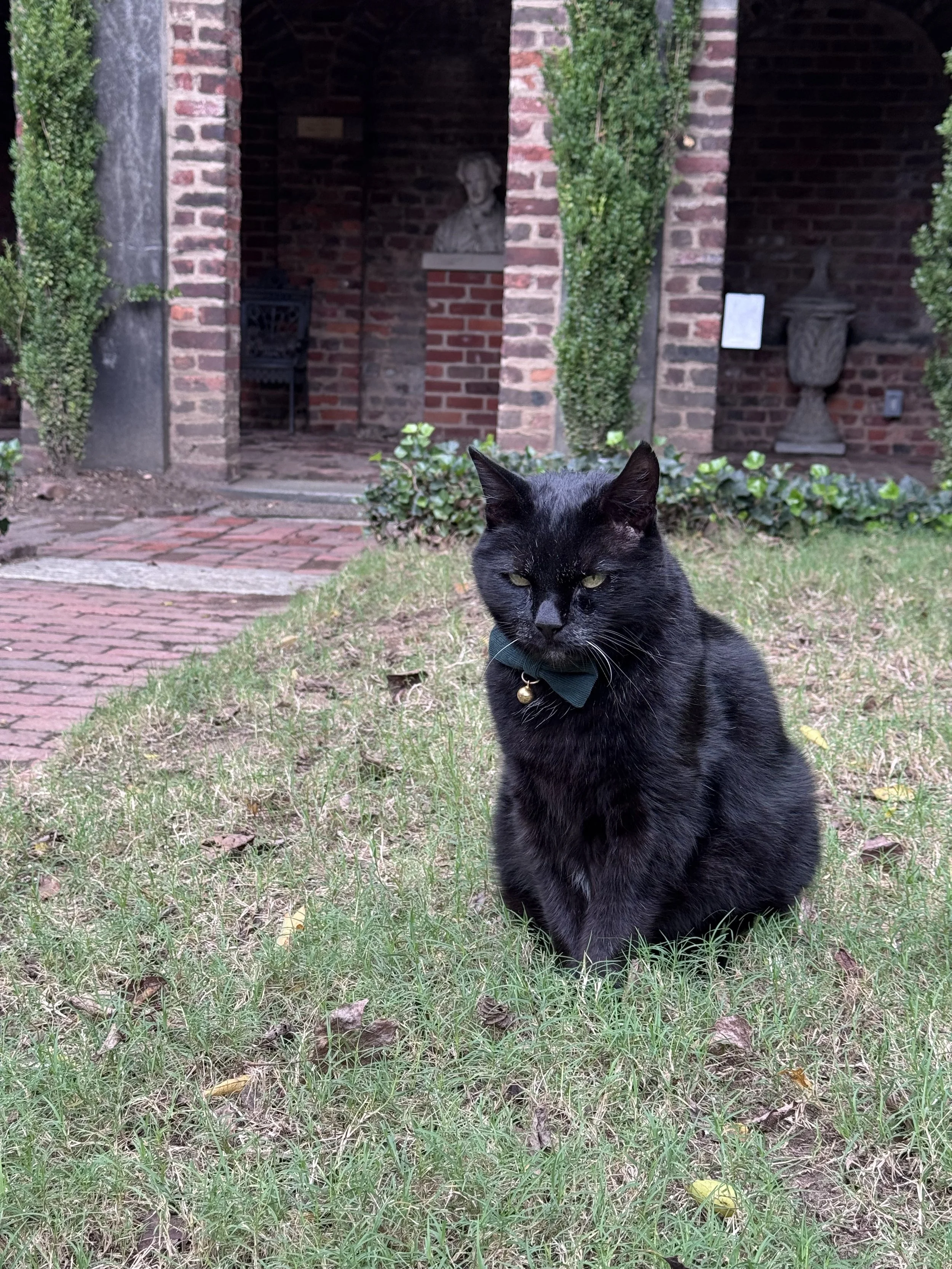
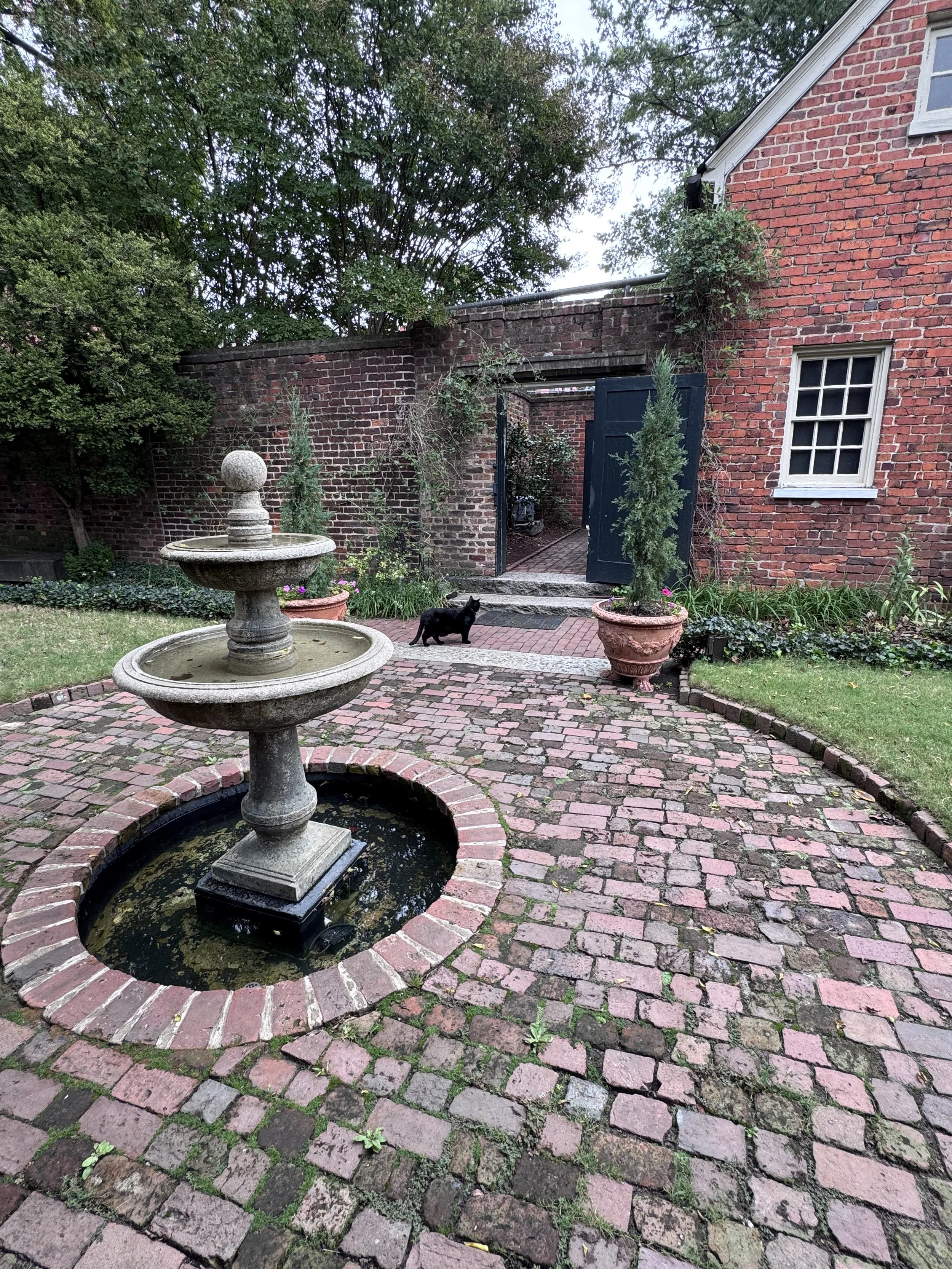
One of the black cats keeping watch over Poe’s Shrine at The Poe Museum in Richmond, Virginia.
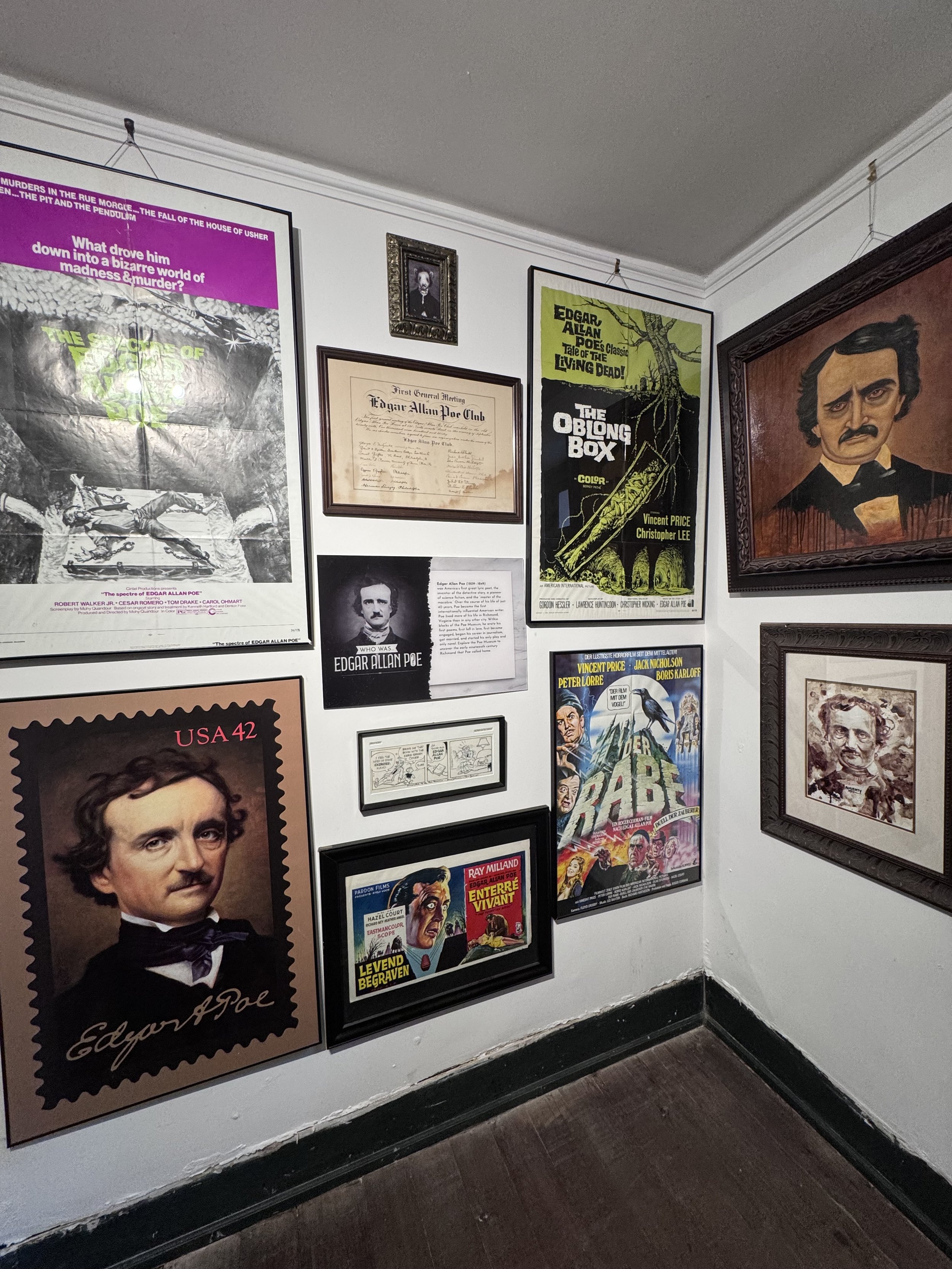
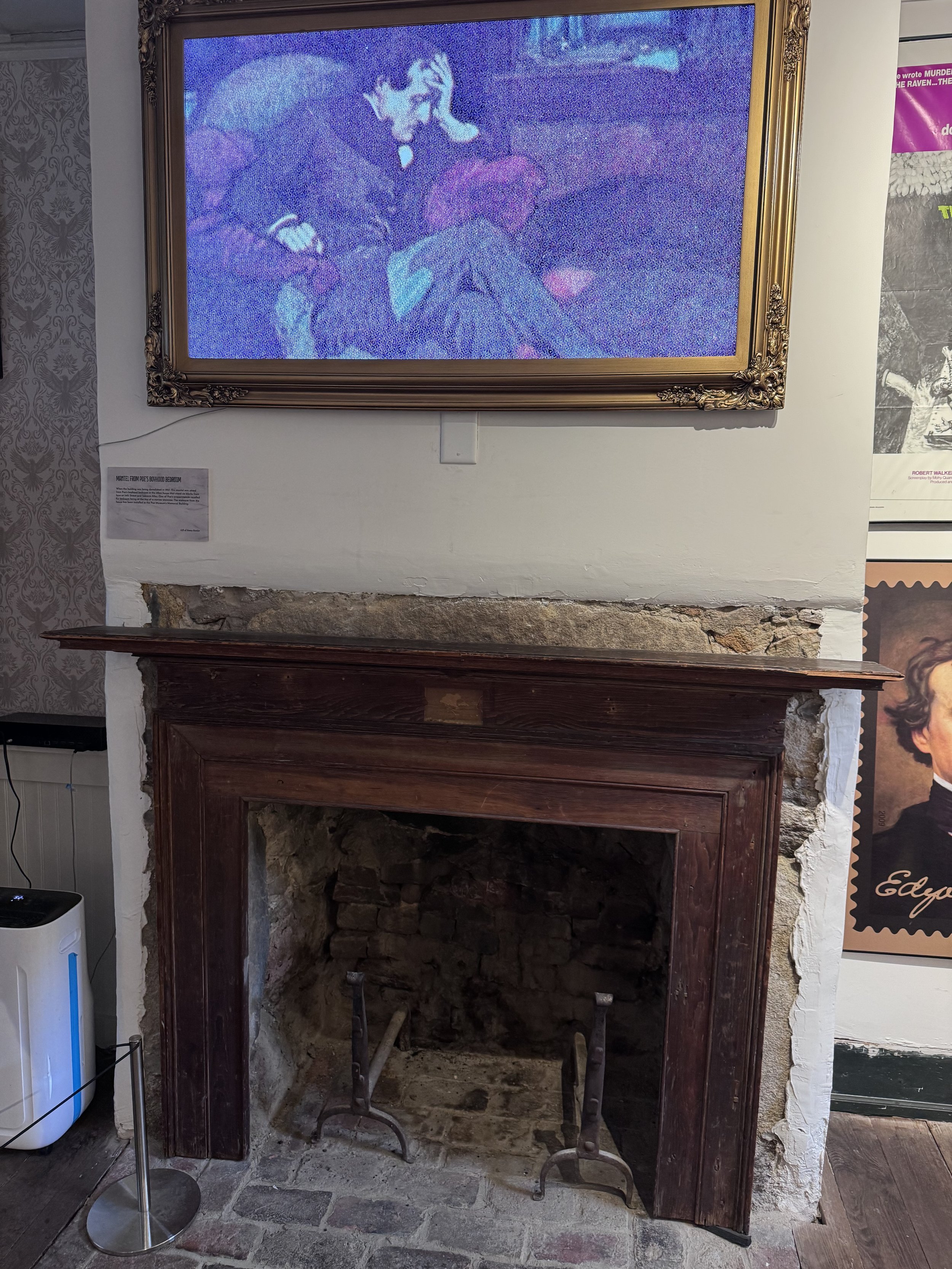
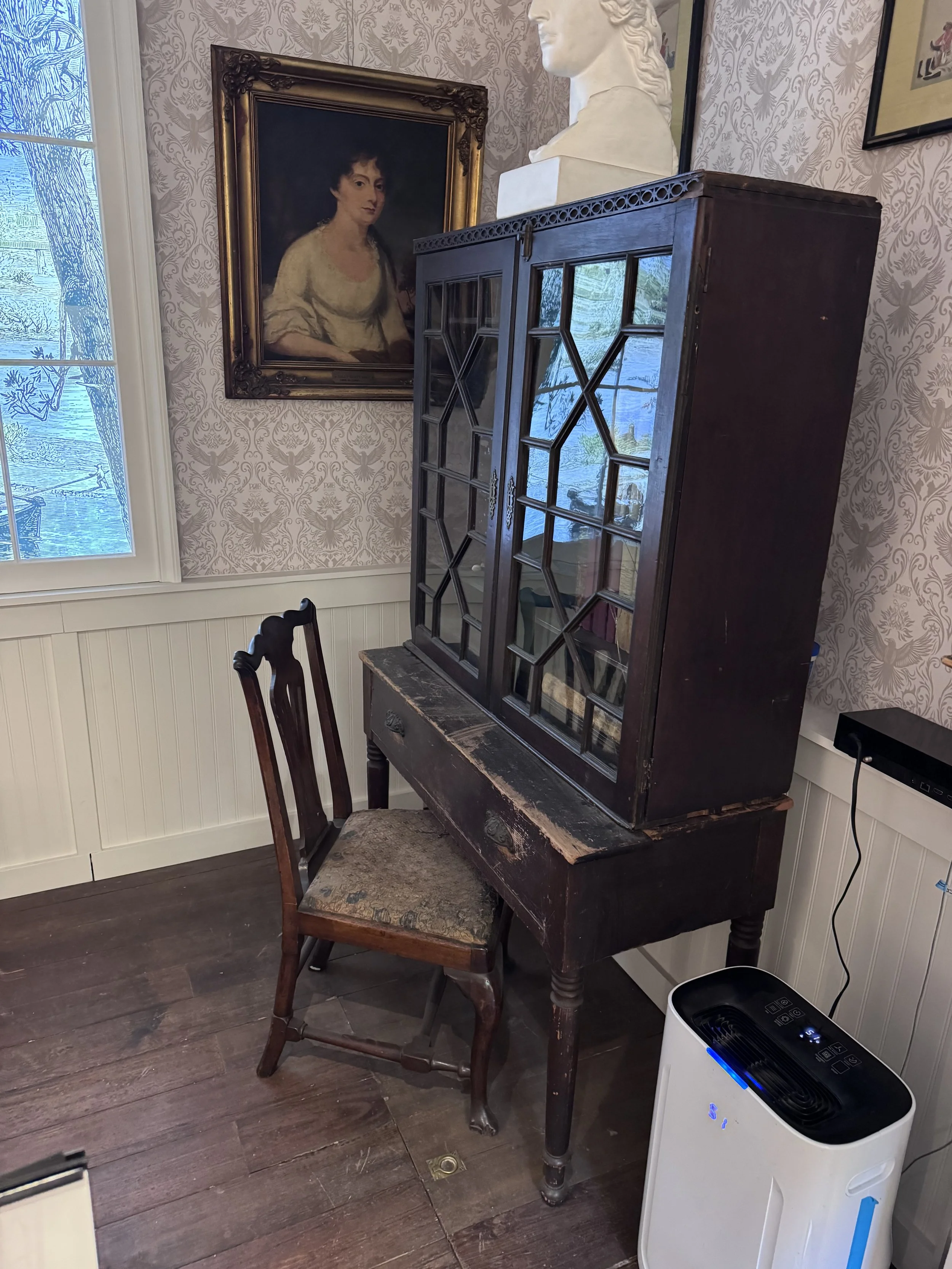
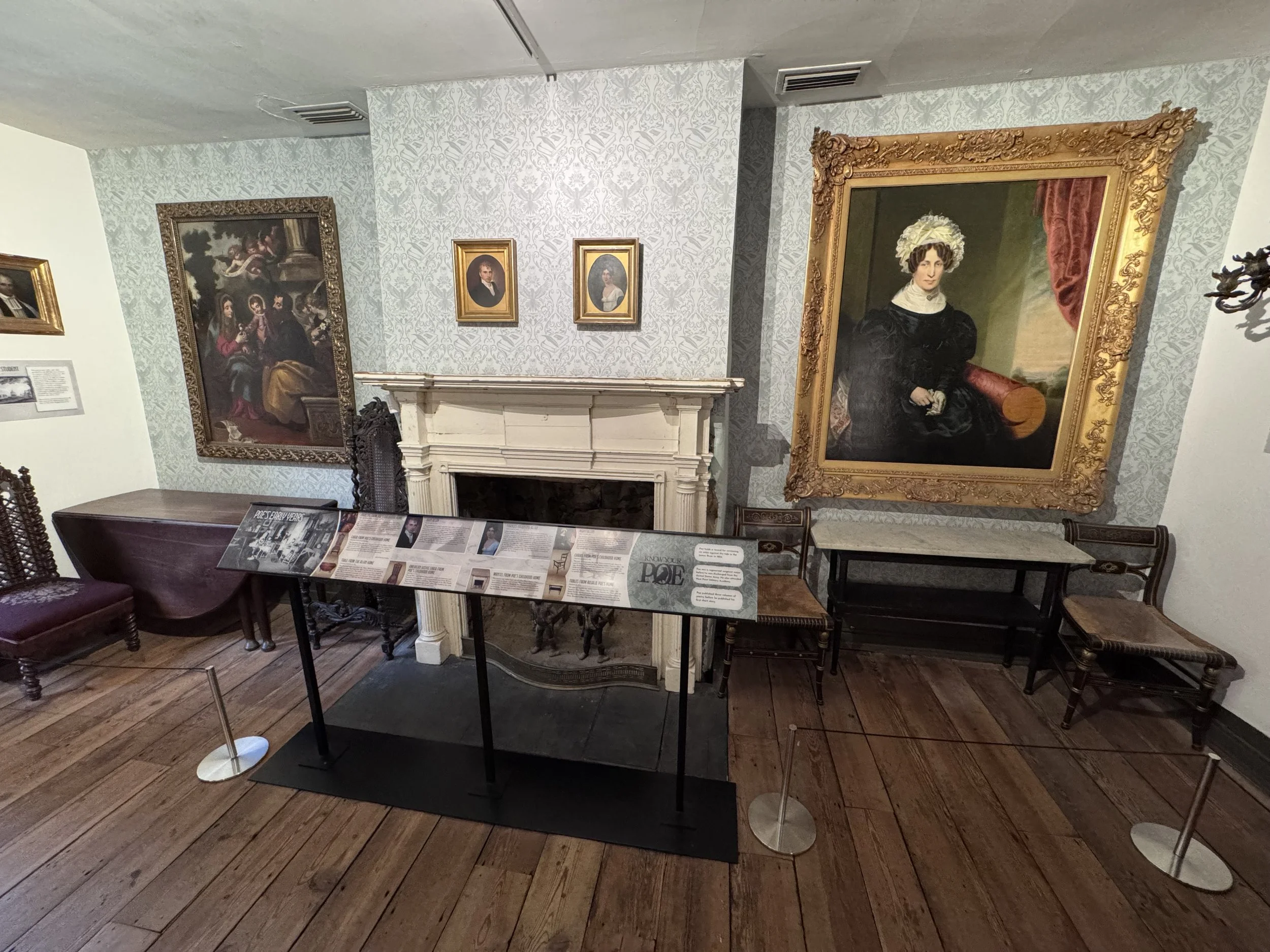
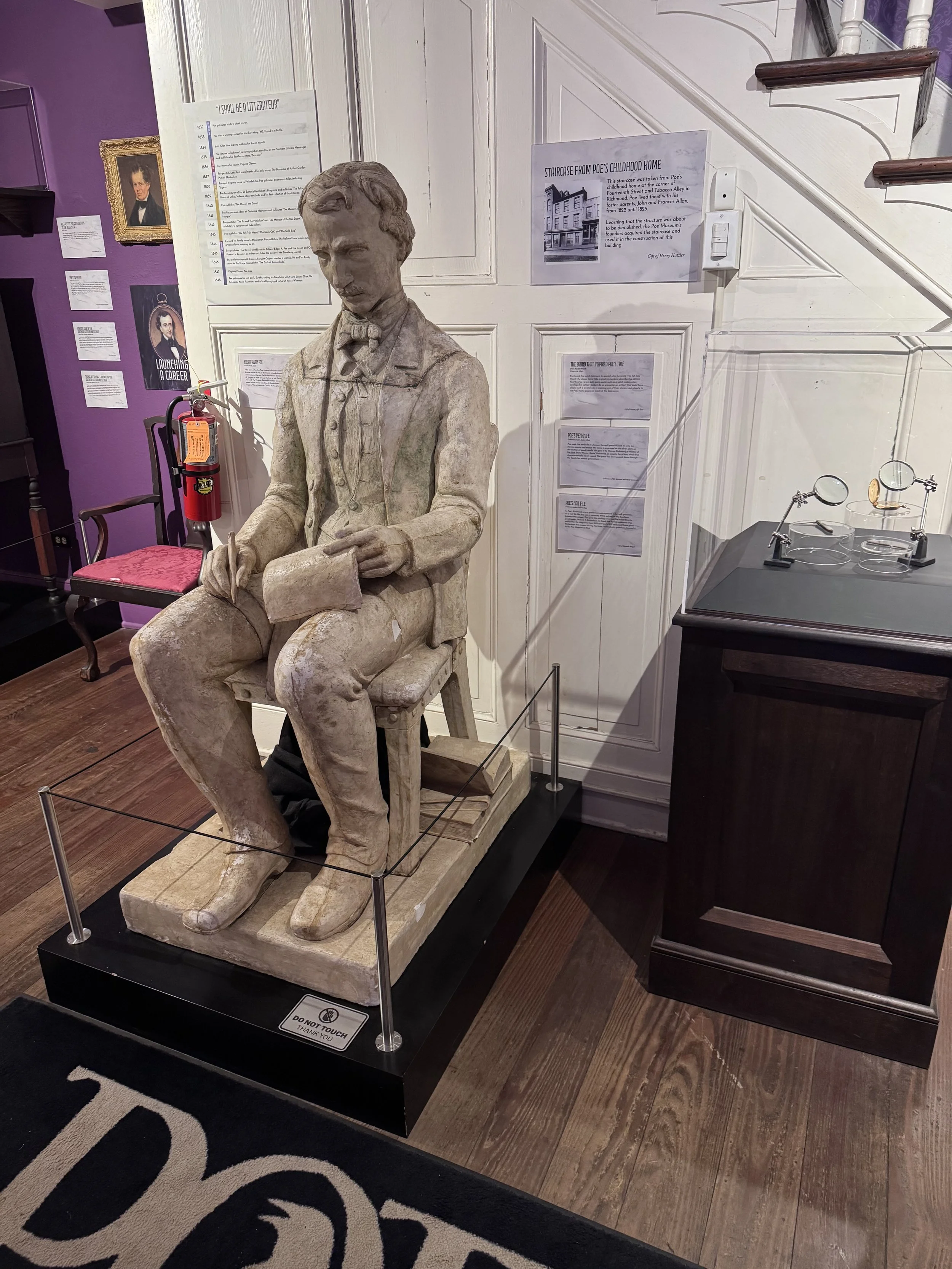
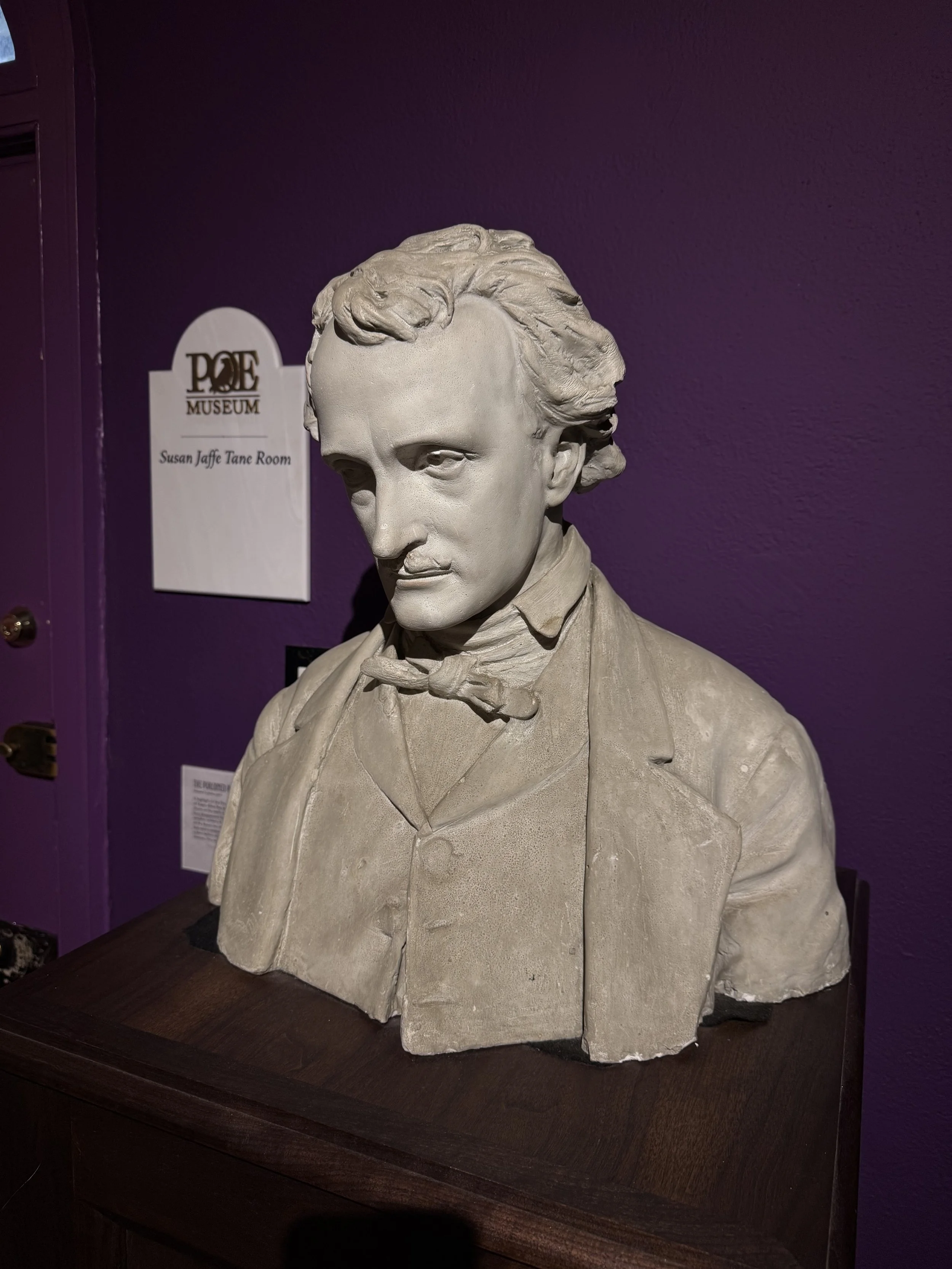
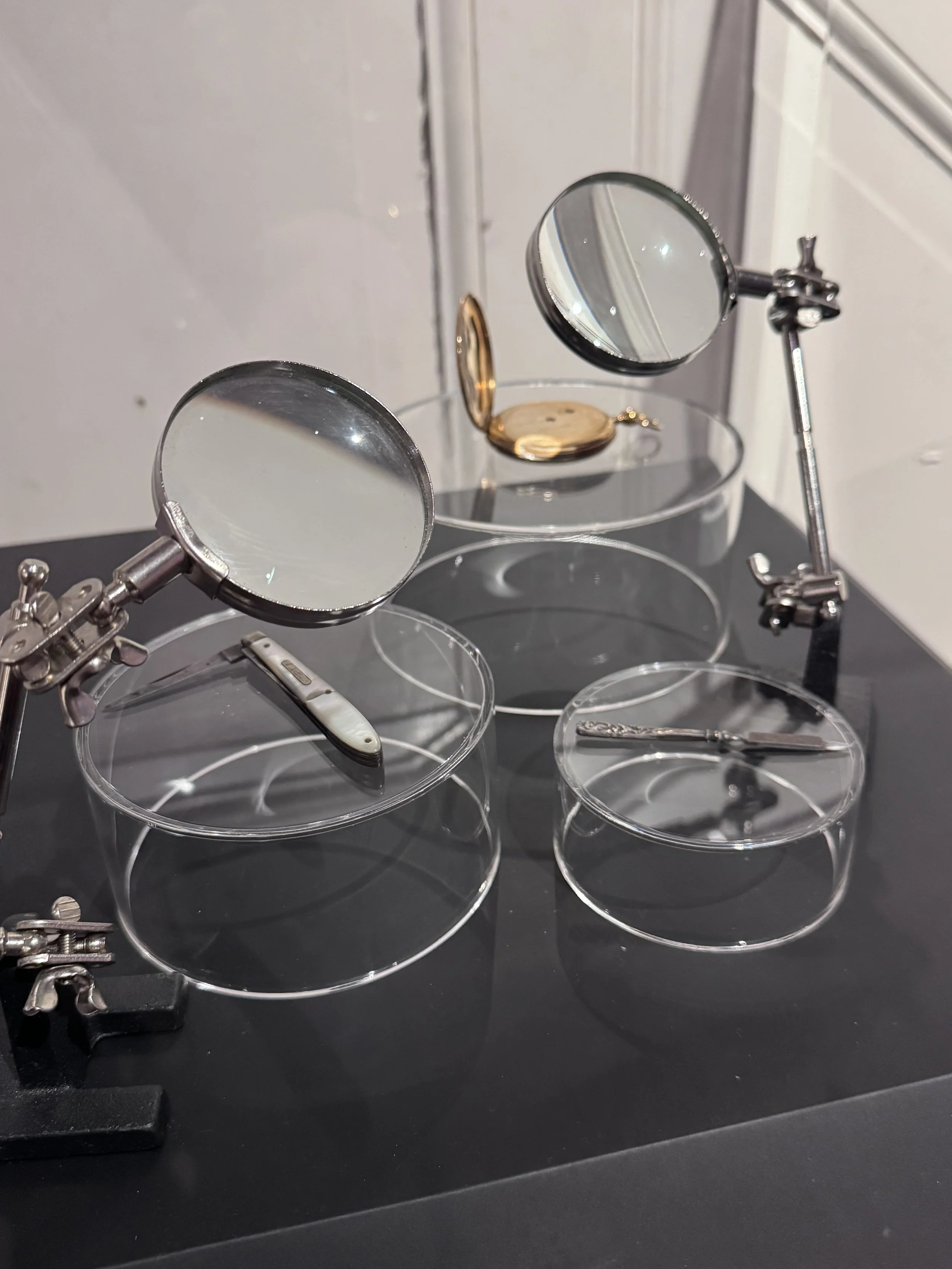
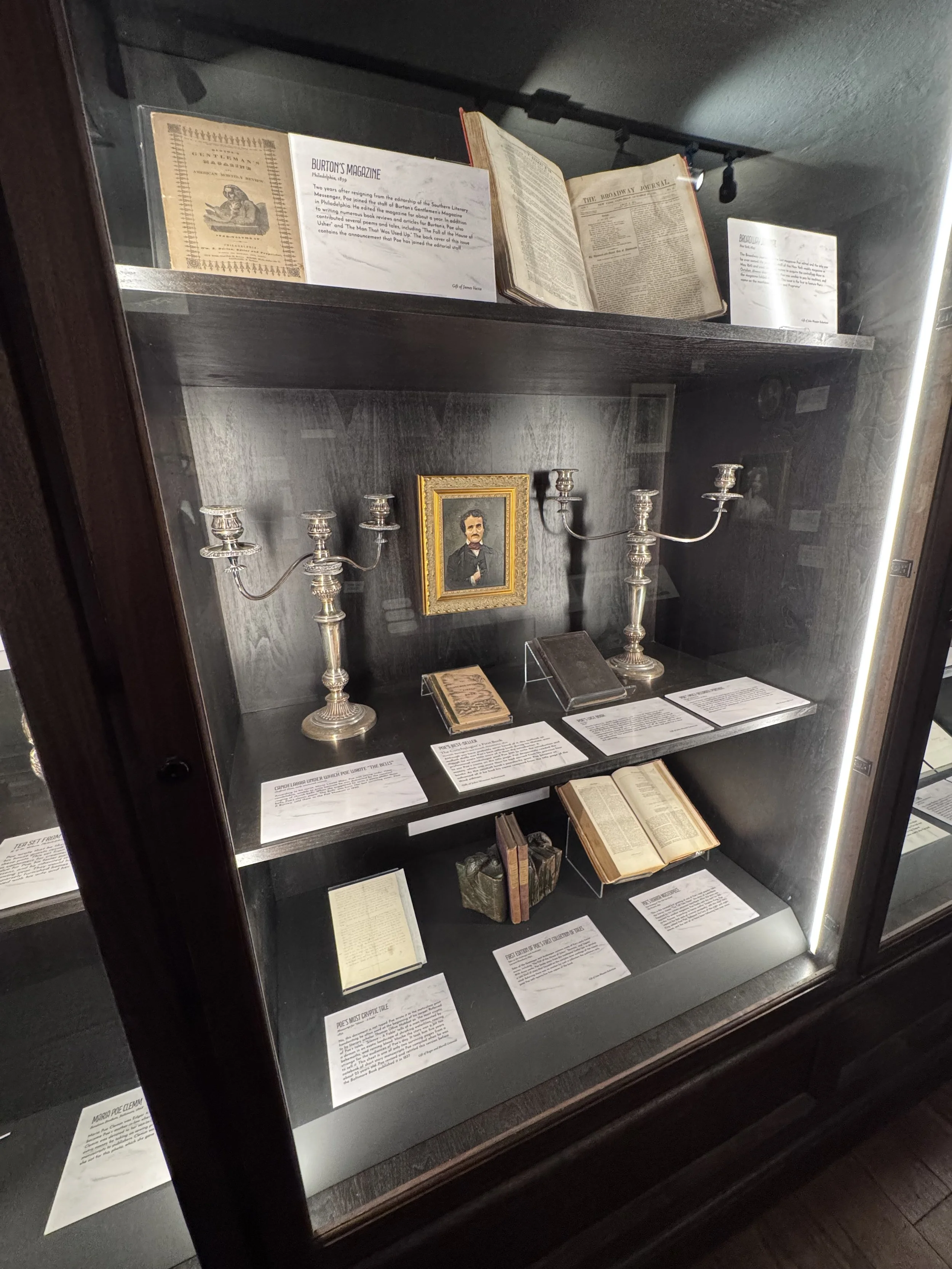
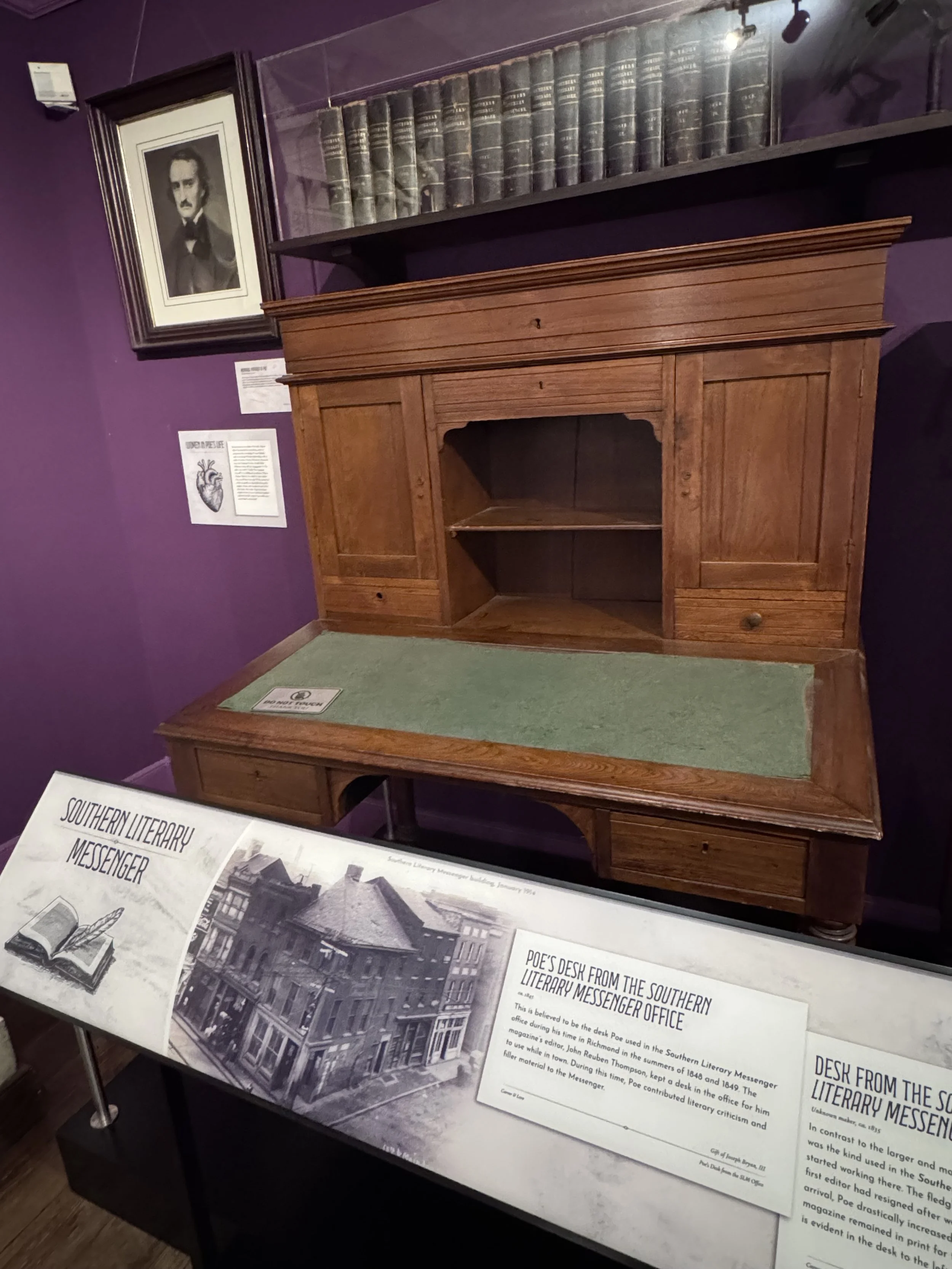
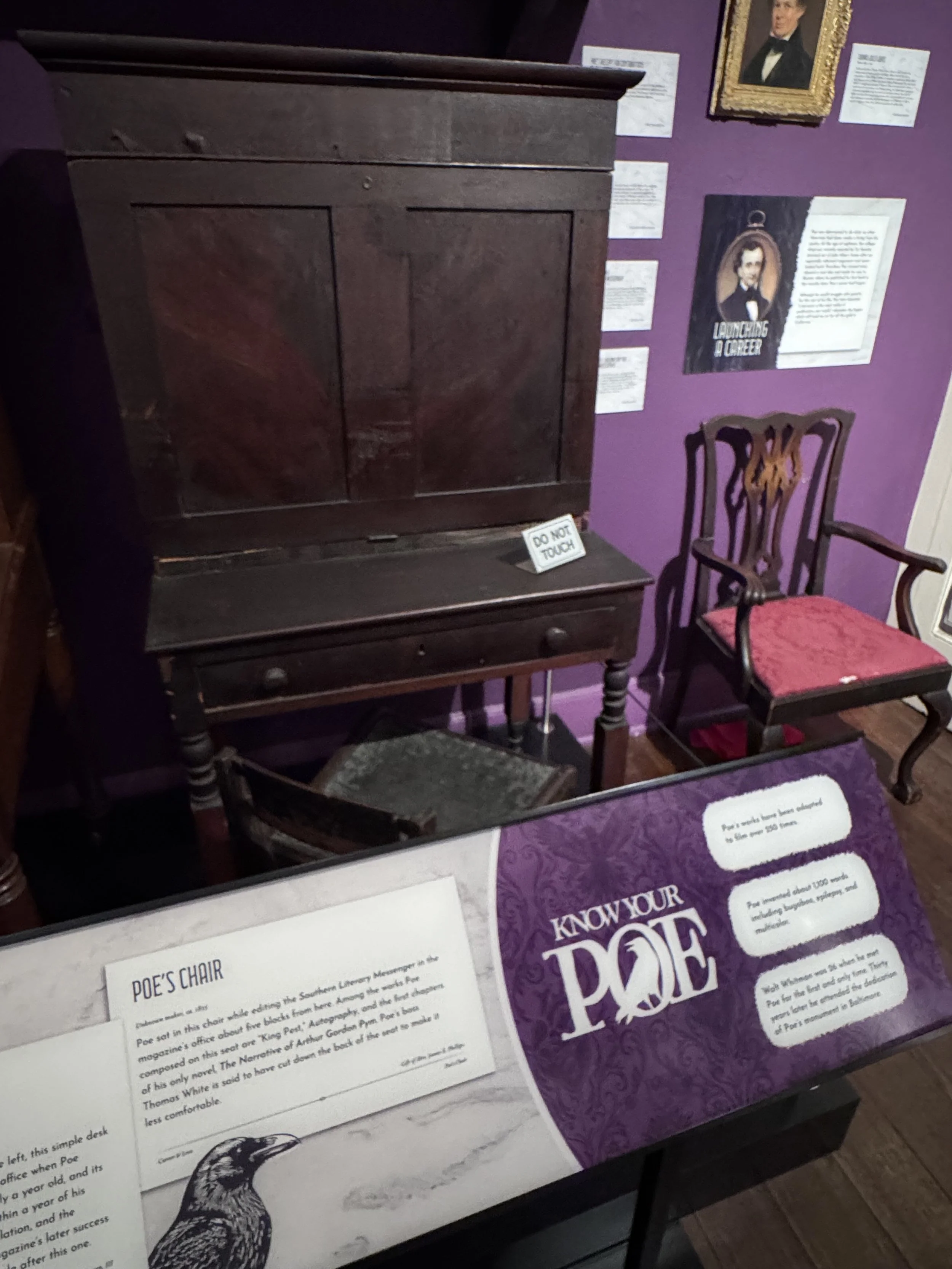
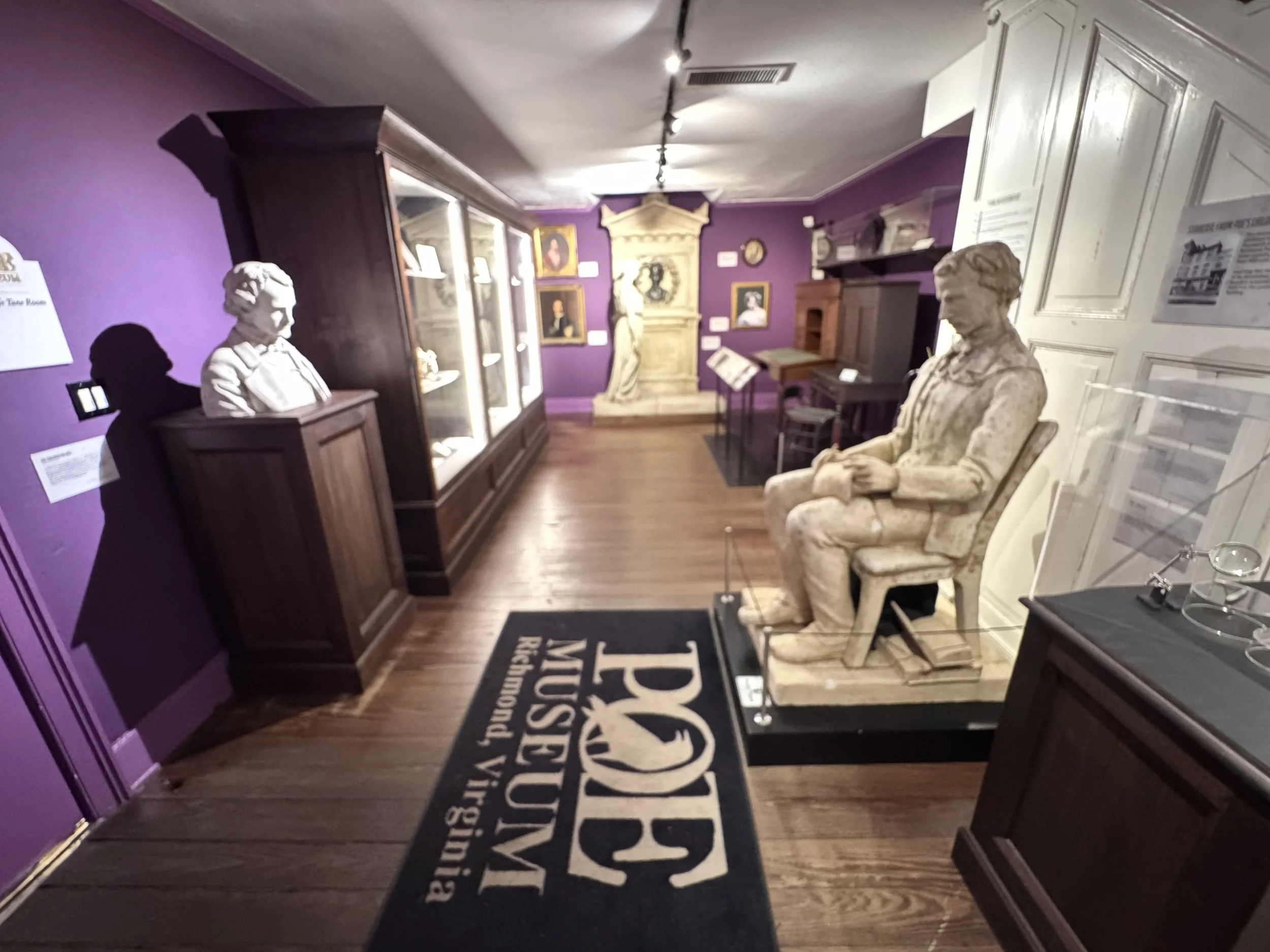
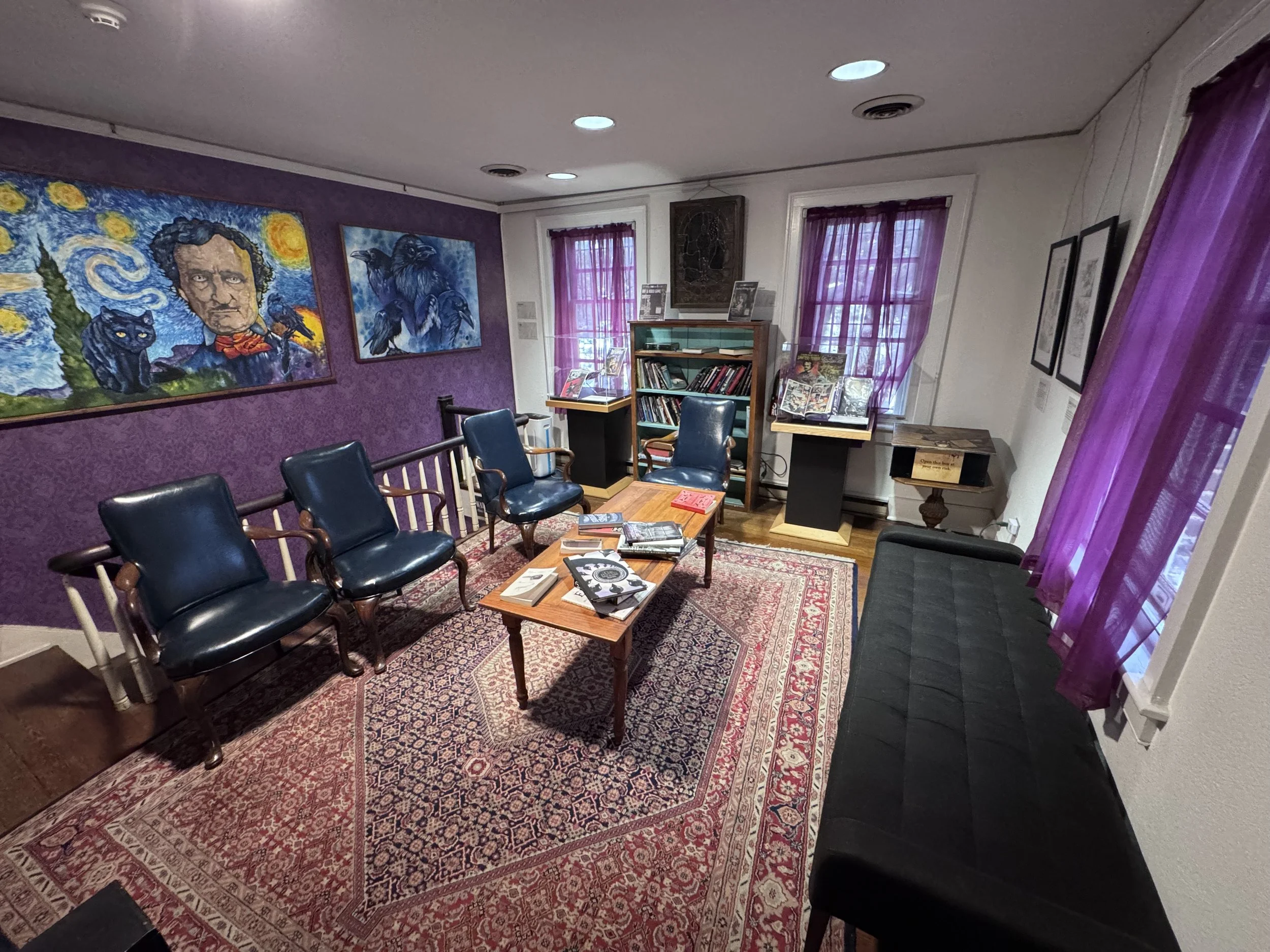
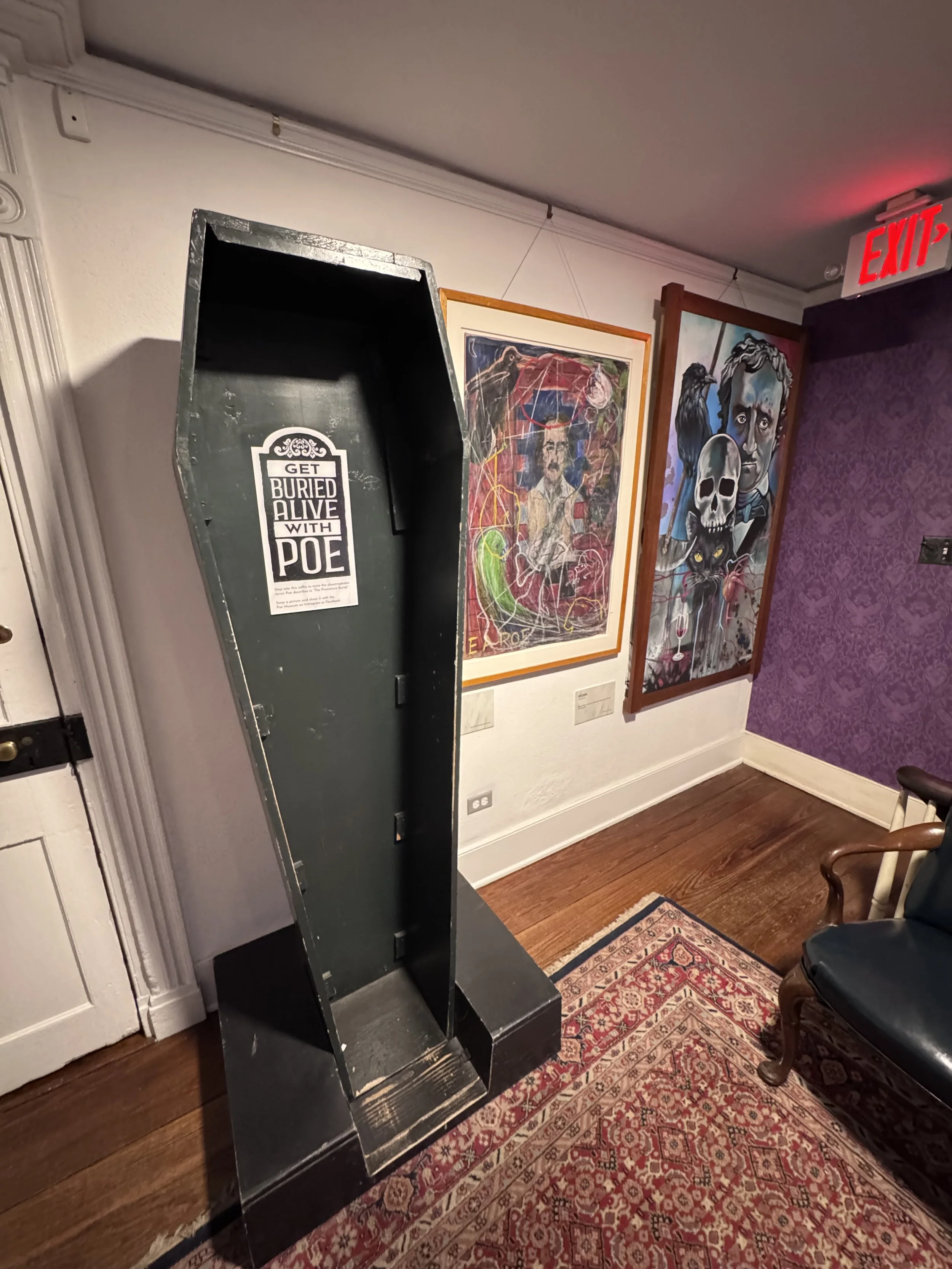
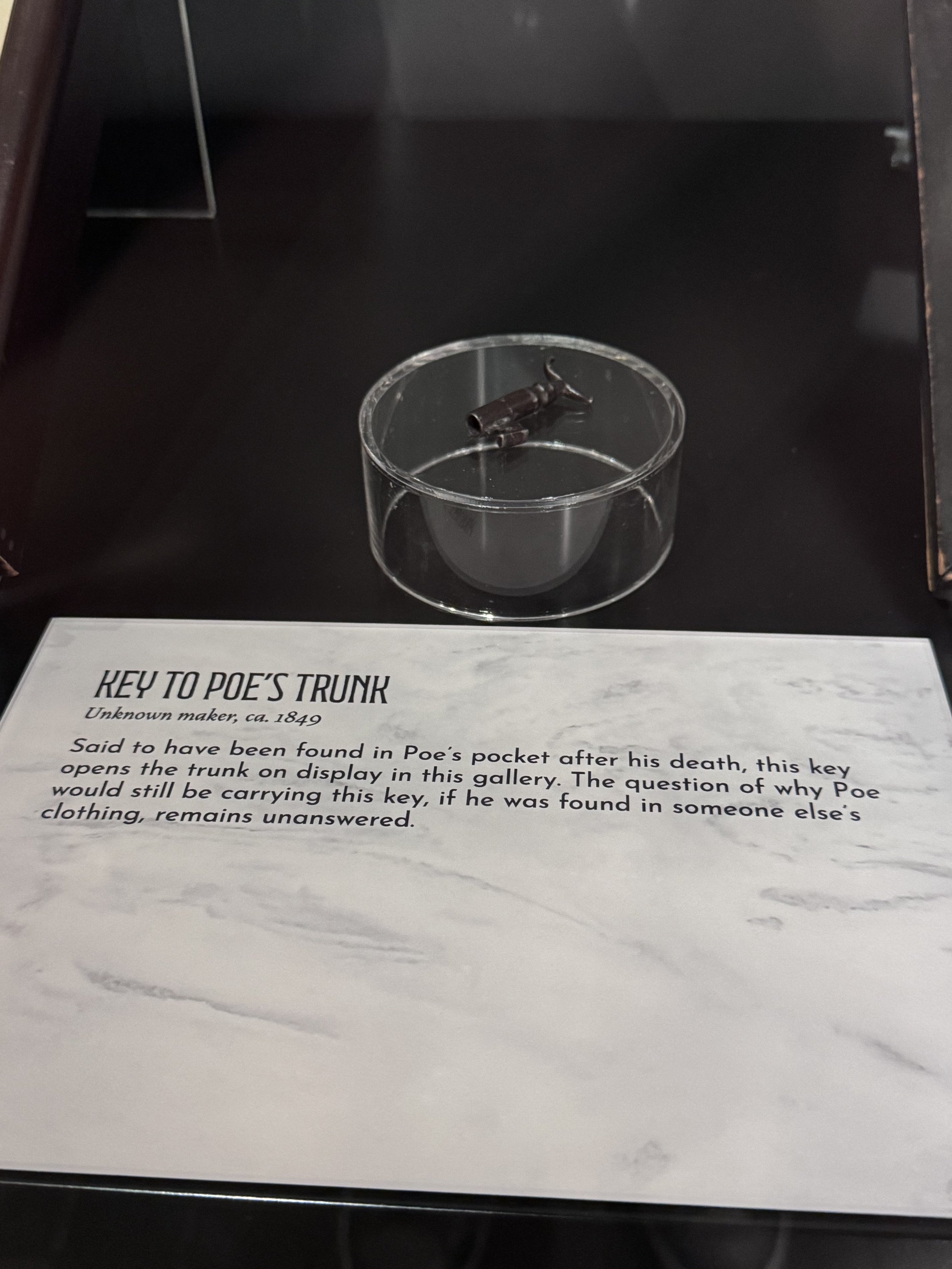
Today the Poe Museum houses the largest collection of Poe artifacts anywhere in the world with well over 4,000 pieces, including manuscripts by Poe, first editions of his books, and many of his actual personal belongings. Visitors can view his pocket watch (which he wore while writing “The Tell-Tale Heart”), fragments from his coffin, his childhood bed, his waist coat, his pocket watch, a Daguerreotype photograph of Poe, his desk at The Southern Literary Messenger, and the engagement ring he gave Elmira Royster Shelton just before his death. What fascinated me the most, however, was the display of his trunk which was found in his boarding room in Baltimore after his death, and the trunk’s key that had been found in the pocket of the clothes he was wearing when he’d been taken to the hospital, clothes that were not his own. Spooky!
Oh, another interesting note: Several black cats also inhabit the grounds, strays the museum has adopted and cares for. Poe loved black cats.
I highly recommend a trip to Richmond for its music, it’s art, it’s dining, its history, and of course especially for the Poe Museum. Give yourself an hour or two and leisurely take in all of the artifacts on display and get to know one of America’s greatest literary contributors and the father of the mystery.
You can learn more about The Poe Museum at https://poemuseum.org.